


As Cayman’s election campaign enters its final straight, the outcome is too close to call.
Without official public polling, and with little precedent to rely on in an election that, for the first time, features three distinct parties, few are willing to predict a winner.
The People’s Progressive Movement is running 13 candidates, the new Cayman Islands National Party is running 12, and The Caymanian Community Party is fielding a team of 10. Outside of those groups, there is a wide field of independents, with diverse alignments.
It seems inevitable – according to analysts – that some form of coalition will be required to make the next government.
By the time the polls open on Wednesday, more than 2,500 people – around 10% of the electorate – will have already voted in postal or mobile ballots.
Election Day Live
Follow CompassTV coverage at compasstv.ky and on Digicel+ Channel 122, Logic Channel 22, C3 Channel 22, and FLOW Channel 102.
Broadcasting: 7-9am, 12pm update, 3pm update and then live from 5pm until the count is done.
Stay up to date all day with our live blog at www.caymancompass.com, with Compass reporters stationed across the country.
Though the pre-election focus has been on the three parties, independents are favoured to win anywhere between four and seven seats.
And while expectations are that one of the three party leaders – Joey Hew of the PPM, André Ebanks of the TCCP, and Dan Scott of the CINP – will be the next premier, it remains possible that another leader could emerge from outside that trio.
At the very least, a handful of independents – possibly including current and previous government ministers – are expected to play a key role in coalition talks.
Compass Media chief political correspondent Tammi Sulliman says this election is unique.
“For the first time in our political history, we’re seeing a three-party race unfold – and it’s reshaping the landscape. In constituencies like East End and Cayman Brac East, the sheer number of candidates means the vote could split in unpredictable ways.”

The evolution of party politics does not mean there will be a clear result. But Sulliman believes the structure parties will bring to negotiations means things could run more smoothly this time.
“While a coalition government remains a real possibility,” she said, “there’s hope that one party will emerge with a clearer mandate from the people, sparing the country from the prolonged negotiations and protracted political horse trading we saw in 2021.
“This election is not just about individual candidates – it’s about stability, direction, and who can effectively lead from day one.”
Possible coalitions
The likeliest combinations of MPs that could form a coalition appear to be the PPM and some independents that have indicated they would work with them, or some mix of the CINP and TCCP, possibly bolstered by other independents.
One combination that can probably be ruled out is any partnership between the PPM and the other two parties.
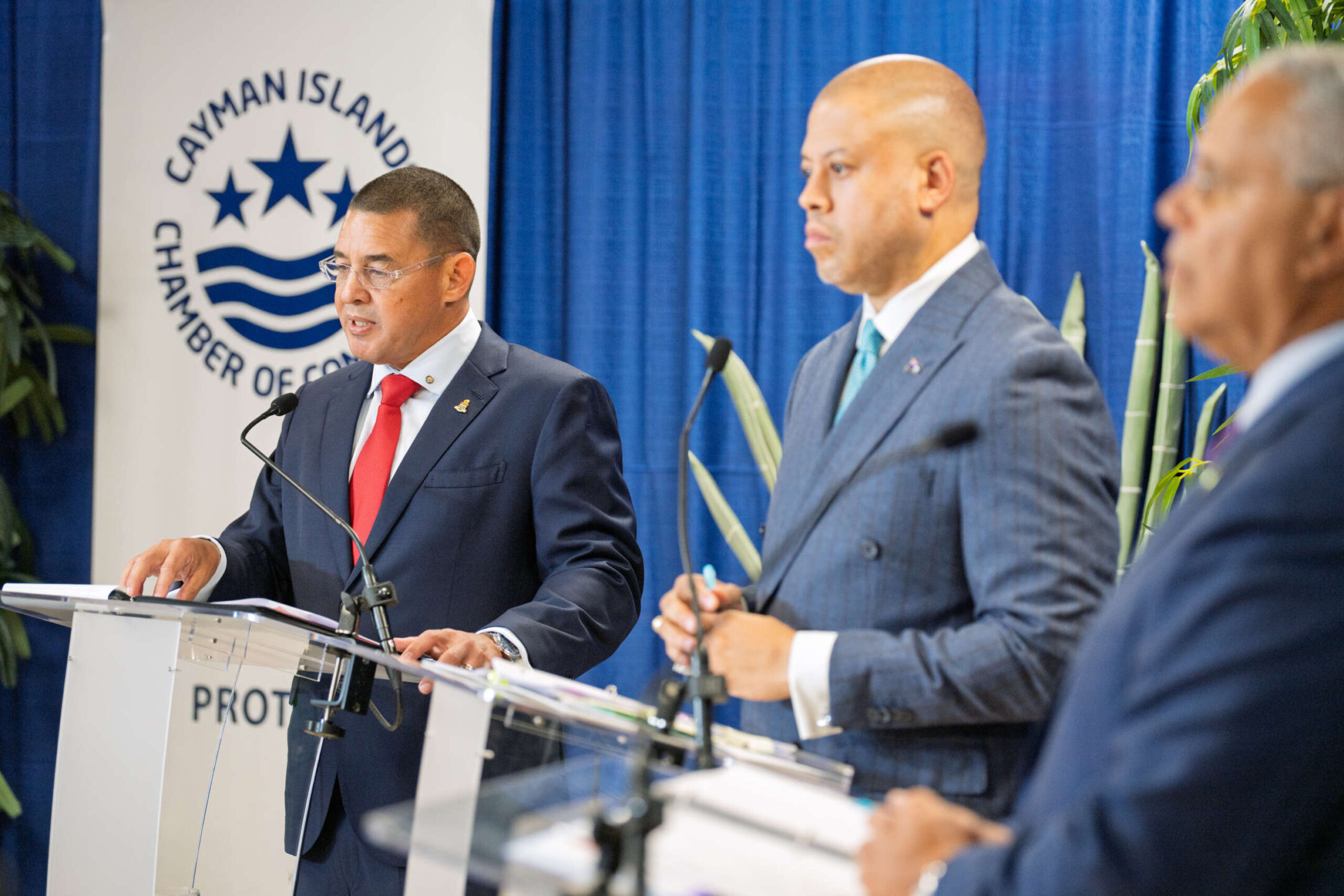
The Chamber of Commerce-hosted leadership debate – in which Ebanks and Scott both targeted the PPM – saw the seeds of a possible partnership emerging there. Both have indicated that nothing has been negotiated and have not been willing to talk coalitions until the results on the night are clear.
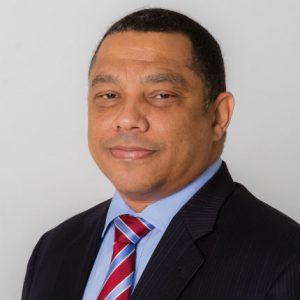
Cline Glidden, a former government minister and CompassTV pundit, believes the PPM will get the most seats of the three parties. But he is not convinced that will be enough to hold sway in coalition talks with what he expects to be a substantial independent group.
A united block of independents featuring heavy hitters like Rolston Anglin, Jay Ebanks and Chris Saunders – if they win their seats – would have a lot of bargaining power in coalition talks.
“I think there is no doubt that we are heading for a coalition of some kind,” said Glidden.
He does not believe the two new parties – even in combination – will get enough seats to form a government.
He said TCCP has some relatively safe seats and, combined with the CINP, he expects them to get close. But negotiations with victorious independents may be more of a challenge, given the rift that emerged in the last independent coalition.
He believes there could be as many as seven independents claiming seats.
“There is very little that is certain in this election,” he said. “There are too many seats that are too close to call, and a lot will depend on the allegiances of the independents that do get elected and how united they are in any coalition negotiation. We may yet see a premier emerge from outside of the three established leaders.
“My suspicion is that there will be a lot of talks taking place on the night and after the vote, and it may be a few days after the polls close before we know who will form the government.”
However, he believes, the talks will not drag on as long as they did in 2021.
“I think there has been some political maturing and some lessons learned, and we will see coalition talks move more swiftly this time.”
Era of party politics here to stay
In 2021, the PPM and partners took eight seats and were expected to quickly negotiate a coalition with at least two independents.
But after seven days of back and forth, the party ended up in opposition, with Wayne Panton leading an ill-matched coalition of independents – initially known as PACT. That coalition collapsed with the ousting of Panton, and Juliana O’Connor-Connolly, who had initially ran with the PPM, ended up as premier of a new independent group known as the United People’s Movement.
But that administration didn’t last either, with four key MPs resigning and later teaming up with Panton to form the new TCCP party.
The evolution of a new era of party politics is a consequence of the instability seen in the independent setup, says James Whittaker, of non-profit public policy think tank Caymanomics.
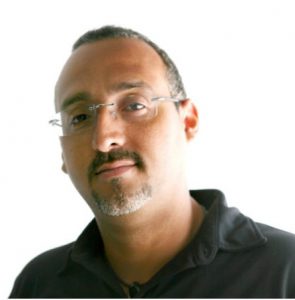
No matter the result on Wednesday, he believes Cayman politics has matured during this election cycle and that the emergence of new parties is a good thing.
“This election showcases some stark contrasts but one thing almost everyone agrees on, including all political parties, is that the last four years were unsuccessful, largely due to the inability of the ‘coalition of independents’ to work cohesively together,” he said. “It is thus most likely that the rebirth of established party politics is now here to stay permanently, marking a new era.”
Whittaker sees this as an especially consequential election and possibly a confusing one for voters – given how the existing government has splintered in multiple directions.
“It remains to be seen how the voting public will respond to the current dynamic that failings of the prior administrations are being used as a primary talking point by all the parties, while, at the same time, key decision-makers from the prior administrations are now key players in some of their own parties.”
He expects Cayman is headed for a coalition, with the vote on the night determining who holds the cards in the horse-trading that follows.
“Whatever happens,” he said, “it is going to be not only an interesting election, but a very consequential one for the future of the Cayman Islands in many ways.”
- James Whittaker, the writer of this article, and James Whittaker, of Caymanomics, are not related.
Related Videos








Let’s make it a coalition of the willing. We have 3 years (at least) of Progressive Republican politics shaping this hemisphere and Europe and England are not going to lead us to prosperity. We need to lead ourselves by building the future infrastructure and attractions that will shape our economy for our great grandchildren
It’s telling that none of the parties can field a full slate of candidates, especially given that you don’t need to live in the constituency where the candidate runs. Because the parties are so weak we will end up with horse trading again, with the usual players pulling strings behind the scenes.
Mr. Anglin being described as a heavy hitter did make me smile though.