At a glance
- The Cayman Islands Regiment is on target for its first Caymanian commanding officer by 2030
- Lieutenant Colonel Roger Carter will retire at the end of March
- Carter said Cayman could become a ‘standard of excellence’ for disaster response in the Caribbean
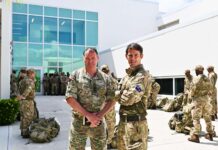
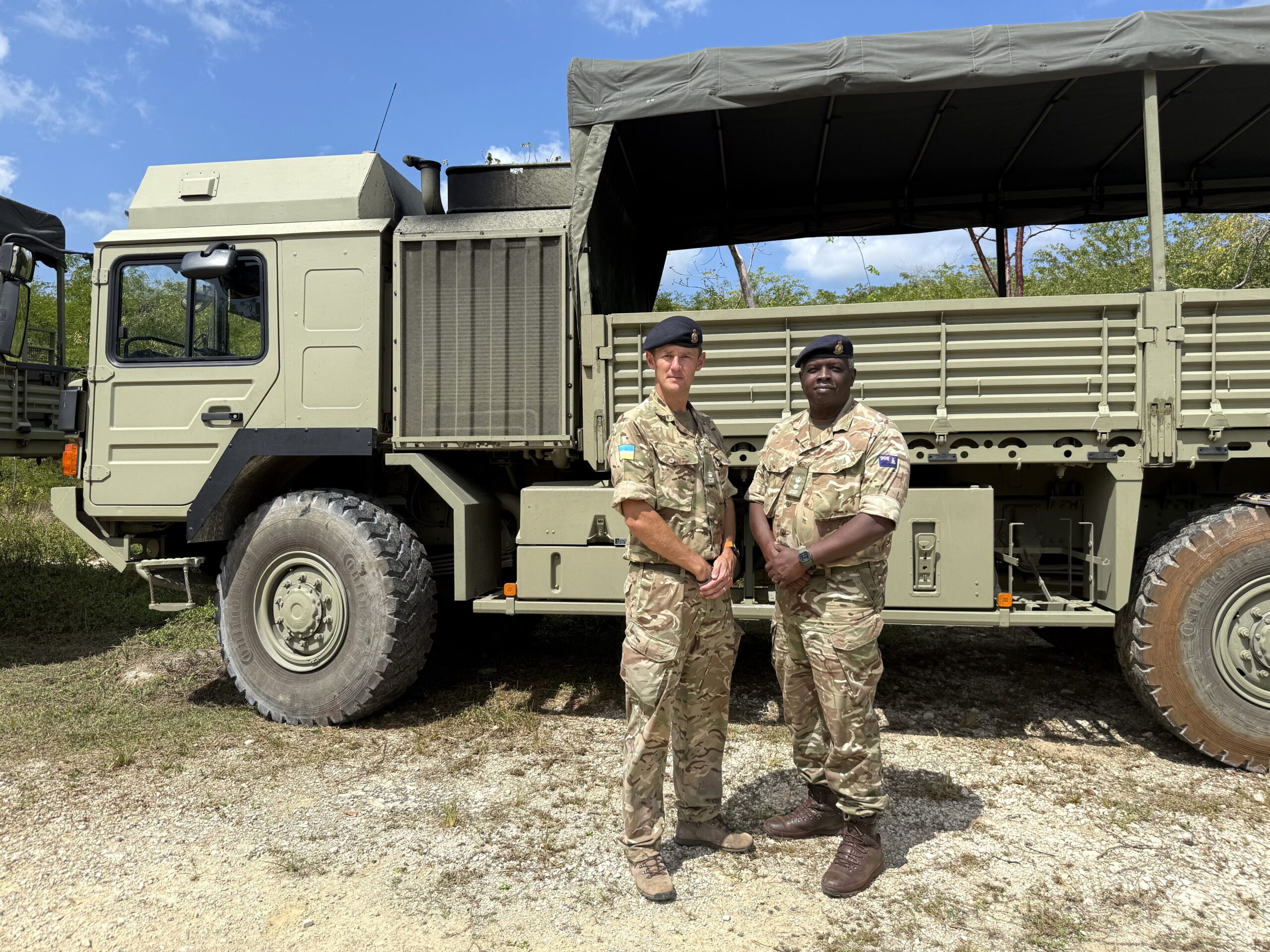
The Cayman Islands Regiment is on target to get its first Caymanian commanding officer by 2030, the outgoing leader has said.
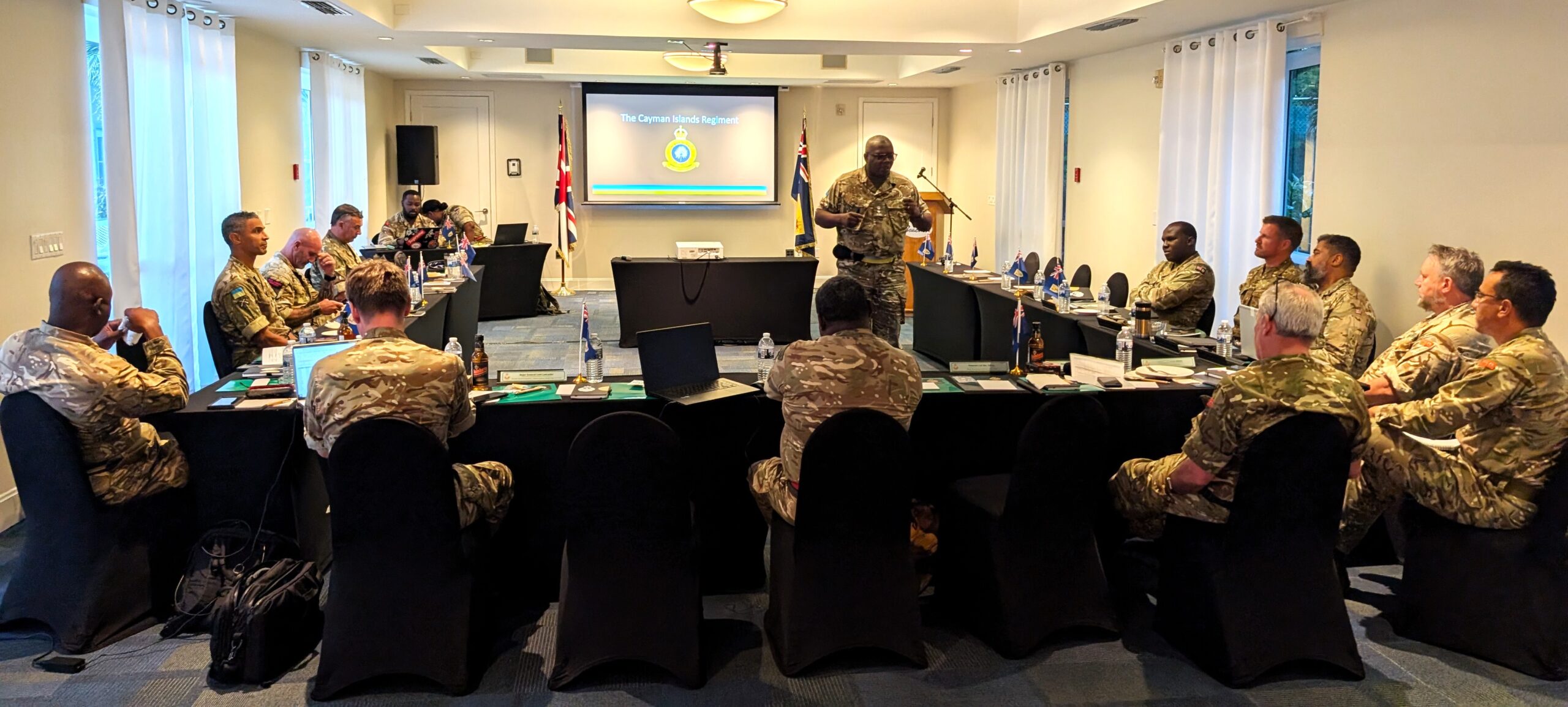
Lieutenant Colonel Roger Carter, who has led the regiment for three years, told the Compass that preparations for the fourth commanding officer in the service’s short history and its first home-grown leader were on track, and that he has left a strategy in place through 2033.
“I have built up a road map for 2033,” he said. “I have a strategy. For me, it guides my every step. I am focused.
He said his biggest achievement as commanding officer of the regiment was to change and professionalise the attitudes of those around him.
Carter explained, “It’s the people – certainly if you change people around you, you’ve done your job.
“When I came here, I immediately got a sense of the soldiers, what was important to them. Looking at them three years later, I can see the change.”
He said that after he took command, he noticed that soldiers struggled with small tasks such as boarding troop transports quickly and efficiently.
“The culture is developing. People undervalue military training and what it does,” he said.
“You are trained to think in a very structured way and think about problems. A combat situation is a problem, but lives are at stake.
“That’s probably the greatest value of military personnel – the way they are trained to think. And the way Cayman soldiers think now is more in line with what I expect of military people.”
Opportunities in Washington
Carter, a former colonel in the Trinidad and Tobago Defence Force, said he was ready to retire when he learned that the job of commanding officer of the Cayman regiment was available.
The 35-year veteran, now 58, was born in Trinidad’s Port of Spain and joined the defence force in 1989.
He gained extensive experience in humanitarian aid and disaster relief as a soldier and in 2011 was appointed assistant chief staff officer (Operations) at Trinidad’s national defence headquarters.
Carter was responsible for inter-agency and multi-national operations, as well as management of the inter-agency counter-terrorism team.
He was later appointed as defence and military attaché at Trinidad’s embassy in Washington, with accreditation to Canada, and was the head of delegation to the Inter- American Defense Board from 2018 to 2021.
Carter also has a Master of Science with distinction in national security and strategic studies from the University of the West Indies.
He said that the posting in Washington presented huge opportunities to boost his knowledge in areas such as international affairs.
“It provides you with just the best education if you take the opportunity, not just to do your job, but to step out of it and experience Washington just as it was,” he said.
“I went to every think tank … whatever was shaping the world. I just used the opportunity in Washington to learn.”
Shifting from military to farming
Despite his accomplished military career, he said he had once aspired to be a journalist and writer and has since written a short story collection as well as children’s books based on his own childhood on the banks of a river in Trinidad.
Carter said planned to retire after Washington, but the chance to help shape a relatively new military unit was too strong a lure.
“I realised that was the one thing I couldn’t resist. A new problem. I wanted to test myself and see if I could be as good at this as I was at being an officer in Trinidad,” he said.
Carter said Bermuda, by far the most senior of the UK overseas territories regiments, was “the best in the region” in the disaster relief role.
But Carter added, “If Cayman sticks to the plan and we follow the road map, we will become that standard of excellence. We want to be the standard for disaster response in the Caribbean.”
He admitted he was still up for another challenge after he hands over command to Major Graham Muir, a British Army veteran who serves as the regiment’s training and operations officer, at the end of March.
“I’m waiting for the next problem. If someone provides me with a problem that’s interesting enough,” he said.
“Other than that, I have a lovely backyard and my wife and I are going to become farmers of sorts.”
Carter said he planned to become as self-sustaining as possible using hi-tech and vertical gardening techniques to grow food.
But he added that Cayman would always have a place in his heart and that it had “a good group, a committed corps of soldiers who are very interested in the military and who want to see it work”.
“They are now officially my people and that’s a kind of lifetime status,” he said.
Related Videos