The Caribbean Food and Nutrition Institute advises how to... Watch that diet when you're pregnant
About the article
This is a digitised version of an article from The Cayman Compass's print archive. Occasionally, the digitisation process introduces transcription errors, or other problems.
See the article in its original context from August 1979.
Brought to you by

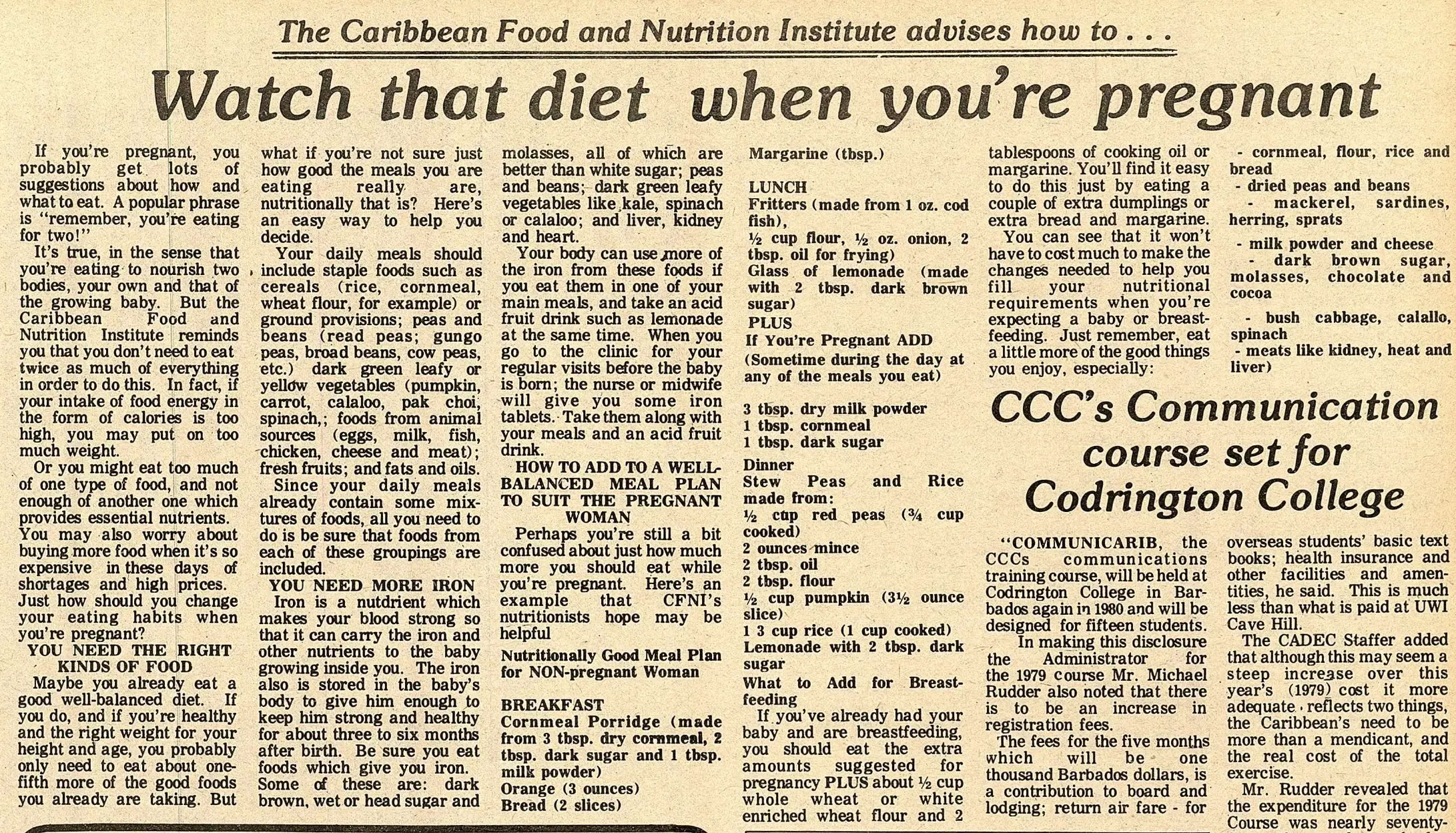
It's true, in the sense that you're eating to nourish two bodies, your own and that of the growing baby. But the Caribbean Food and Nutrition Institute reminds you that you don't need to eat twice as much of everything in order to do this. In fact, if your intake of food energy in the form of calories is too high, you may put on too much weight.
Or you might eat too much of one type of food, and not enough of another one which provides essential nutrients. You may also worry about buying more food when it's so expensive in these days of shortages and high prices. Just how should you change your eating habits when you're pregnant?
YOU NEED THE RIGHT KINDS OF FOOD
Maybe you already eat a good well-balanced diet. If you do, and if you're healthy and the right weight for your height and age, you probably only need to eat about one-fifth more of the good foods you already are taking. But what if you're not sure just how good the meals you are eating really are, nutritionally that is? Here's an easy way to help you decide.
Your daily meals should include staple foods such as cereals (rice, cornmeal, wheat flour, for example) or ground provisions; peas and beans (read peas; gungo peas, broad beans, cow peas, etc.) dark green leafy or yellow vegetables (pumpkin, carrot, calaloo, pak choi, spinach,; foods from animal sources (eggs, milk, fish, chicken, cheese and meat); fresh fruits; and fats and oils.
Since your daily meals already contain some mixtures of foods, all you need to do is be sure that foods from each of these groupings are included.
YOU NEED MORE IRON Iron is a nutdrient which makes your blood strong so that it can carry the iron and other nutrients to the baby growing inside you. The iron also is stored in the baby's body to give him enough to keep him strong and healthy for about three to six months after birth. Be sure you eat foods which give you iron. Some of these are: dark brown, wet or head sugar and molasses, all of which are better than white sugar; peas and beans; dark green leafy vegetables like kale, spinach or calaloo; and liver, kidney and heart.
Your body can use more of the iron from these foods if you eat them in one of your main meals, and take an acid fruit drink such as lemonade at the same time. When you go to the clinic for your regular visits before the baby is born; the nurse or midwife will give you some iron tablets. Take them along with your meals and an acid fruit drink.
HOW TO ADD TO A WELL-BALANCED MEAL PLAN TO SUIT THE PREGNANT WOMAN
Perhaps you're still a bit confused about just how much more you should eat while you're pregnant. Here's an example that CFNI's nutritionists hope may be helpful Nutritionally Good Meal Plan for NON-pregnant Woman BREAKFAST
Cornmeal Porridge (made from 3 tbsp. dry cornmeal, 2 tbsp. dark sugar and 1 tbsp. milk powder)
Orange (3 ounces)
Bread (2 slices) Margarine (tbsp.) LUNCH
Fritters (made from 1 oz. cod fish), 1/2 cup flour, 1/2 oz. onion, 2 tbsp. oil for frying)
Glass of lemonade (made with 2 tbsp. dark brown sugar)
PLUS
If You're Pregnant ADD (Sometime during the day at any of the meals you eat) 3 tbsp. dry milk powder
1 tbsp. cornmeal
1 tbsp. dark sugar Dinner Stew Peas and Rice made from: 1/2 cup red peas (3/4 cup cooked) 2 ounces mince 2 tbsp. oil 2 tbsp. flour 1/2 cup pumpkin (31/2 ounce slice) 1 3 cup rice (1 cup cooked) Lemonade with 2 tbsp. dark sugar What to Add for Breastfeeding
If you've already had your baby and are breastfeeding, you should eat the extra amounts suggested for pregnancy PLUS about 1/2 cup whole wheat or white enriched wheat flour and 2 tablespoons of cooking oil or margarine. You'll find it easy to do this just by eating a couple of extra dumplings or extra bread and margarine.
You can see that it won't have to cost much to make the changes needed to help you fill your nutritional requirements when you're expecting a baby or breastfeeding. Just remember, eat a little more of the good things you enjoy, especially: - cornmeal, flour, rice and bread
- dried peas and beans
- mackerel, sardines, herring, sprats - milk powder and cheese
- dark brown sugar, molasses, chocolate and cocoa - bush cabbage, calallo, spinach
- meats like kidney, heat and liver)