How to detect a counterfeit
About the article
This is a digitised version of an article from The Cayman Compass's print archive. Occasionally, the digitisation process introduces transcription errors, or other problems.
See the article in its original context from March 1987.
Brought to you by

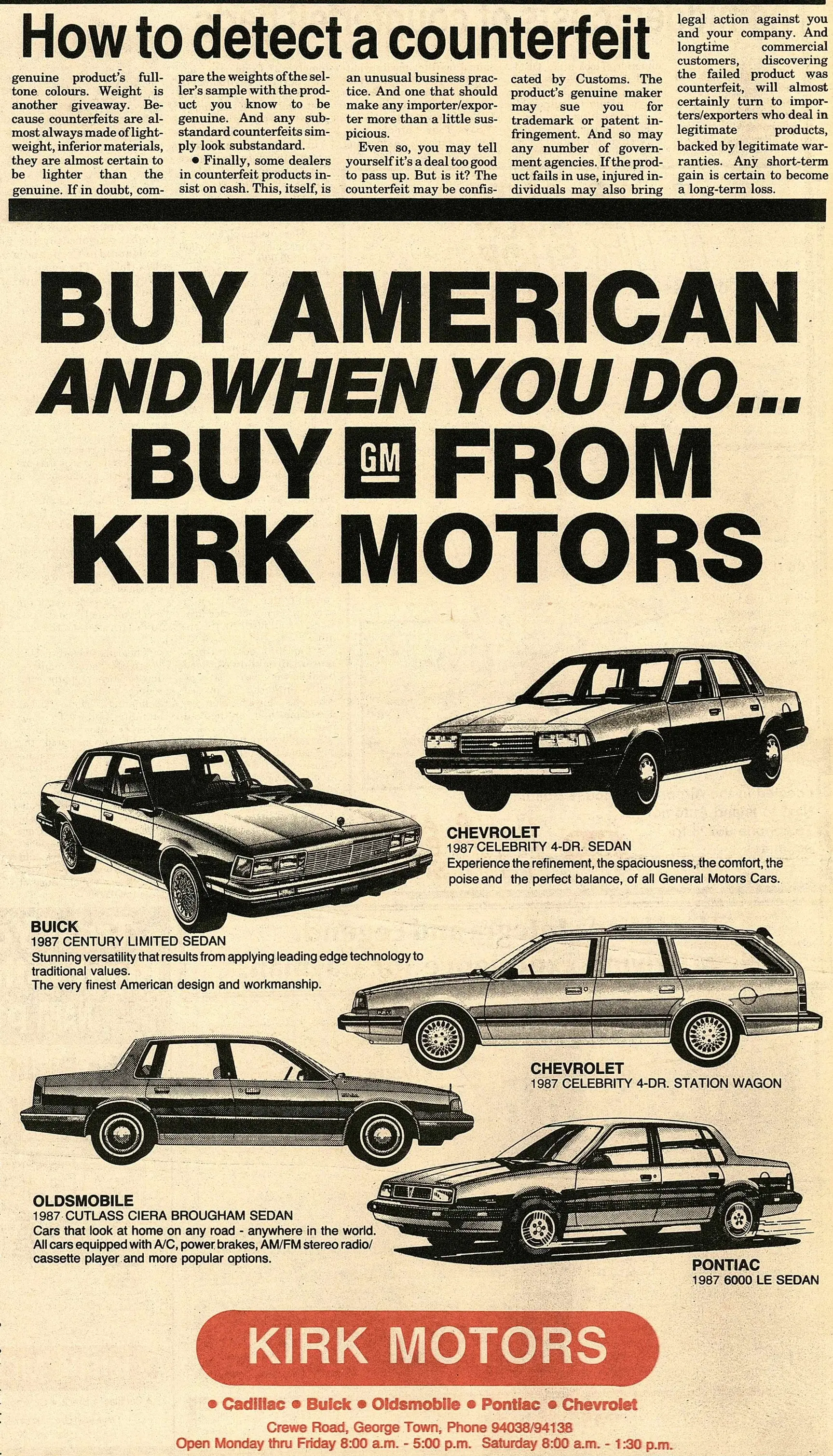
• Finally, some dealers in counterfeit products insist on cash. This, itself, is an unusual business practice. And one that should make any importer/exporter more than a little suspicious.
Even so, you may tell yourself it's a deal too good to pass up. But is it? The counterfeit may be confiscated by Customs. The product's genuine maker may sue you for trademark or patent infringement. And so may any number of government agencies. If the product fails in use, injured individuals may also bring legal action against you and your company. And longtime commercial customers, discovering the failed product was counterfeit, will almost certainly turn to importers/exporters who deal in legitimate products, backed by legitimate warranties. Any short-term gain is certain to become a long-term loss.