Fat trimming tips
About the article
This is a digitised version of an article from The Cayman Compass's print archive. Occasionally, the digitisation process introduces transcription errors, or other problems.
See the article in its original context from July 1991.
Brought to you by

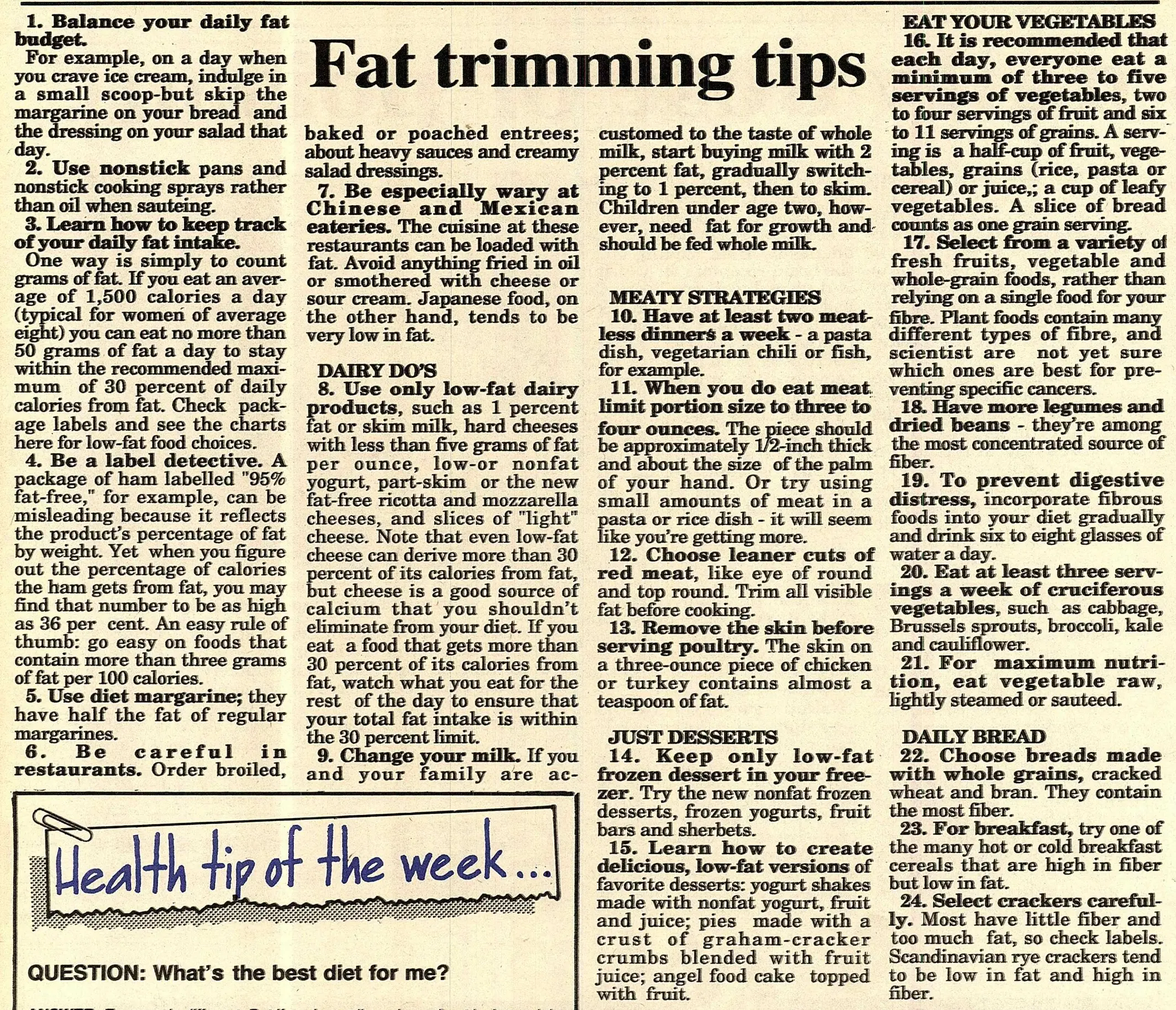
2. Use nonstick pans and nonstick cooking sprays rather than oil when sauteing.
3. Learn how to keep track of your daily fat intake. One way is simply to count grams of fat. If you eat an average of 1,500 calories a day (typical for women of average eight) you can eat no more than 50 grams of fat a day to stay within the recommended maximum of 30 percent of daily calories from fat. Check package labels and see the charts here for low-fat food choices.
4. Be a label detective. A package of ham labelled "95% fat-free," for example, can be misleading because it reflects the product's percentage of fat by weight. Yet when you figure out the percentage of calories the ham gets from fat, you may find that number to be as high as 36 per cent. An easy rule of thumb: go easy on foods that contain more than three grams of fat per 100 calories.
5. Use diet margarine; they have half the fat of regular margarines.
6. Be careful in restaurants. Order broiled, baked or poached entrees; about heavy sauces and creamy salad dressings.
7. Be especially wary at Chinese and Mexican eateries. The cuisine at these restaurants can be loaded with fat. Avoid anything fried in oil or smothered with cheese or sour cream. Japanese food, on the other hand, tends to be very low in fat. DAIRY DO'S
8. Use only low-fat dairy products, such as 1 percent fat or skim milk, hard cheeses with less than five grams of fat per ounce, low-or nonfat yogurt, part-skim or the new fat-free ricotta and mozzarella cheeses, and slices of "light" cheese. Note that even low-fat cheese can derive more than 30 percent of its calories from fat, but cheese is a good source of calcium that you shouldn't eliminate from your diet. If you eat a food that gets more than 30 percent of its calories from fat, watch what you eat for the rest of the day to ensure that your total fat intake is within the 30 percent limit.
9. Change your milk. If you and your family are accustomed to the taste of whole milk, start buying milk with 2 percent fat, gradually switching to 1 percent, then to skim.
Children under age two, however, need fat for growth and should be fed whole milk. MEATY STRATEGIES
10. Have at least two meatless dinners a week - a pasta dish, vegetarian chili or fish, for example.
11. When you do eat meat limit portion size to three to four ounces. The piece should be approximately 1/2-inch thick and about the size of the palm of your hand. Or try using small amounts of meat in a pasta or rice dish - it will seem like you're getting more.
12. Choose leaner cuts of red meat, like eye of round and top round. Trim all visible fat before cooking.
13. Remove the skin before serving poultry. The skin on a three-ounce piece of chicken or turkey contains almost a teaspoon of fat. JUST DESSERTS
14. Keep only low-fat frozen dessert in your freezer. Try the new nonfat frozen desserts, frozen yogurts, fruit bars and sherbets.
15. Learn how to create delicious, low-fat versions of favorite desserts: yogurt shakes made with nonfat yogurt, fruit and juice; pies made with a crust of graham-cracker crumbs blended with fruit juice; angel food cake topped with fruit. EAT YOUR VEGETABLES 16. It is recommended that each day, everyone eat a minimum of three to five servings of vegetables, two to four servings of fruit and six to 11 servings of grains. A serving is a half-cup of fruit, vegetables, grains (rice, pasta or cereal) or juice,; a cup of leafy vegetables. A slice of bread counts as one grain serving.
17. Select from a variety of fresh fruits, vegetable and wholegrain foods, rather than relying on a single food for your fibre. Plant foods contain many different types of fibre, and scientist are not yet sure which ones are best for preventing specific cancers.
18. Have more legumes and dried beans - they're among the most concentrated source of fiber.
19. To prevent digestive distress, incorporate fibrous foods into your diet gradually and drink six to eight glasses of water a day.
20. Eat at least three servings a week of cruciferous vegetables, such as cabbage, Brussels sprouts, broccoli, kale and cauliflower.
21. For maximum nutrition, eat vegetable raw, lightly steamed or sauteed. DAILY BREAD
22. Choose breads made with whole grains, cracked wheat and bran. They contain the most fiber.
23. For breakfast, try one of the many hot or cold breakfast cereals that are high in fiber but low in fat.
24. Select crackers carefully. Most have little fiber and too much fat, so check labels. Scandinavian rye crackers tend to be low in fat and high in fiber.