Escobar escape hits Colombian chief's popularity
About the article
This is a digitised version of an article from The Cayman Compass's print archive. Occasionally, the digitisation process introduces transcription errors, or other problems.
See the article in its original context from August 1992.
Brought to you by

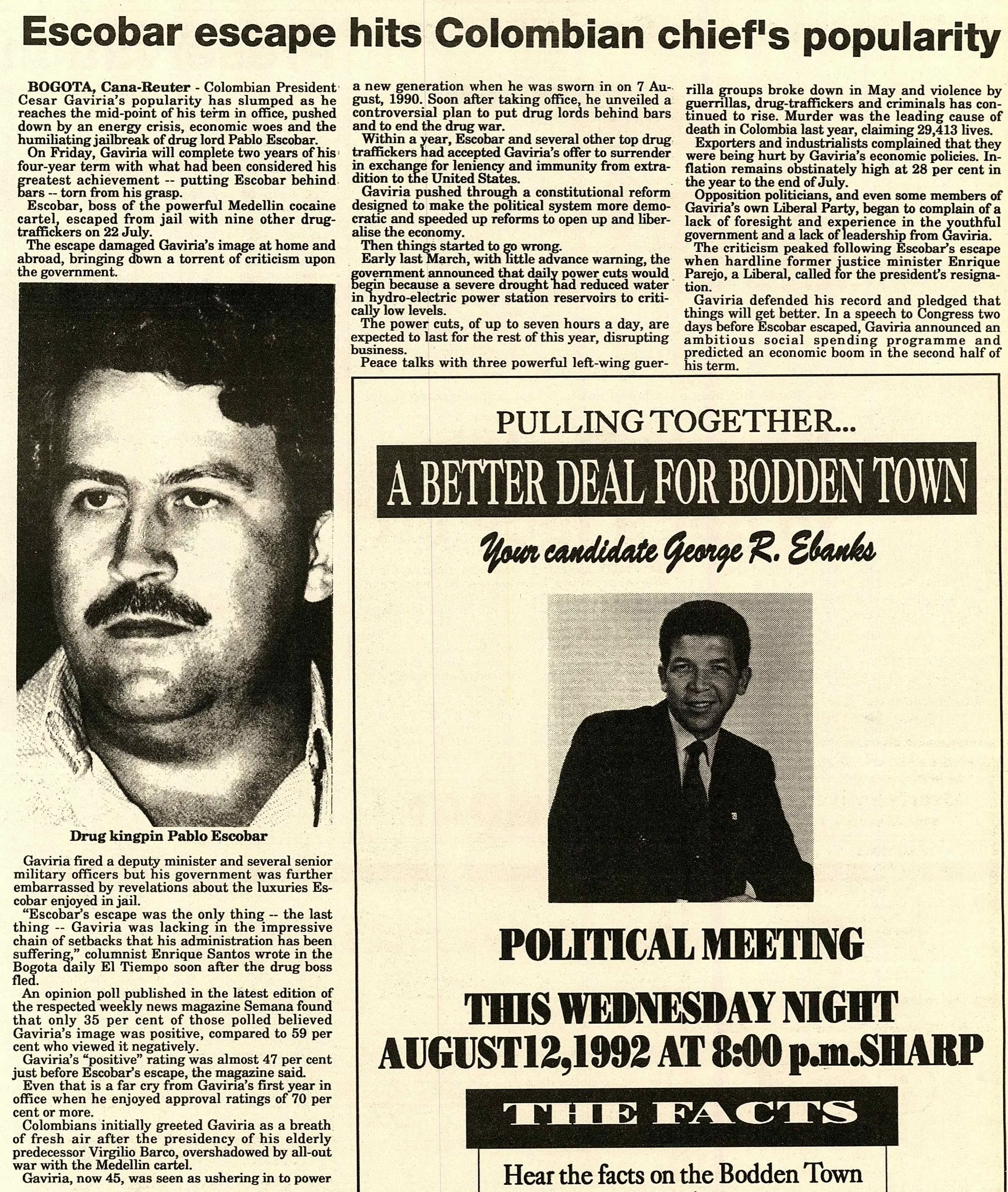
On Friday, Gaviria will complete two years of his four-year term with what had been considered his greatest achievement -- putting Escobar behind bars -- torn from his grasp.
Escobar, boss of the powerful Medellin cocaine cartel, escaped from jail with nine other drugtraffickers on 22 July.
The escape damaged Gaviria's image at home and abroad, bringing down a torrent of criticism upon the government. Gaviria fired a deputy minister and several senior military officers but his government was further embarrassed by revelations about the luxuries Escobar enjoyed in jail.
"Escobar's escape was the only thing -- the last thing -- Gaviria was lacking in the impressive chain of setbacks that his administration has been suffering," columnist Enrique Santos wrote in the Bogota daily El Tiempo soon after the drug boss fled.
An opinion poll published in the latest edition of the respected weekly news magazine Semana found that only 35 per cent of those polled believed Gaviria's image was positive, compared to 59 per cent who viewed it negatively.
Gaviria's "positive" rating was almost 47 per cent just before Escobar's escape, the magazine said. Even that is a far cry from Gaviria's first year in office when he enjoyed approval ratings of 70 per cent or more.
Colombians initially greeted Gaviria as a breath of fresh air after the presidency of his elderly predecessor Virgilio Barco, overshadowed by all-out war with the Medellin cartel.
Gaviria, now 45, was seen as ushering in to power a new generation when he was sworn in on 7 August, 1990. Soon after taking office, he unveiled a controversial plan to put drug lords behind bars and to end the drug war.
Within a year, Escobar and several other top drug traffickers had accepted Gaviria's offer to surrender in exchange for leniency and immunity from extradition to the United States.
Gaviria pushed through a constitutional reform designed to make the political system more democratic and speeded up reforms to open up and liberalise the economy.
Then things started to go wrong.
Early last March, with little advance warning, the government announced that daily power cuts would begin because a severe drought had reduced water in hydro-electric power station reservoirs to critically low levels.
The power cuts, of up to seven hours a day, are expected to last for the rest of this year, disrupting business.
Peace talks with three powerful left-wing guerrilla groups broke down in May and violence by guerrillas, drug-traffickers and criminals has continued to rise. Murder was the leading cause of death in Colombia last year, claiming 29,413 lives.
Exporters and industrialists complained that they were being hurt by Gaviria's economic policies. Inflation remains obstinately high at 28 per cent in the year to the end of July.
Opposition politicians, and even some members of Gaviria's own Liberal Party, began to complain of a lack of foresight and experience in the youthful government and a lack of leadership from Gaviria. The criticism peaked following Escobar's escape when hardline former justice minister Enrique Parejo, a Liberal, called for the president's resignation.
Gaviria defended his record and pledged that things will get better. In a speech to Congress two days before Escobar escaped, Gaviria announced an ambitious social spending programme and predicted an economic boom in the second half of his term.