When being nice becomes a sin
About the article
This is a digitised version of an article from The Cayman Compass's print archive. Occasionally, the digitisation process introduces transcription errors, or other problems.
See the article in its original context from May 1993.
Brought to you by

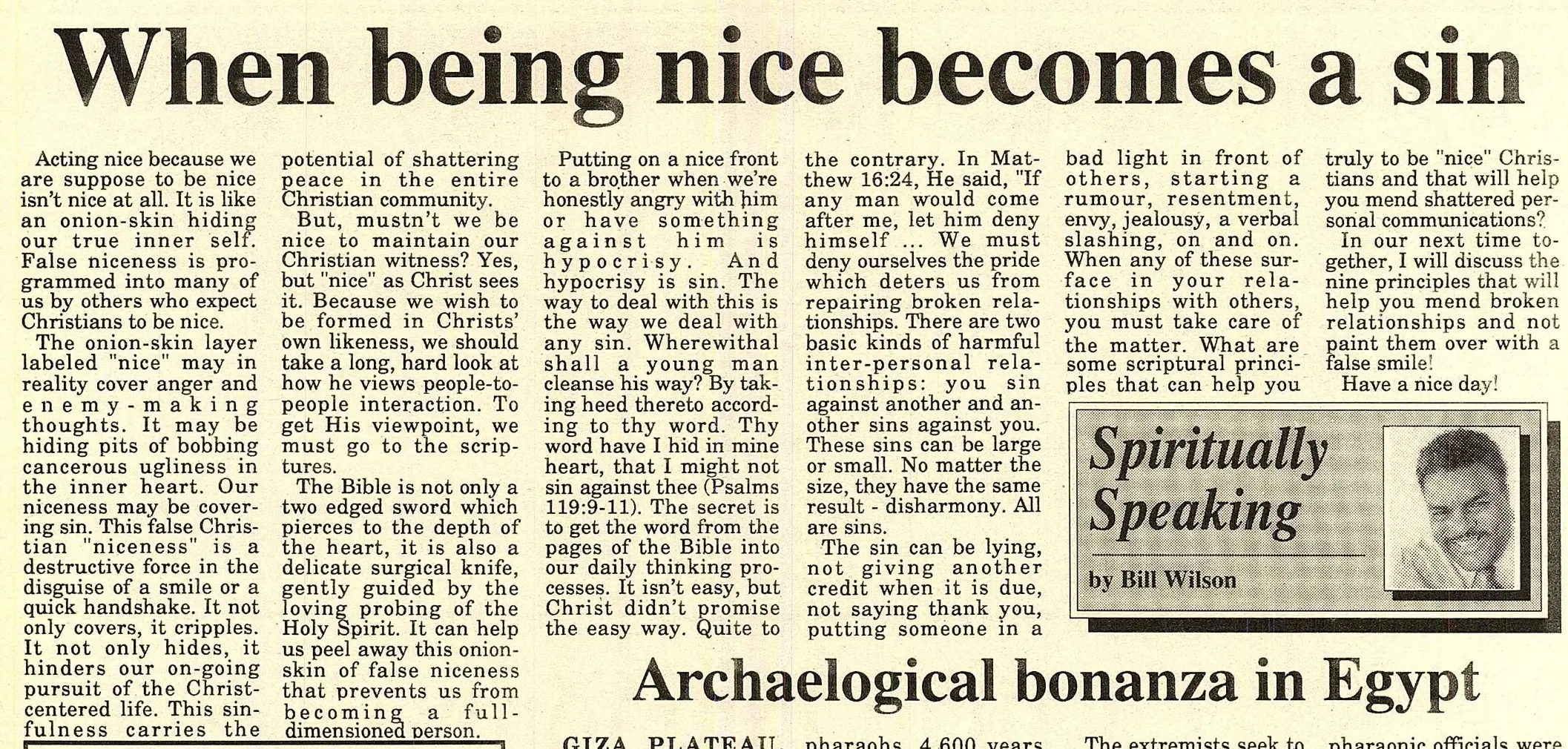
The onion-skin layer labeled "nice" may in reality cover anger and enemy-making thoughts. It may be hiding pits of bobbing cancerous ugliness in the inner heart. Our niceness may be covering sin. This false Christian "niceness" is a destructive force in the disguise of a smile or a quick handshake. It not only covers, it cripples. It not only hides, it hinders our on-going pursuit of the Christ-centered life. This sinfulness carries the potential of shattering peace in the entire Christian community. But, mustn't we be nice to maintain our Christian witness? Yes, but "nice" as Christ sees it. Because we wish to be formed in Christs' own likeness, we should take a long, hard look at how he views people-to-people interaction. To get His viewpoint, we must go to the scriptures.
The Bible is not only a two edged sword which pierces to the depth of the heart, it is also a delicate surgical knife, gently guided by the loving probing of the Holy Spirit. It can help us peel away this onion-skin of false niceness that prevents us from becoming a fulldimensioned person. Putting on a nice front to a brother when we're honestly angry with him or have something against him is hypocrisy. And hypocrisy is sin. The way to deal with this is the way we deal with any sin. Wherewithal shall a young man cleanse his way? By taking heed thereto according to thy word. Thy word have I hid in mine heart, that I might not sin against thee (Psalms 119:9-11).
The secret is to get the word from the pages of the Bible into our daily thinking processes. It isn't easy, but Christ didn't promise the easy way. Quite to the contrary. In Matthew 16:24, He said, "If any man would come after me, let him deny himself ... We must deny ourselves the pride which deters us from repairing broken relationships. There are two basic kinds of harmful interpersonal relationships: you sin against another and another sins against you. These sins can be large or small. No matter the size, they have the same result - disharmony. All are sins.
The sin can be lying, not giving another credit when it is due, not saying thank you, putting someone in a bad light in front of others, starting a rumour, resentment, envy, jealousy, a verbal slashing, on and on.
When any of these surface in your relationships with others, you must take care of the matter. What are some scriptural principles that can help you. truly to be "nice" Christians and that will help you mend shattered personal communications?
In our next time together, I will discuss the nine principles that will help you mend broken relationships and not paint them over with a false smile!
Have a nice day!