NEW ZEALAND Queen signs Maori land settlement
About the article
This is a digitised version of an article from The Cayman Compass's print archive. Occasionally, the digitisation process introduces transcription errors, or other problems.
See the article in its original context from November 1995.
Brought to you by

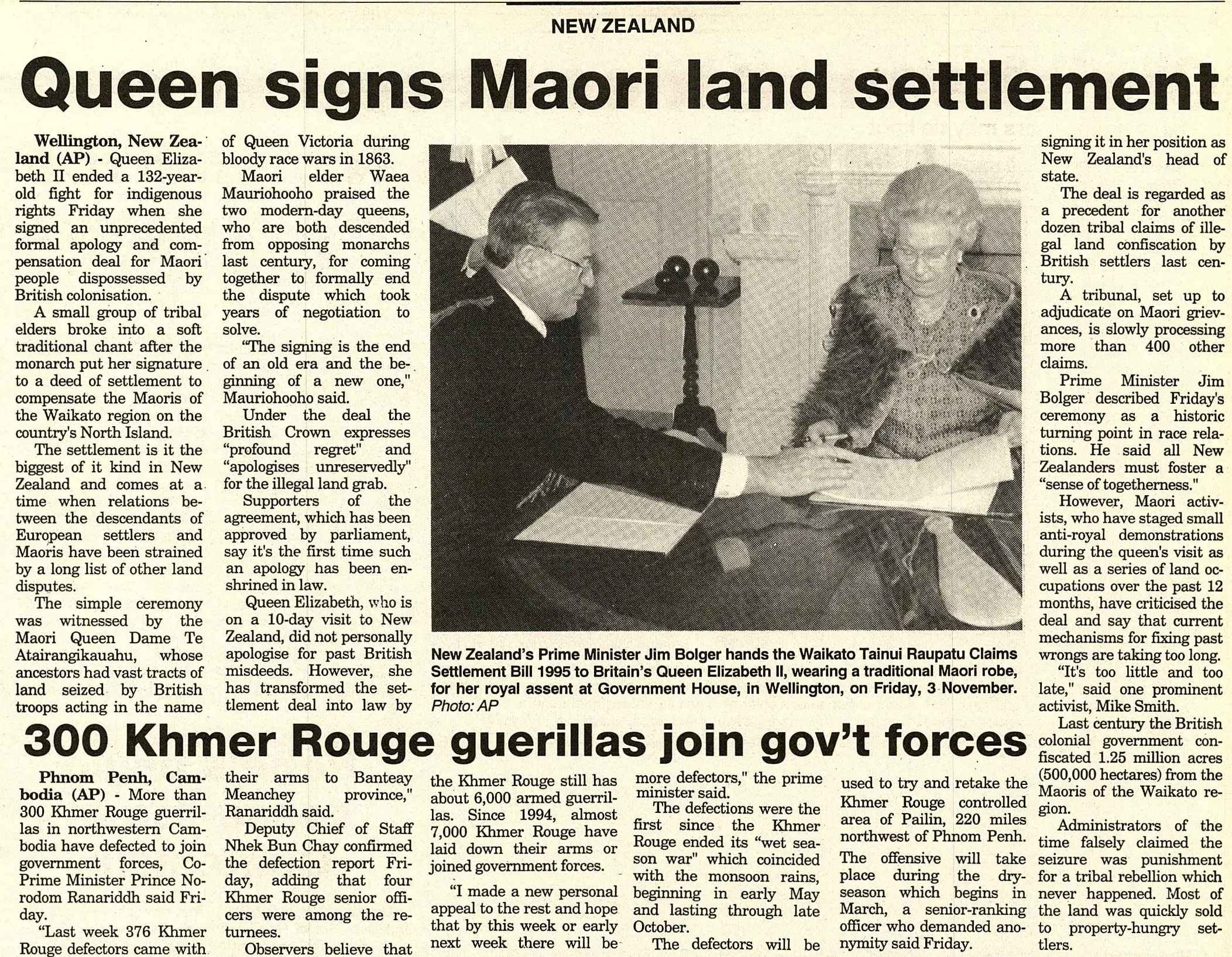
A small group of tribal elders broke into a soft traditional chant after the monarch put her signature to a deed of settlement to compensate the Maoris of the Waikato region on the country's North Island.
The settlement is it the biggest of it kind in New Zealand and comes at a time when relations between the descendants of European settlers and Maoris have been strained by a long list of other land disputes.
The simple ceremony was witnessed by the Maori Queen Dame Te Atairangikauahu, whose ancestors had vast tracts of land seized by British troops acting in the name of Queen Victoria during bloody race wars in 1863. Maori elder Waea Mauriohooho praised the two modern-day queens, who are both descended from opposing monarchs last century, for coming together to formally end the dispute which took years of negotiation to solve.
"The signing is the end of an old era and the beginning of a new one," Mauriohooho said. Under the deal the British Crown expresses "profound regret" and "apologises unreservedly" for the illegal land grab. Supporters of the agreement, which has been approved by parliament, say it's the first time such an apology has been enshrined in law.
Queen Elizabeth, who is on a 10-day visit to New Zealand, did not personally apologise for past British misdeeds. However, she has transformed the settlement deal into law by signing it in her position as New Zealand's head of state.
The deal is regarded as a precedent for another dozen tribal claims of illegal land confiscation by British settlers last century.
A tribunal, set up to adjudicate on Maori grievances, is slowly processing more than 400 other claims.
Prime Minister Jim Bolger described Friday's ceremony as a historic turning point in race relations. He said all New Zealanders must foster a "sense of togetherness."
However, Maori activists, who have staged small anti-royal demonstrations during the queen's visit as well as a series of land occupations over the past 12 months, have criticised the deal and say that current mechanisms for fixing past wrongs are taking too long. "It's too little and too late," said one prominent activist, Mike Smith.
Last century the British colonial government confiscated 1.25 million acres (500,000 hectares) from the Maoris of the Waikato region.
Administrators of the time falsely claimed the seizure was punishment for a tribal rebellion which never happened. Most of the land was quickly sold to property-hungry settlers.