CARIBBEAN BOTANIC GARDENS Linking the economy and environment
About the article
This is a digitised version of an article from The Cayman Compass's print archive. Occasionally, the digitisation process introduces transcription errors, or other problems.
See the article in its original context from July 1996.
Brought to you by

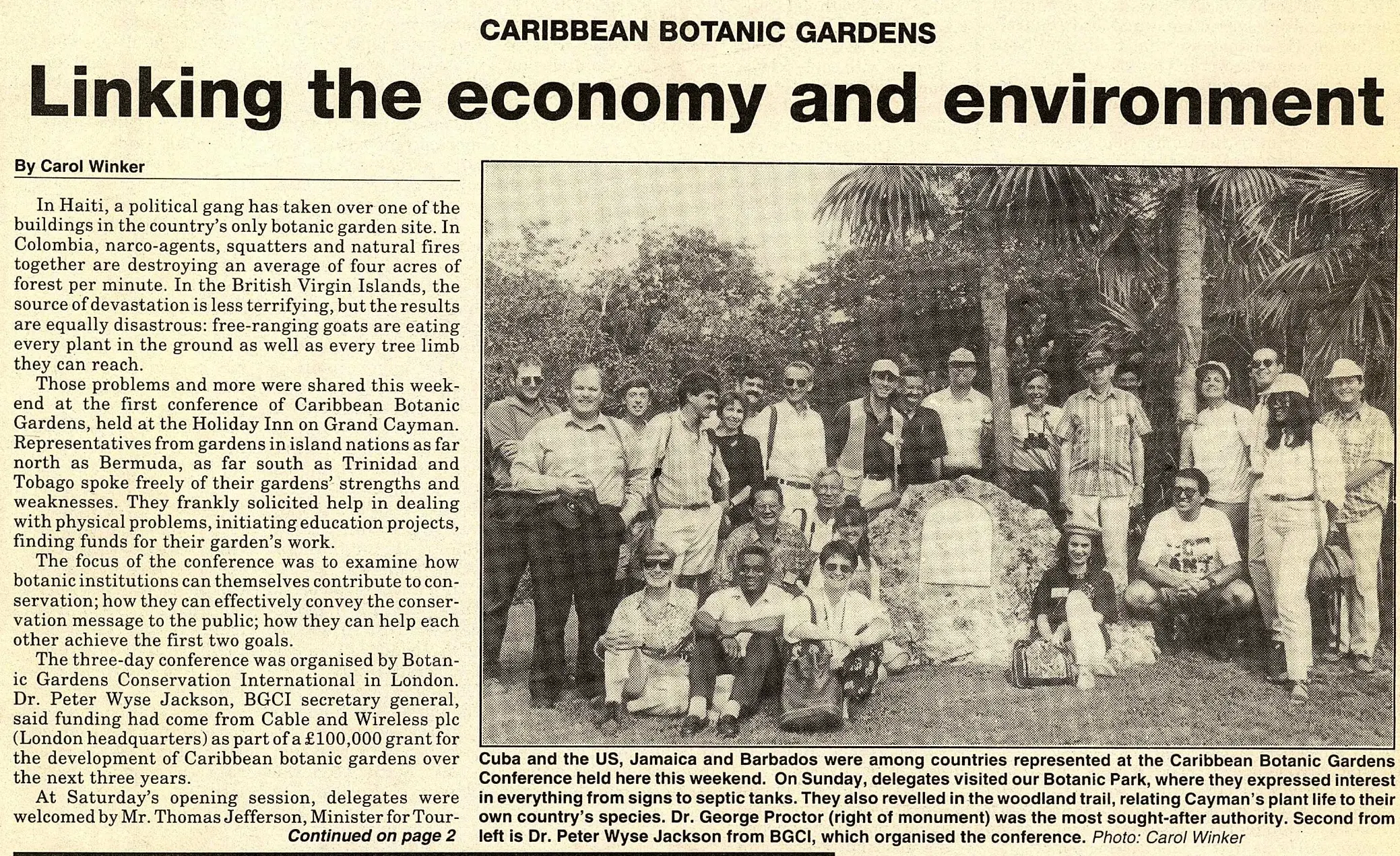
Those problems and more were shared this weekend at the first conference of Caribbean Botanic Gardens, held at the Holiday Inn on Grand Cayman. Representatives from gardens in island nations as far north as Bermuda, as far south as Trinidad and Tobago spoke freely of their gardens' strengths and weaknesses. They frankly solicited help in dealing with physical problems, initiating education projects, finding funds for their garden's work.
The focus of the conference was to examine how botanic institutions can themselves contribute to conservation; how they can effectively convey the conservation message to the public; how they can help each other achieve the first two goals.
The three-day conference was organised by Botanic Gardens Conservation International in London. Dr. Peter Wyse Jackson, BGCI secretary general, said funding had come from Cable and Wireless plc (London headquarters) as part of a £100,000 grant for the development of Caribbean botanic gardens over the next three years.
At Saturday's opening session, delegates were welcomed by Mr. Thomas Jefferson, Minister for Tour-Continued on page 2 from page 1 ism, Aviation and Commerce. Mr. Jefferson told them that tourism is a major component of Cayman's economy, as is the case for many Caribbean islands, and "tourism depends heavily on the natural environment.
"If tourism based on the environment is to be sustainable then the environment must be onerved and botanic gardens can play a key role in helping preserve what we have for our children and visitors," he reminded them.
Cayman's Queen Elizabeth II Boatanic Park serves many important roles in this country - environmental, cultures ans economic - he told them. "Many Caymanians now realise that land development must be balanced by preservation of representative portions of the local environment, to sustain both the local excosystems and cultural traditions."