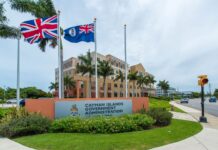
Although it continues to be a somewhat controversial issue locally three years after passage, other countries in the Caribbean and around the world are beginning to take notice of the Cayman Islands’ Freedom of Information Law and the relative success the legislation has enjoyed.
Some current and former British territories, including Bermuda, Bahamas and Guernsey have drawn extensively upon Cayman’s Freedom of Information Law (2007) in creating their own legislation or in preparing to take steps toward a more open and transparent government.
Former director of information at the UK’s Ministry of Justice Belinda Crowe said she was “quite impressed” with Cayman’s open records legislation. Ms Crowe performed some research on a number of smaller countries’ open records regimes in preparing an information strategy for the States of Guernsey last year. Although Guernsey won’t be looking to adopt anything like FOI laws for at least another three years, Ms Crowe said she thought Cayman’s “practical approach to making FOI work well” offered “much that similar jurisdictions could learn from”.
“I think it’s a really good piece of legislation and it seems to be working well,” Ms Crowe told the Caymanian Compass. “There was quite a lot of debate before the legislation took place and then a good lead-in time [before implementation]. It’s not something that one should rush into.” Talk of an FOI Law in Cayman began in 2005, but it wasn’t passed in legislation for more than two years. Following the bill’s passage in 2007, the effective date for the law was set as 5 January, 2009. A legislative review for the FOI Law is believed to be under way at the moment, though few specifics of that have been made public.
Ms Crowe said she would be following the developments out of that review quite closely.
In reviewing Cayman’s FOI Law and particularly the powers vested in the Information Commissioner’s Office, Ms Crowe found that the separate aspects of Cayman’s government – for all the public hub-bub FOI sometime causes – appeared to have “a joint aim of encouraging good information practices”.
“I think that’s really positive, and it’s hard to do in a small jurisdiction,” she said.
Guernsey
Ms Crowe’s advice to Guernsey in her information strategy was aimed more at preparing the states’ government for the advent of greater transparency. Her recommendations only sought the readying of FOI legislation in three years time, and then only if it was appropriate.
Rather, the former UK Ministry of Justice official and now-information consultant sought to convince the states why better information practices were needed generally, and what changes would have to be made there to improve those practices.
“The lack of a strategic, proactive and consistent approach to government communication means that the public relies almost entirely on the media for information, and that government itself has no mechanism for getting information out to tell its story – which puts you on the back foot,” Ms Crowe noted.
With regard to media communications, Ms Crowe said such a proactive approach will actually help make a government look good in the long run: “The benefits would be a more positive public perception of government domestically and internationally, and less time spent on reacting to stories in the media.” Any transparent public information policy is a balancing act, she admits.
“Care is needed to protect personal and commercially confidential information and information rightly protected by other laws,” she said. “[However], information should not be kept secret because its disclosure would be embarrassing.”
Bahamas
The Bahamas’ FOI legislation is expected to come into force on 1 July, according to media reports.
Under the Bahamian proposal, records are exempt from disclosure if the information prejudices the country’s security, defence or international relations; or release law enforcement information that could endanger a person’s life or jeopardise the security of a prison.
Data which contains advice or recommendations prepared for Cabinet meetings also will be exempt, among other things. Information that would injure the Bahamas’ foreign relations, confidential Cabinet information or trade secrets are also exempt.
The bill also creates information managers who will be appointed by every public authority to promote maintenance of records, archival and disposal; receive requests for records, assist persons seeking access to information and receive complaints about information disclosure. The legislation is almost a carbon copy of Cayman’s current law.
Bermuda
Bermuda used the same Jamaican civil rights lawyer, Carole Excell, who Cayman hired to act in the role of FOI coordinator prior to and after the passage of the country’s FOI Law.
The open records legislation initially proposed by the Bermudian government differs significantly from what was passed in Cayman in 2007 and it has not been brought into effect. In Bermuda, the proposal is referred to as PATI, of the Public Access to Information legislation.
Despite that, Cayman officials are pleased with the reaction the local law has gotten on an international scale.
“All of this, I would say with some cautious optimism … seems to indicate that the perception in the wider region is that we have our act together, and that there are lessons to learn from the Cayman Islands FOI example,” said Deputy Information Commissioner Jan Liebaers.

Related Videos