The new concert season of the “Music on the Menu” series is upon us, and the first of three events presented by the Cayman Arts Festival will be on Oct. 2 at Luca restaurant.
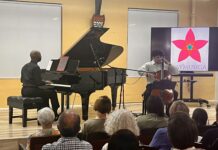
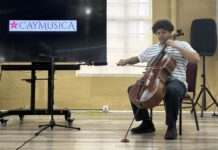
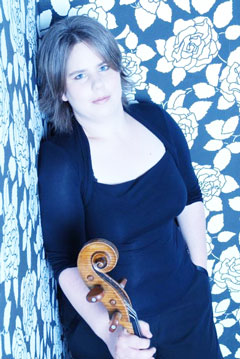
Featuring cellist Angharad Parkes and pianist Glen Inanga, the “Soulful Awakening” concert is sure to appeal to classical music lovers.
Guests will be welcomed with canapés and drinks on the terrace, followed by a three-course meal with wine. After dinner, Parkes and Inanga will perform a repertoire from Rachmaninoff’s epic “Sonata for Cello and Piano Op. 19” and Chopin’s “Barcarolle in F Sharp major Op. 60.”
The musicians
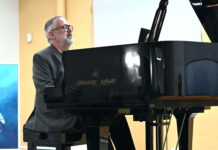
Cambridge-educated Inanga, the festival’s artistic director, studied at the Royal Academy of Music in London, and has performed at Lincoln Center in New York.
Parkes, who lives and works in Cayman, graduated from the Glenn Gould School of the Royal Conservatory of Music, Toronto, and has performed as a soloist and chamber musician in Toronto, Wales, and Croatia. This marks Parkes’s second performance at a “Music on the Menu” concert series, although she has performed with Inanga in the past.
“Angharad is a very talented cellist whom the Cayman audiences should hear more of,” Inanga said. “She is great to work with and I am delighted that she has accepted the invitation to open the season for our ‘Music on the Menu’ series.”
The music
Chopin and Rachmaninoff’s similarities make the program’s music selections a natural pairing; both suffered from illnesses which profoundly affected them, plunging them into depths of emotions that resulted in these two masterpieces.
“Chopin (1810-1849)and Rachmaninoff (1873-1943) were composers from the Romantic era,” Inanga explained. “They were born 63 years apart and Rachmaninoff played several of Chopin’s works and was clearly influenced by Chopin, just like many other composers [for piano] that came after him. Both composers wrote extensively for the piano and were widely considered one of the finest pianists of their time.”
Inanga said pairing piano and cello is very common for composers, particularly after Beethoven wrote his sonatas for the genre around the turn of the 19th century, giving equal weight to both instruments in level of difficulty. “Rachmaninoff was influenced by the genre, insisting that his ‘Sonata for Cello and Piano Op. 19’ was written with equal importance given to both parts in the music.”
The sonata, in particular, contains four movements, with breaks between each that have their own speed and mood: Lento-Allegro moderato (initially slow and then moderately fast); Allegro scherzando (fast and playful); Andante (at a walking pace); and Allegro mosso (very fast). The barcarolle, on the other hand, contains one continuous movement with different sections and no breaks.
Parkes delves into the composer’s psyche at the time, which leans toward that of tortured artist. “The Rachmaninoff cello sonata Op. 19, written in 1901, is firmly rooted in the romantic style of the 19th century. It is the last of three works composed by Rachmaninoff in 1901 as he awakened from a depression that had lasted three years, after the failed reception of his first symphony.
“Rachmaninoff had regained his footing after working with Russian psychologist Dr. Nicolai Dahl, and the cello sonata’s romantic themes and impassioned voice delve into an internal world. From the hesitant opening of the first movement through to the triumphant finale of the fourth movement, the sonata propels us on a journey that seems to mirror what we know of Rachmaninoff’s own personal journey,” Parkes said.
As for Chopin’s “Barcarolle in F Sharp major Op. 60,” for those not familiar with the term “barcarollle,” it is a piece of music composed in the style of a folk song sung by Venetian gondoliers. The title creates the expectation for the composition to maintain a “boat” accompaniment while inventing suitably artless, or “gondolier,” melodies. When Chopin completed the “Barcarolle Op. 60” for solo piano in 1846, it was his last large-scale work, and he was already frail from a fatal illness to which he would succumb three years later. It is believed that he was happy with it as he played it often in Paris, London and Scotland.
“Music on the Menu” begins with the reception at 6:30 p.m.; dinner and concert from 7:30 p.m. Tickets are $100; tables for 6-10 people may be reserved in advance. To reserve tickets, email [email protected].


Related Videos