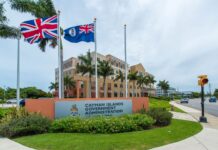
The growing economic crisis has spurred sentiment in some sectors that offshore jurisdictions deserve at least some of the blame for what’s been happening and Cayman is showing up on some prominent critics’ radar screens.
French President Nicholas Sarkozy and Prime Minister Francois Fillon, and German Finance Minister Peer Steinbrueck have been particularly vocal in their public criticism of offshore jurisdictions.
In the run-up to the planned global economic summit set to take place in Washington on 15 November, Mr. Fillon has even called for wiping out tax havens in the interest of global finance reform.
In October, the Organization for Economic Cooperation and Development held a conference, ‘The Fight Against International Tax Evasion and Avoidance: Improving transparency and stepping up exchange of information in tax matters,’ in Paris.
‘If we are going to find a lasting solution to the current financial crisis we need to ensure that there is debate between bank regulators and tax authorities. Tax may not have been one of the main causes of the crisis but I do believe it should be an integrated part of the long-term solution,’ OECD Secretary-General Angel Gurría said then.
‘We cannot expect tax payers to fund the bailing out of failed financial institutions and at the same time allow these institutions to facilitate offshore non-compliance by using tax havens.’
The OECD lists 35 jurisdictions, including the Cayman Islands, as ‘committed to improving transparency and establishing effective exchange of information in tax matters,’ while Andorra, Liechtenstein and Monaco are listed as ‘uncooperative tax havens’ for refusing to share any information on their finance sectors.
At the conference, France and Germany, along with 15 other countries, but not including the United States and Switzerland, said they intended to create a new blacklist of tax havens that fail to cooperate on tax evasion and transparency.
The OECD will have until mid-2009 to draft the new list, anticipated to reach a few dozen, and a conference is planned in Berlin in May or June to decide on further steps.
After the meeting, French Budget Minister Eric Woerth reportedly said the Bahamas, the Cayman Islands, St Kitts and Nevis, as well as some Pacific Islands such as Samoa, weren’t considered to be meeting their pledge to fight tax evasion.
‘Cayman has already established that our business is not built around tax evasion and that we have no difficulty with the concept of effective cooperation in tax matters,’ says Ted Bravakis, director of public relations for the Portfolio of Finance & Economics.
‘Neither the International Monetary Fund, the Financial Stability Forum nor the US Treasury has attributed the global financial instability to ‘tax havens’. The OECD’s own assessments [‘Tax Cooperation: Towards a Level Playing Field’; published annually since 2006] establish that Cayman has the cooperation gateway and associated transparency at OECD standard.’
He says that given that, by existing measures, Cayman already complies with prevailing transparency standards, the Government would need to be clear about the basis for exceeding those standards.
‘Obviously, if the standards themselves change, then Cayman would need to keep pace. Cayman’s negotiating position in relation to tax cooperation arrangements has and will continue to be driven by what is in the best economic interests of the Cayman Islands,’ he says.
Mr. Bravakis points out that since 2003, Cayman along with a number of other OECD and non-OECD countries have been active, good faith participants in an exercise established by the OECD to address level playing field issues, based on the OECD’s acknowledgement that a level playing field did not exist.
The concern over the issues is making expected waves within the broader Cayman Islands financial services sector.
‘The Cayman Islands Financial Services Association is greatly concerned with the recent calls for the revival of listing of offshore centres and the accusations of non-cooperation,’ said CIFSA Chairman Eduardo D’Angelo P. Silva.
He points out the Cayman Islands has always demonstrated a strong commitment to international cooperation and has always acted responsibly to fulfil its obligations.
‘In recent years our government signed a Tax Information Exchange Agreement with the US, adhered to the European Union Savings Tax Directive by signing agreements with 27 EU member-countries and has, in general, engaged in bona-fide negotiations within the framework established by the OECD,’ he said.
‘It would be a complete waste of 10 years of fruitful work if the OECD would again call us non-cooperative.’
Nicholas Sarkozy
Peer Steinbrueck
Related Videos