The United States Senate Finance Committee has asked that country’s Government Accountability Office to come to the Cayman Islands to investigate an office building.
Chuck Grassley, ranking Republican Member of the Senate Finance Committee, said the United States has to strike the right balance between allowing Americans to benefit from the global economy and policing the evasion of US taxes.
‘The Ugland House office building in the Cayman Islands has been the source of much debate on the Senate floor over the past few years,’ Mr. Grassley said. ‘It’s time the Finance Committee found out what’s really going on there.’
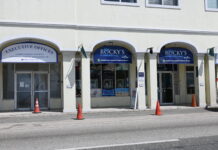
Ugland House, which is on South Church Street just south of the centre of George Town, is home to Cayman’s largest law firm, Maples and Calder.
In a letter written by Mr. Grassley and Senate Finance Committee Chairman Max Baucus to the Government Accountability Office, the pair stated they are concerned US taxpayers are creating offshore business entities solely to evade their US tax obligations.
The letter points out that Ugland House was reported to be the home of 12,748 companies.
‘Of course, this building does not house the operations of 12,748 companies,’ the letter stated. ‘Rather, Ugland House is home to an international law firm and is listed as the registered office of entities that are organised in the Cayman Islands.’
The Senate Finance Committee asked the GAO to travel to the Cayman Islands and visit Ugland House so it could understand the significance of offshore corporations and learn more about what is happening at the building.
The GOA was asked to determine what business the registered corporations carry out in the Cayman Islands; what business reasons exist for incorporating in the Cayman Islands; what information is available on the entities registered at Ugland House, including how many are associated with US citizens, residents or organisations and whether they are complying with U.S. tax laws; and to what extent the US Internal Revenue Service has looked into the US tax compliance implications of the entities.
The Public Relations Unit of Cayman’s Portfolio of Finance and Economics acknowledged the development by issuing a press release late Tuesday.
Director of Public Relations Ted Bravakis commented on the Finance Committee’s decision.
‘While a remarkable development, it is somewhat understandable giving the current political situation in the US,’ he said, referring to US Democrat’s commitments concerning a pay-as-you-go budget and closing the tax gap.
The Public Relations Unit does not believe the GOA would find anything wrong with the way business is transacted in the Cayman Islands. The press release issued by the Public Relations Unit outlined the reasons for that belief.
‘The law enforcement, regulatory and tax information exchange channels between the Cayman Islands and the US – some dating back more than 20 years – offer no protection for Americans who are seeking to evade their tax obligations,’ the release stated.
‘The Cayman Islands has solid working relationships with the Treasury – including the IRS – the [Securities and Exchange Commission] and the Department of Justice, a product of extensive cooperation between our two countries.’
The release also stated that ‘substantially all of the answers to the questions that the Senate Committee on Finance is requesting the GAO collect are fully in the public domain’.
Mr. Bravakis said companies and entities often will do business in the Cayman Islands to minimise their taxes, not to evade them, although he admitted the line between tax minimisation and evasion has become blurred in recent times.
‘It’s more about transparency,’ he said.
Although the 12,748 number of supposed companies registered at Ugland House is often cited because of an article written in Bloomberg Markets magazine in 2004, Mr. Bravakis said it is not even accurate anymore.
‘That number is always changing,’ he said.
Regardless of the number, it is common practice, even in the United States, for certain jurisdictions to register high numbers of companies because of advantageous tax regimes. A fact sheet produced by the Cayman Islands points out that there are more than 200,000 entities that have their address at 1209 Orange Street in Wilmington, Delaware, a state that has tax advantages over other places in the United States.
Mr. Bravakis downplayed the suggestion that the Cayman Islands is secretive in anyway, and said the mere fact that someone was able to ascertain the number of companies registered at Ugland House at a particular time proved the information was in the public domain.
Maples and Calder partner Adrian Pope said neither his company nor the Cayman Islands had any interest in attracting clients engaged in illegal tax evasion.
‘I suspect the Cayman Islands has a much better record than many larger countries in keeping unlawful business out,’ he said. ‘Should a case of unlawful tax evasion manage to slip through the cracks, there is a Tax Information Exchange Agreement in effect between the Cayman Islands and the US, which can be used to deal with the perpetrators.’
Although Maples and Calder has not been contacted by the GAO with regard to the investigation, it would be prepared to meet with its representatives if asked, Mr. Pope said.
‘Hopefully, they will listen to what we have to say.’
Mr. Bravakis expressed some scepticism as to whether the GAO would come here with an open mind. Still, the Government would do what it could to be a good host.
‘Our tendency is to host, but the issue is the rules, and under what circumstances,’ he said.
When they arrive, the GAO will not have access to any records they want.
‘That is not allowed in any regime in the world,’ Mr. Bravakis said.
The same rules will apply at Maples and Calder.
‘We are happy to discuss general matters in relation to the Cayman Islands financial sector,’ Mr. Pope said. ‘We will not discuss individual client matters without the express consent of the client.
‘We presume the US, would likewise not permit the Cayman Islands Government – or anyone else – to walk into a law firm in Washington or Delaware and demand to see client files.’
Related Videos