The preliminary results from a Cayman-based COVID-19 vaccine trial indicate a very encouraging initial outcome, according to researchers leading the project.
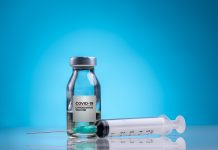
A group of 20 volunteers were recruited in October for Perseus Cayman Ltd’s phase one human trials of its DNA-based COVID vaccine.
The Grand Cayman business, which is a partner of US medical research company Orbis Health Solutions, adapted its work on cancer immunotherapy in an effort to create an effective vaccine to fight COVID-19.
The preliminary results from the first two sets of blood samples taken from participants in the human trial, which will be submitted to the Health Practice Commission, will show that the vaccine was successful in creating neutralising antibodies that protect against the coronavirus, the company said.
“Everything went perfectly. We are very excited and optimistic about the preliminary results that will be submitted,” Orbis president Riley Polk said, crediting local physician and the trial’s principal investigator, Dr. Sook Yin, and her team, for the work they had done on island.
He added that once the data is presented to the regulator, the company will ask that the HPC consider granting permission for a phase two trial with further volunteers.
The Perseus vaccine is one of several hundred COVID-19 vaccines in various stages of trials across the world.
The Pfizer/BioNTech vaccine, which Cayman is expected to receive some doses of next month, has been approved by the UK and the US for emergency widespread use.
But he said this does not mark the “end of the search” for an effective vaccine. He said the widespread scientific view is that COVID-19 is likely to be around, in various forms, for many years and a large percentage of the world’s population would need to be vaccinated – possibly on an annual basis.
He said there was a need for research to continue to refine and perfect the vaccine, and additional effective vaccines would help with world supply.
He added that as the health crisis evolves, other formulations of the vaccine might prove to be more efficient in the long term, with a common goal likely to be the production of a stable, single-dose version which would be potentially easier to mass produce and distribute than those that have been first off the production line.
Graham Hampson, a lawyer who is on the Perseus board of directors, was one of the initial 20 volunteers.
“It was a very interesting and informative process for me,” he said. “I am aware of the results that Perseus has had so far with the clinical trials of its solid tumour cancer immunotherapy vaccine, which has been in development for some years. Accordingly, I had some knowledge of and confidence in the science and safety of the technology used.”
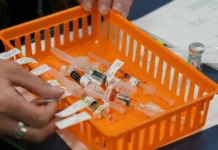
After being pre-screened to determine that they were healthy and that they had not previously been exposed to COVID 19, the volunteers were given the vaccine by intradermal injection, which is just below the skin.
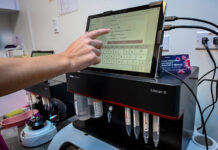
Every two weeks, for a period of six-to-eight weeks post-injection, the volunteers provide blood samples which the scientists in the US test extensively for antibodies and other data.
“We have had two blood draws so far,” said Hampson. “I did not suffer any side effects other than a minor injection site ‘bump’ which I was told to expect and which is apparently not uncommon with such vaccinations. It did not hurt, my vital signs were monitored carefully after the vaccine and everything went perfectly. I believe this was the experience of other volunteers as well.”
Dr. Thomas Wagner, the lead scientist and founder of Orbis, said that early results of all the blood samples have shown a high concentration of antibodies that work to prevent the ‘spike protein’ on the virus from attaching to human cells. A detailed analysis will soon be delivered to the HPC.
He believes the technology – which has been adapted from a process and methodology that has shown success in cancer immunotherapy trials – could have applications beyond the current emergency.
It is essentially a DNA-based vaccine technology.
If it proves successful for COVID-19, says Wagner, there is no reason it wouldn’t be similarly effective in a future pandemic. Once the process itself is tested and accepted, he said, it could theoretically be adapted to fight any virus.
The DNA sequence of COVID-19 was known within weeks of the outbreak. The same would likely be true in a future pandemic. What Perseus is developing, says Wagner, is a delivery system that ‘shows’ the DNA information of a foreign body to the immune system and stimulates the natural defence system to attack it.
Related Videos