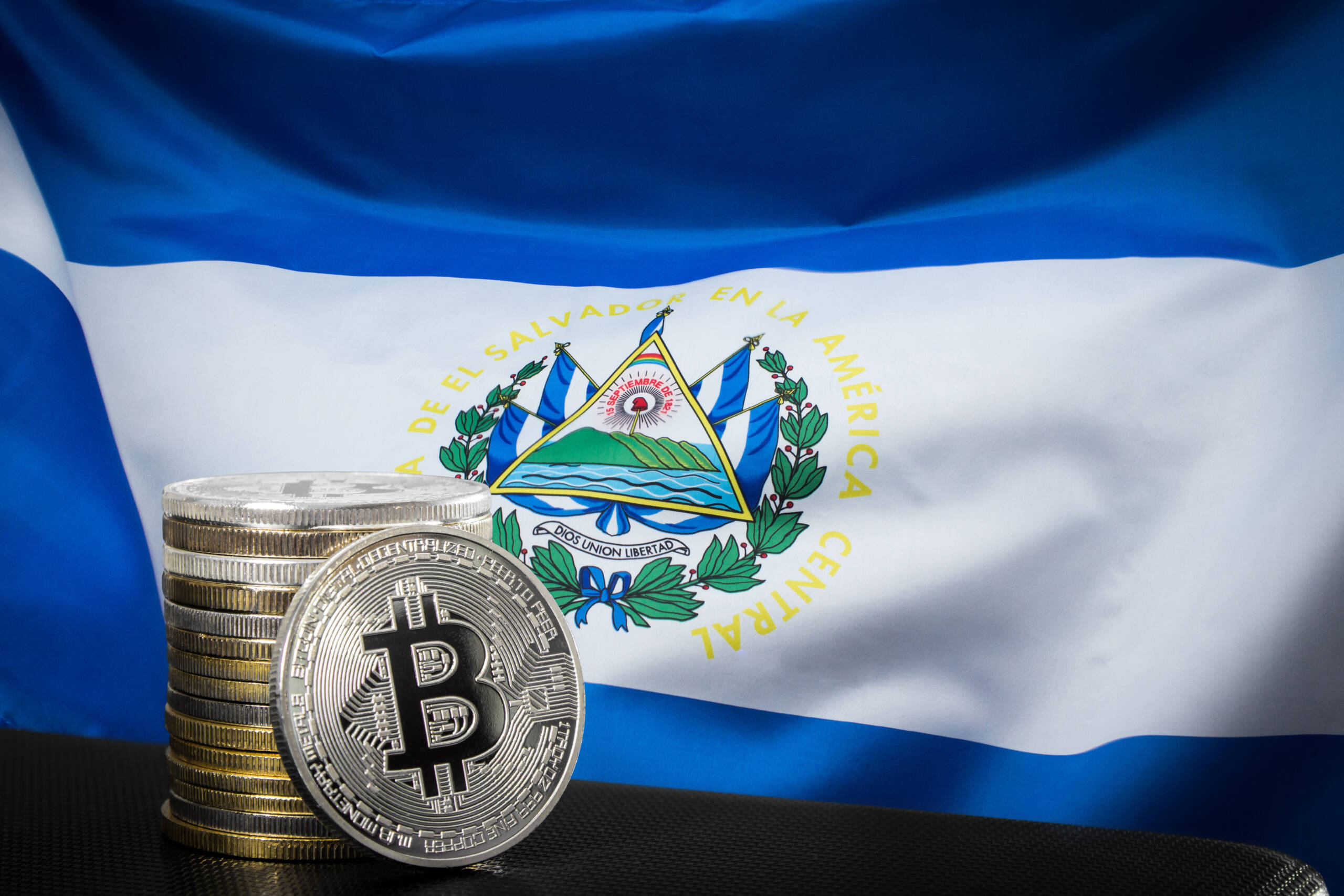
Despite bitcoin’s status as legal tender along with a significant government push and incentives, the cryptocurrency is not yet an accepted medium of exchange in El Salvador, according to a research paper by the National Bureau of Economic Research.
In September 2021, El Salvador embarked on an experiment by becoming the first country to introduce bitcoin as legal tender.
El Salvador’s Bitcoin Law makes the cryptocurrency an accepted means of payment for taxes. It also requires merchants to accept bitcoin in exchange for goods and services and permits prices to be expressed in the cryptocurrency.
Government promotes crypto use
To promote adoption of the virtual currency, the government launched the Chivo wallet, which allows payments in bitcoin and US dollars. El Salvador adopted the US dollar and replaced the colón as its official currency in 2001.
El Salvador incentivised the use of the crypto wallet by giving every citizen who downloaded the app to their smartphone the equivalent of US$30 in bitcoin.
This is a significant amount of public funds in a country that has a population of 6.5 million people and a GDP per capita of little more than $4,130. The government also established a trust fund of $150 million for the conversion of bitcoin into cash.
With 70% of the population unbanked and 90% not using mobile banking, the potential upside of virtual payments, long touted by crypto enthusiasts, made the country a case study.
Almost two-thirds of Salvadoreans have access to a cellphone with internet connection, which is needed to make payments using Chivo – a slang term that means ‘cool’.
A survey of 1,800 households by NBER conducted in February 2022 found that about half a year after launch, 68% of respondents were aware of the Chivo wallet, through social media, TV, radio, the news, and friends and family.
Just over half had downloaded the app.
However, most downloads (40%) occurred in September and “virtually no downloads have taken place in 2022”, the research paper found.
Less than half of those who downloaded the app – about 20% of all respondents – continued to use the crypto wallet after spending the initial $30 bonus in bitcoin, but not intensively.
About 10% of Chivo users reported spending less in cash, and 11% said they had reduced their use of debit or credit cards.
Without the $30 incentive, 75% of survey participants who knew about the app would not have downloaded it.
Data by the Central Reserve Bank of El Salvador confirms that only 1.6% of remittances went through digital wallets in February 2022 – the lowest percentage since Chivo’s creation.
The NBER working paper noted that on average 4.9% of all sales are paid in bitcoin.
Smartphone owners who are banked, more educated, younger and male were statistically more likely to be aware of the wallet and use it.
The most important reason not to download the app was a preference for cash and a lack of trust in bitcoin and the underlying payment system.
Performance issues
A recent Bloomberg report found that Chivo is still suffering from teething problems.
Making a payment with the app is easy, with the vendor typing in the amount and generating a QR code. The buyer then scans the code with the app on their phone and the transaction is carried out instantly. In theory.
In practice, the system is still beset with issues. Transactions can be slow or lack confirmations and payment receipts. Chivo ATMs that convert cash into crypto and vice versa are often devoid of cash or perform sluggishly.
Although technically required by law, so far only about 20% of businesses accept bitcoin. Those that do are typically large companies.
Given the high volatility of bitcoin, the vast majority of businesses (88%) reported that they convert the cryptocurrency they receive from sales into US dollars.
Related Videos