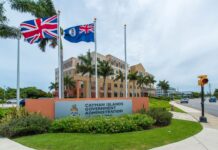
Realtors and dealers in precious metals and stones heard about specific money laundering risks in their sectors at a recent Department of Commerce and Investment (DCI) workshop.
Both sectors are known as ‘designated non-financial businesses and professions’ (DBNFPs) and fall under the AML supervision of the department.
Sixty-six individuals, who attended the course on 26 July in-person and via Zoom, learned about Cayman’s 2021 National Risk Assessment, which provides an overview of the money laundering risks to the Cayman Islands economy at a national level.
In addition, presenters shared findings from DCI’s 2021 report on DBNFPs, which outlined the results of 60 onsite inspections, with a focus on areas of concern and good practice.
The report found that there was greater compliance by businesses in relation to nominated officers and the quality of AML manuals used. The general knowledge of the AML principles also improved last year.
“The industry exhibits a sense of appreciation for the relevance of the AML regime, however, a small percentage of registrants continue to struggle with the development of appropriate risk-based assessments, and the maintenance of ongoing subscriptions to databases used for international client due diligence searches,” the report said.
Of the 60 inspected businesses, seven were non-compliant and 15 only partially compliant, a category that the department described as having “moderate shortcomings”.
The report showed that businesses found it challenging to conduct independent audits on their AML regime, but said the registrants were given time to address this. Companies also struggled with the collection of customer due diligence records and various policies and procedures.
During the inspections, businesses said they found the cost of compliance too high. This referred mainly to the cost of database subscriptions for due diligence validation, as well as the initial development of policy manuals and other compliance documentation.
In total, the department issued 25 enforcement notices for de-registration in 2021. These entities were de-registered for not meeting the requirements of the AML regulations to operate as a DNFBP.
Speakers at the workshop highlighted that over the past three years, significantly more DNFBPs had moved towards compliance with an awareness of anti-money laundering rules.
Financial Services Minister Andre Ebanks said in a press release, “Keeping stakeholders informed about what the DCI teams and the wider government are seeing on the ground and at a national level is necessary to our success in the fight against money laundering and prevention of terrorism.”
Noting that DCI had collaborated with the Cayman Islands Centre for Business Development, which helped to promote and host the session, Minister Ebanks added that the two entities plan to team up again to raise the profile of important initiatives and services impacting the business community.
Related Videos