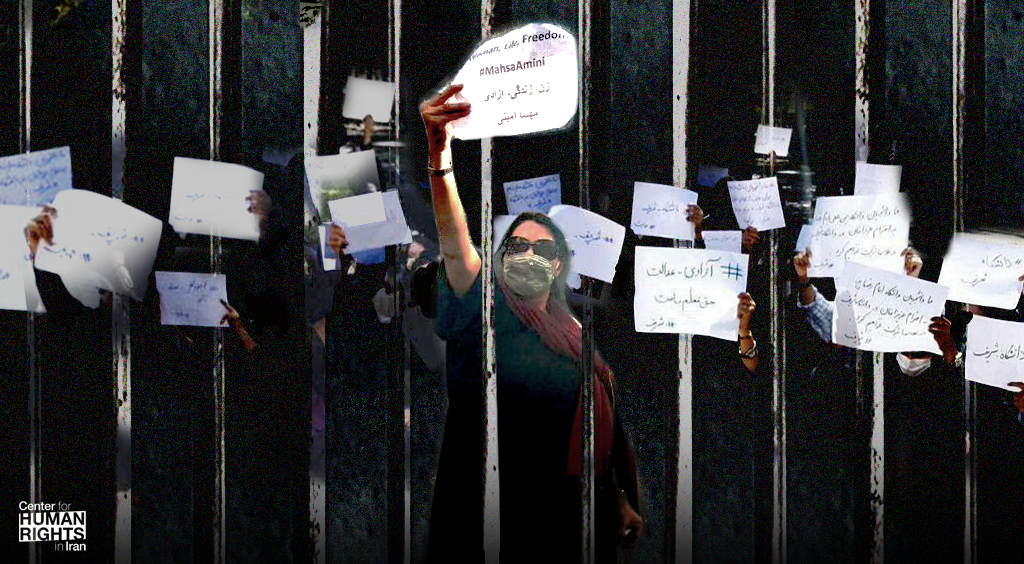
With violent protests in Iran now in their fourth week, Iranians living in the Cayman Islands are looking on with great concern.
Though they may be far from Iran, the fear of the morality police exists outside of that country’s borders for women like Jane (not her real name), who fled the Middle East to escape oppression.
Speaking with the Cayman Compass on the condition of anonymity for fear of retribution, Jane said while she would like to join in the protests that are being seen around the world, she and her friends here are afraid to be visible in their support.
“This is really is heart-breaking to see this new generation of young people who deserve to be free… [have freedom] of choice… [to be] persecuted the way. They have been going through so much. Just recently this morality police is attacking these people, imprisoning them and then they kill them. They abuse them. God knows what else they do to them,” she said.
Death of Mahsa Amini was breaking point
She said she wanted to come forward to raise awareness in Cayman and shine the light on the atrocities happening in her homeland.
She said some of the protesters, many of them students, have disappeared, and limited internet makes getting reports out of Iran difficult.
Protesting gender barriers in the cafeteria, male and female students have their meals outside — together and side by side.
Gilan University, northern Iran. Oct 11 #IranProtests #MahsaAmini #مهسا_امینی pic.twitter.com/1sbfjbrFyH
— IranHumanRights.org (@ICHRI) October 11, 2022
“We don’t know where are these kids,” she said, adding she fears for her own relatives.
The protests were sparked by the death of 22-year-old Mahsa Amini, who died last month while in custody of Iran’s morality police.
Protesters are calling for justice for Amini and are rebelling against the oppression of women.
A number of students and protesters have been killed in violent clashes.
Sagher Mahmood Bajwa, missionary at the Ahmadiyya Muslim Community Cayman Islands, in a statement to the Compass Tuesday, lamented the death of Amini, saying this was not the way of Islam.
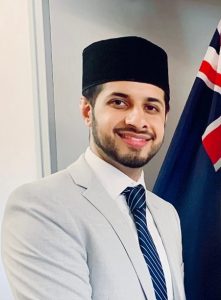
“What happened to Mahsa Amini was a tragedy and un-Islamic. God has made it very clear in the Holy Quran that “There is no compulsion in religion” (2:257). As an ambassador of Islam, it pains my heart when people gravely misrepresent my peaceful religion. The word ‘Islam’ literally means ‘peace’, thus any sort of action which disrupts the peace of society is un-Islamic. The Prophet Muhammad (peace be upon him) established great rights for women,” he said.
Bajwa added that no religion has given so much respect to women as Islam.
“It has declared mothers to be the most deserving of love after God and His Messenger and that raising daughters with respect promises one salvation. [It] proclaims that men who care for their wives are the finest of the believers.
“In Islam women are given the rights to education, to vote, to divorce, to employment, to speak their minds, and the list goes on. Thus, people who commit such atrocities to the like of what happened to Mahsa will certainly be answerable to God for their actions. We pray that may God grant eternal peace to the soul of Mahsa and fortitude to her loved ones,” he added.
On Monday, the UK Foreign Office issued sanctions on the morality police in its entirety, as well as both its chief, Mohammed Rostami Cheshmeh Gachi, and the head of the Tehran division, Haj Ahmed Mirzaei.
The UK imposed sanctions on five leading political and security officials in Iran for committing serious human rights violations.
Foreign Secretary James Cleverly, in announcing the sanctions, said the UK stands with the people of Iran who are “bravely calling for accountability from their government and for their fundamental human rights to be respected”.
“These sanctions send a clear message to the Iranian authorities – we will hold you to account for your repression of women and girls and for the shocking violence you have inflicted on your own people,” he said.
A call for justice
For Jane, watching the violence unfold has been scary, but not necessarily surprising, as she shared that several years ago she fled oppression in Iran knowing that things would not get better.
“I would say in that time, perhaps a generation ago, we were more obedient because we didn’t have enough knowledge. I left because I didn’t like the way things were, so I just closed my eyes and just left.
“I put myself through education in different countries and got educated and now I see that the younger generation who are doing the protest are aware of how the rest of the world is. They are aware of what freedom means,” she said.

Jasmin Ramsey, deputy director of the Center for Human Rights in Iran, told the Compass Tuesday via email the protests are ongoing in Iran despite violent repression by state security forces, especially in Kurdistan Province, where Mahsa (her Kurdish name was Zhina) Amini was born.
“Despite violent state repression, people are continuing protests around the country – be they school girls and boys, university students, or oil workers. The message to the government is clear by the two main slogans of these protests: “Woman, Life, Freedom” and “Death to the dictator!” meaning, people want fundamental rights including women’s rights, and an end to the crisis of impunity that runs rampant in the Iranian government,” she said.
All protest movements, Ramsey added, ebb and flow, but there is no end in sight to these protests right now because the people’s central demands have not been met.
These are part of the evolution of Iran’s protest movement, which aims for major social and political changes, she said.
“I was myself born in Iran and like many Iranians, have felt hopeless at times over the government in Iran’s policy of systematic repression. What gives me hope, and what gives many people hope, are the women, including young girls, who are helping to lead these protests and who are risking everything, including their lives, to demand basic and fundamental rights. The women of Iran hold the key to the country’s future,” she added.
Concerned for family
Jane said she worries for her female relatives as the oppression grows.
She recounted her cousin’s recent experience when she went to Iran for a family wedding.
Her cousin, who is Canadian, was arrested by the morality police, with all the women that attended the wedding, for mixing with the men, even though they were their husbands and children.
The 72 women, she said, were taken on a bus and put in a small cramped room.
“They couldn’t even sit down, there were that many of them, they couldn’t breathe because it was like a small room. [The morality police] wanted to scare them. My cousin was wearing long nails and had a bit of a nail polish on and they attempted to pull her nails out with a tool just to teach her that [lesson],” she said.
Jane said her cousin and the women were later released and immediately she flew back to Canada.
The event left her traumatised, Jane said, adding her cousin vowed not to return.
Though she feels “my country is a beautiful place”, Jane said she too was afraid to return.
She said she stands with the women of Iran and wanted them to know she was proud of their bravery.
Related Videos