Until the 18th century, mahogany trees were commonplace in Grand Cayman, but logging stripped the island of the tropical hardwood.
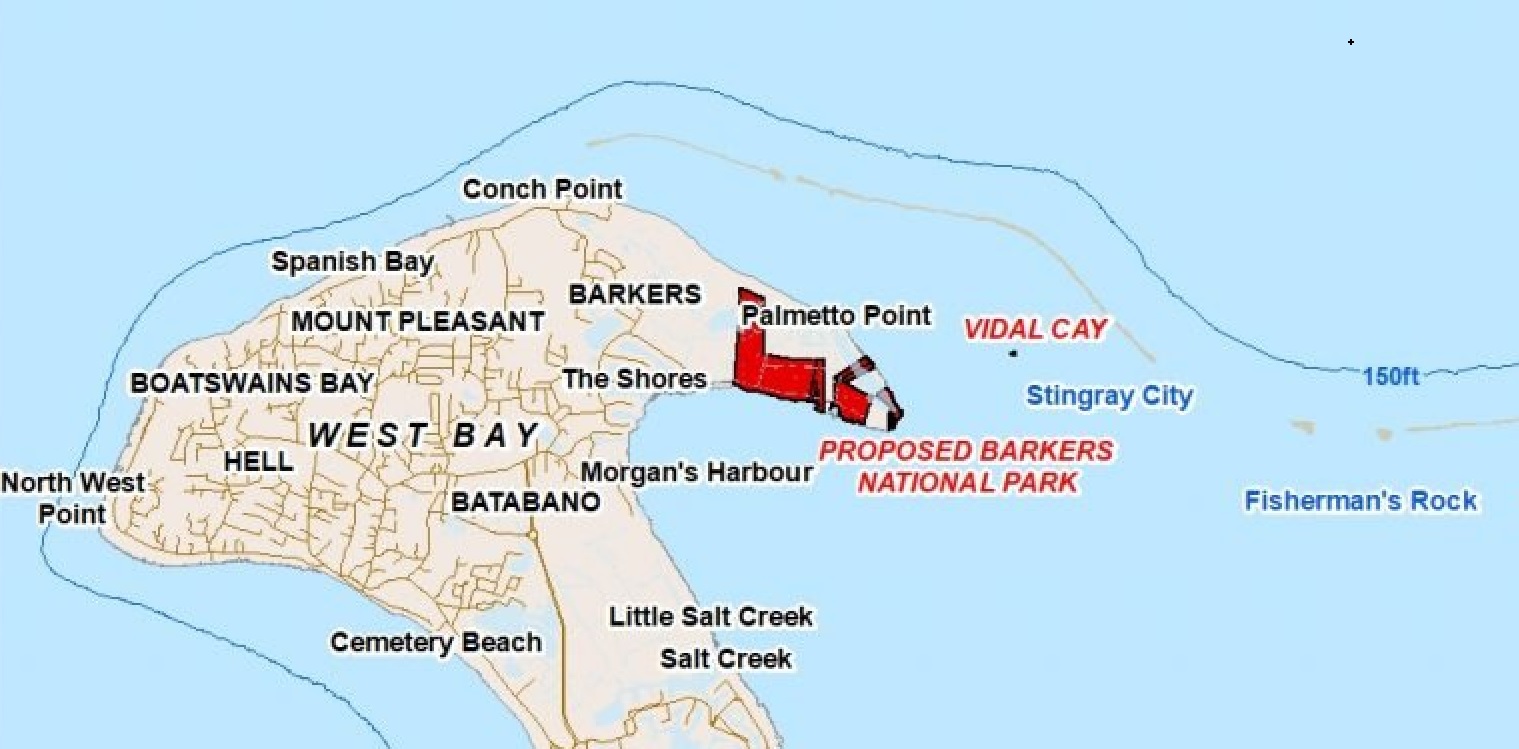
Now, a company in Cayman is looking to help repopulate part of the island – Barkers in West Bay – with the trees, by working with local developers to relocate any mahogany they might otherwise just tear down and remove in the pre-construction clearing process.

Aaron Knapik, director of Trans Pacific Networks, which is registered in Cayman, said his company is taking the initial steps to reintroduce into Barkers a native, mahogany tree canopy that was lost from much of Cayman due to deforestation in the 1700s.
“Our effort is all about aligning interests,” he said. “We all care deeply about Barkers and want to see it restored to both a site where it can preserve the natural environment, while also allowing us all to enjoy its beauty in ways that will not have a negative impact upon the area.
“Replanting the mahoganies is an important and necessary step that we can all agree will add a great deal back into the park. It is for our children, their children and the generations beyond them and there is no better time to start that process than today.”
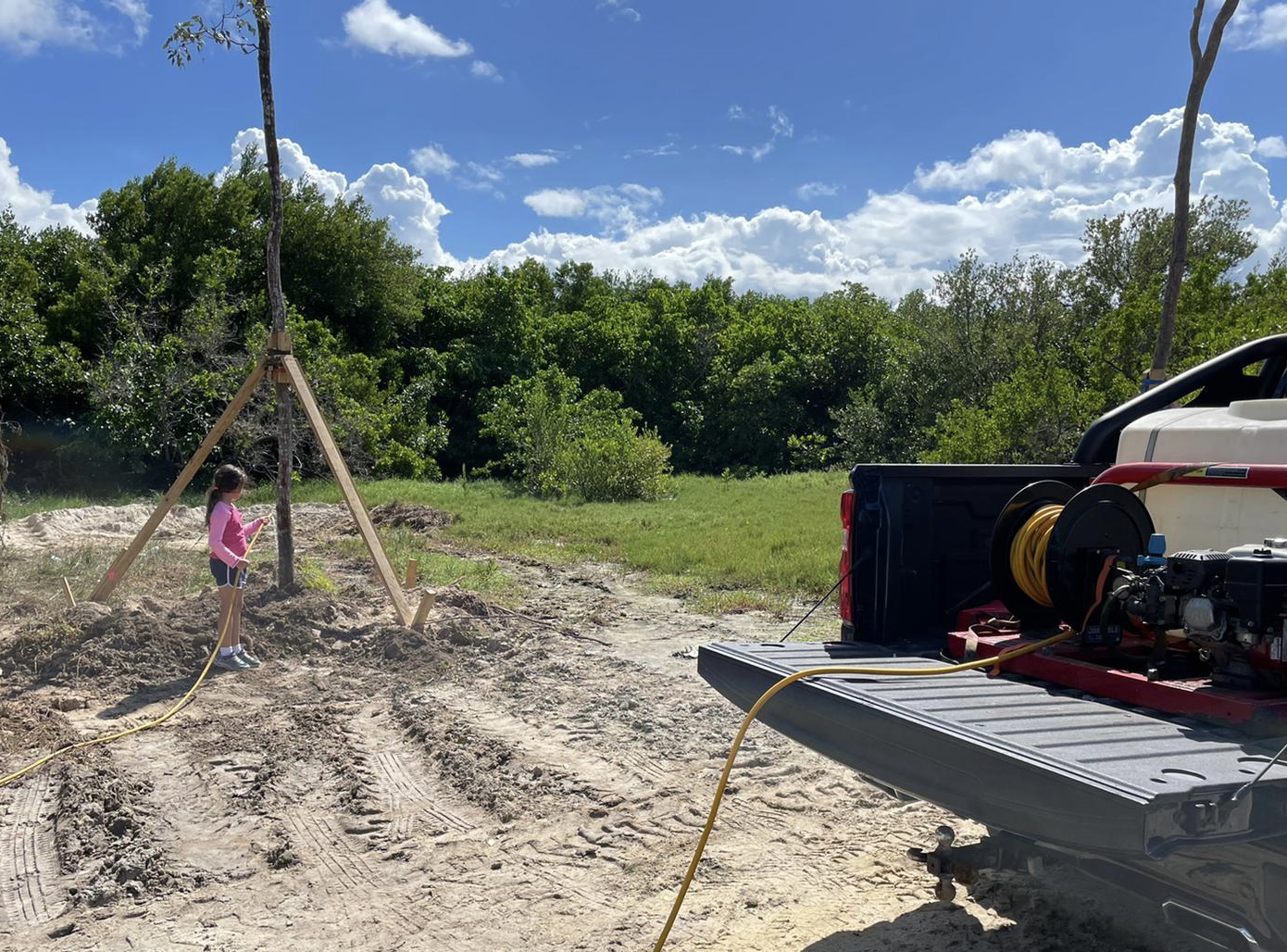
The company has made a commitment to plant or replant 165 mahogany trees in Barkers over the next three years, either by relocating them from new developments, or by planting new saplings.
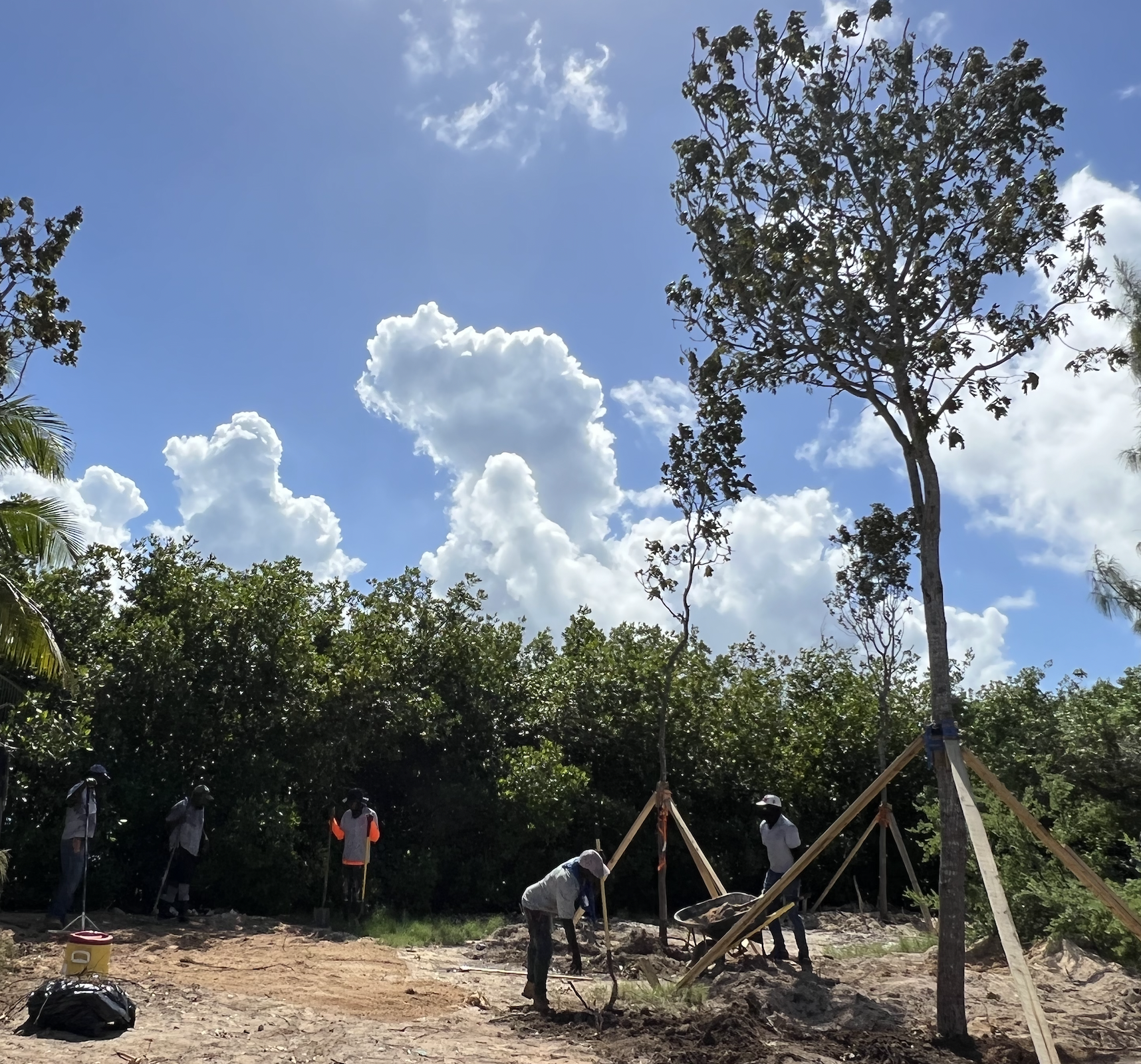
It has already relocated 15 trees from a development in West Bay by Morne Botes.
“By replanting trees, we improve the environment for other native plants and species and provide shade, shelter, comfort, store carbon, stabilise the soil and give life to the peninsula,” Knapik said.
His company is a subsea cable developer which is placing an underwater cable connecting Singapore to the United States.
Knapik says the company wants to give back to Cayman, and sees helping to more widely re-establish a native tree here as a means of doing that.
He told the Compass he hopes that this can, in some small way, start a conversation about the rehabilitation of Barkers as a national treasure and kickstart an effort to developing its potential as a popular national park.
Not quite a national park
Britain’s Prince Edward, the Earl of Wessex, launched Barkers as Cayman’s first national park in 2003, as part of the islands’ quincentennial celebrations. At the time, no legislation existed to establish or protect national parks.
While Cayman has no dedicated national park legislation, areas are protected under the National Conservation Act, which was passed in 2013.
However, much of Barkers is privately owned, and only a small area of it, on its peninsula, is legally protected.
The park has been long neglected, with potholed roads and illegal dumping sites found throughout the area.
Knapik hopes that the mahogany tree replanting project could be the vanguard for other similar initiatives to highlight the beauty of Barkers and its importance as an open space that can be enjoyed by the public.
The Department of Environment has partnered with Trans Pacific Networks on the project.
Vaughan Bodden, a terrestrial research officer with the DoE, described the initiative as a pilot project involving rescuing trees that were slated to be cleared at a development site and transplanting them to Barkers’ protected area.
“It is great initiative by Mr. Knapik and his company and will hopefully set a precedent of developers aiming to save significant local plant species from sites that are to be cleared. We are still in the monitoring phase of the pilot project to determine whether the transplant was successful and whether the recipient site was suitable for this species,” Bodden said.
Long history of mahogany
According to ‘The Cayman Islands: Natural History and Biogeography’, published in 1994, mahogany and other larger trees that are now not commonly found, were once used widely in Cayman.
It states, “For generations Caymanians depended on the local woodland for timber for house building, boat construction and for fuel, with the result that most of the larger trees have been felled. This appears to have resulted in the virtual destruction, at least in Grand Cayman, of the discontinuous 18-24 metre (60-80 feet) emergent canopy layer. Thus in Grand Cayman very little true woodlands, with high canopies, remains.”
According to the book ‘Wild Trees in the Cayman Islands’ by Fred Burton, “As early as 1739, Mahogany was being cut to supply timber for export. By 1889 all the useful Mahogany had been cut from western and southern Grand Cayman, and the ship builders had to look to North Side and Little Cayman for their materials.
“Few of the original old growth Mahoganies remain in Cayman today but there are still plenty of younger trees. Mahogany in Cayman grows best at low elevation and close to wetlands. This species is native to the West Indies and Florida.”
Bodden said that many of the forest areas in Grand Cayman that were cleared have now been urbanised, kept as agricultural lands, or have secondary forest with non-native and native species.
The importance, culturally and environmentally, of mahogany trees was highlighted earlier this year when the government invited the public to plant 70 mahogany across all three islands, as well as 70 other endemic or native trees in each district, as part of the ‘Plant a Tree for the Jubilee’ project to mark the late Queen Elizabeth II’s 70th year on the throne.
Advice given on planting mahoganies
Knapik said his company had worked closely with Bodden and Burton and the DoE’s entire Terrestrial Resources Unit “who reviewed our plan and guided us on what they believed best for the area”.
The National Conservation Council, through the National Conservation Act, issued the company with a permit to replant the trees. Permits must be issued for each phase of the replanting, he said.
Mark Thompson from Thompson Landscapes is advising with the replanting and how to ensure the highest survival rates for the mahoganies.
He said, “We are proud to be part of this project that not only saved these mahogany trees that would otherwise have been lost but to recreate something special at Barkers. It is not just about a one-time effort to move these trees; it is about ensuring they establish themselves back into their natural environment to recreate part of the dominant canopy that has been missing for generations.”
A press release from Trans Pacific Network stated that Coe Group Ltd. developer Botes had approached the company to say he had approval to clear a lot in West Bay for housing and he wanted to ensure the mahogany trees there were not lost.
“We were thrilled to take Morne up on his offer and save the mahoganies, placing them into an area where they can thrive and be enjoyed by all,” the company stated.
A Cayman Islands-based company, TPN will open and staff its Cayman offices in early 2023 before their Singapore-to-US West Coast network is operational.
Related Videos