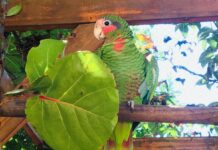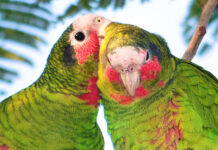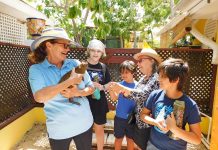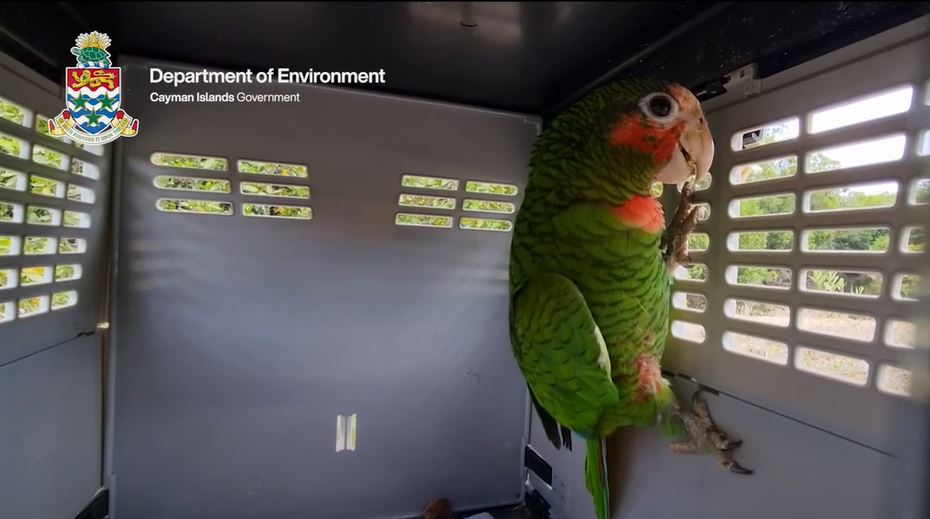
The Department of Environment, together with the Cayman Parrot Sanctuary, released their 34th parrot into the wild on Wednesday, 31 May, in celebration of World Parrot Day.
The DoE’s enforcement staff confiscated the parrot named Mindy after the bird was discovered unregistered at a private residence during the Terrestrial Resources Unit’s annual parrot survey, according to a social media post by the DoE.
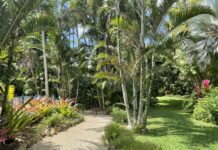
The parrot was released into the wetlands.
DoE terrestrial research officer Jane Haakonsson, in a DoE video on the release, because the location was chosen as it was one of the densest areas of known suitable parrot habitats.
“Normally what we do when we rescue a bird is to release it where it was originally from and where it was found injured, for example, but because Mindy was in private hands illegally, we do not actually have that information of where she was originally from,” she said.
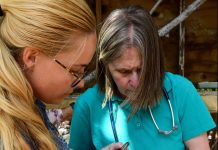
Haakonsson said the bird had been in expert care for the last month in preparation for release.
“We made sure that she could fly properly and strongly and that she knew what to eat and what not to eat. She’s a young bird and a female so we have all faith in her making a full recovery and hopefully joining her family and friends out here,” she said.
Back in 2020 the DoE registered a total of 326 Cayman parrots at the close of its six-month amnesty exercise.
Haakonsson reminded that every bird counts, especially on small islands “where they have such a narrow range”.
“So to increase the population’s resiliency, it’s really important that we do our bit for every single bird. At this particular time of the year, that means looking out for the wild parrot nests. We’re so fortunate to have these birds, our national bird, nesting all around Grand Cayman, even in people’s yards,” she said.
It is illegal to disturb parrots or nests.
Haakonsson urged the community to look out for the parrots and their nests.
“Make sure that nobody’s harassing them, that nobody is trying to steal babies or eggs. It is against the law. These birds are protected at all times,” she said.
Any unregistered Cayman parrots being kept as pets may be seized by DoE conservation officers, and the bird-owners can be fined for possessing or keeping them illegally. The maximum penalty for this is a $500,000 fine and/or four years in prison.
Under the amnesty project, each registered bird was given a full medical check-up and were all outfitted with one identification leg band and implanted with a microchip.
These identifiers, the DoE said at the time, will enable enforcement officers to readily identify poached parrots and enforce the law.
“Help protect our National Bird by monitoring any known nests and reporting any suspicious behaviour to the DoE on 949-8469 or [email protected],” the DoE said in its post.
Related Videos