


The Court of Appeal has said the Labour Act does not apply to charities – and that includes their employees.
President Sir John Goldring, in a written judgment this week, overturned a 2023 Grand Court ruling which said that people who work for charities are covered by the law.
“That would not seem to me to be logical,” he wrote, explaining that the legislation rules out use by charitable organisations, and so their employees must also be excluded.
The decision appears to mean that charity workers are not entitled to the rights afforded by the law, such as sick pay, vacation, minimum wage and maternity leave.
They are also not covered by protections including the ability to bring unfair-dismissal proceedings.
‘A procedural bar’
Acting Justice Alistair Walters last year in Grand Court determined the Department of Labour and Pensions acted unconstitutionally in not investigating the alleged unfair dismissal of a charity worker.
The court heard that the department had quoted to the former employee a section of the law stating it does not apply to certain categories of employer – charitable organisations, churches and the public service.
However, in his 47-page judgment, Walters had said the law does not prohibit or restrict any employee or class of employee themselves from bringing unfair-dismissal proceedings.
He said the section of the act which said it does not apply to charities amounted to “a procedural bar” which has not been justified as “a legitimate or proportionate measure”.
Its use to avoid investigation contradicts the Constitution of the Cayman Islands which provides a person’s right to a fair and public hearing, he added at the time.
‘Difficult to accept’
The attorney general and the Department of Labour and Pensions appealed the judge’s decision, and the case was brought back before the appeals court on 30 Aug. 2023.
During the hearing, Michael Smith of the Attorney General’s Chambers told the court that the Labour Act should be read and interpreted at face value.
“The act clearly precludes persons employed by charitable organisations from bringing claims of unfair dismissal,” he said.
However, Rupert Wheeler, the attorney for the respondent, said the previous judgment addressed an implied right which, if struck down, would result in an act of discrimination.
“If a registered company was to change its designation from a for-profit entity to a charitable entity, that would mean the rights which the employees previously guaranteed would change or even cease to exist, this… should not be the case,” he said.
Goldring delivered the court’s final judgment on 18 Jan.
In his summary, he said the question of whether the charity worker had a right to proceedings under the Labour Act “is a straightforward matter of statutory interpretation”.
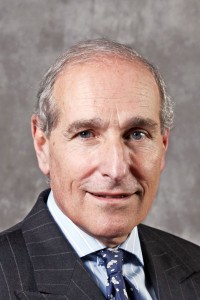
“Does the Labour Act confer on the respondent a substantive civil right vindication…,” he said.
“Or, when excluding application of the act to charitable organisations, must the legislature have intended to include those employed by the organisations?”
He said he found it “difficult to accept” that Parliament intended the law to exclude charities but enable their employees to retain associated rights.
“That would not seem to me to be logical,” he said.
“The inexorable consequence of excluding specific employers from the application of the Act must, it seems to me, be to exclude employees of those employers.”
No hearing
Care worker Shelliann Bush, a 10-year employee of The Pines Retirement Home, claimed she was fired in November 2021 for not having a COVID-19 vaccine.
She told Grand Court in April last year, she had “serious religious reservations” about being vaccinated and should have had freedom of choice about what goes into her body.
Also, there was no government requirement to take the vaccine and nothing in her current contract required her to take it, she said.
However, the retirement home told the court that she had been dismissed for serious misconduct as she allegedly went into work unwell with COVID-19 and infected other staff.
Bush instructed her attorneys to assist her in bringing a claim for severance pay, compensation for unfair dismissal and damages for wrongful dismissal from the home.
However, the Department of Labour and Pensions said it could not investigate the matters surrounding her termination because she had worked for a registered charity.
It said it “only has jurisdiction to address matters and entities covered under [the Labour Act]” and said charitable organisations are not included.
The department closed the matter and suggested she seek another medium to address her complaint – but Bush said there was none available.
The former care worker had taken the case to Grand Court last year, saying the government had breached her rights and freedoms under the Bill of Rights.
She claimed, during the 1 March 2023 proceedings, that she was denied a right to a fair hearing, and was treated differently to employees of non-charitable organisations.
Acting Justice Walters had ruled in favour of the applicant.
Related Videos












It is well known that although covid 19 was rarely fatal, it was far more dangerous to old people and those who are immunosuppressed.
If I was a senior citizen living in a home like the Pines I would be extremely concerned that an employee had not been vaccinated against covid.
Of course she should have been fired for her refusal to protect her patients.