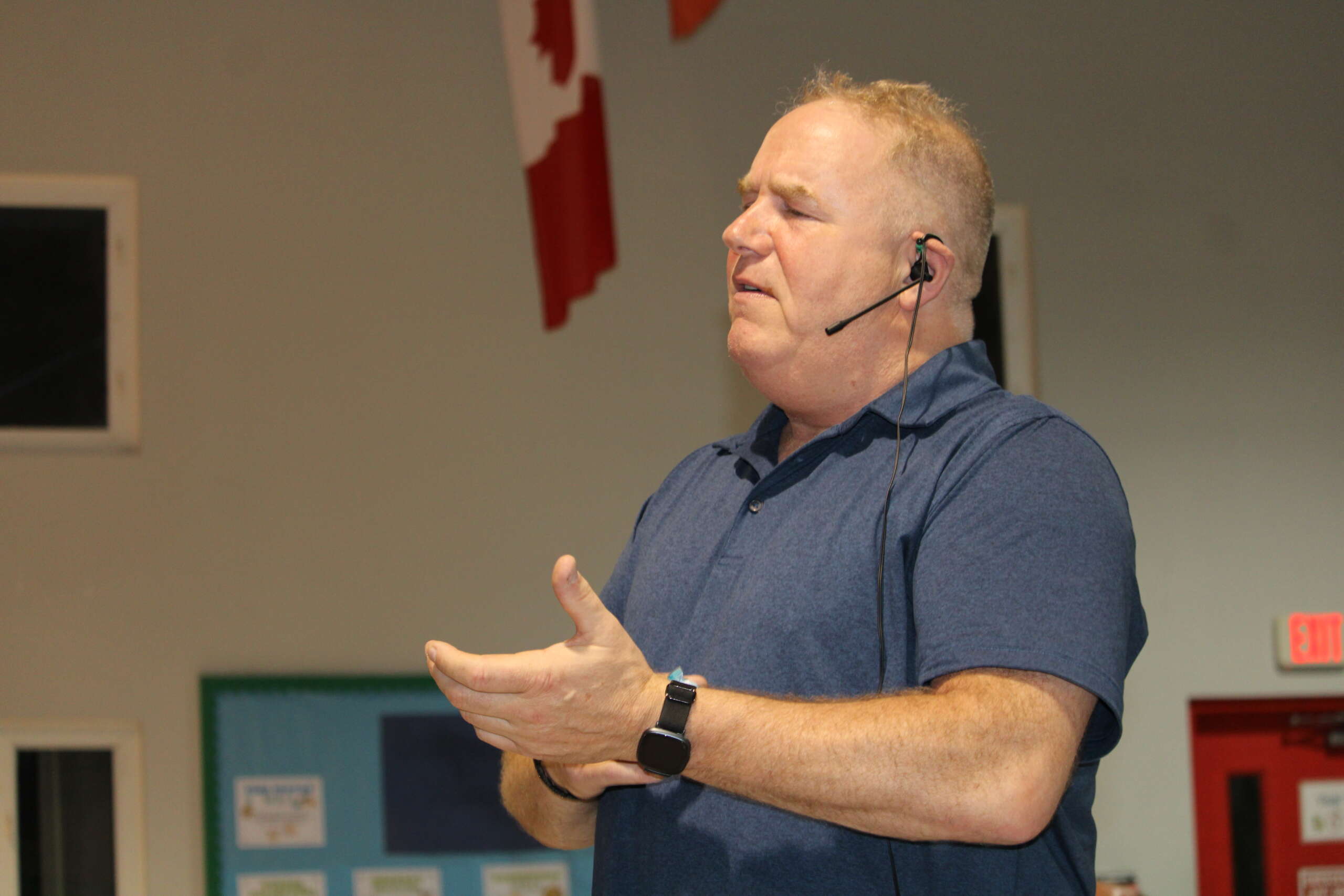
It takes bravery to ask for help dealing with addiction, motivational speaker Rich Barnes told community members at a recent public event.
In fact, it took him 28 years to get to the point where he could say no to the alcohol and cocaine that had dominated his life, marring moments like the birth of his first child.
But he reminded listeners that help is within reach, even for those who have been in the clutches of addiction for most of their lives.
Barnes has recently been touring schools and organisations to share his story in the hopes of reaching those who are similarly battling addiction. He led free public sessions at John A. Cumber Primary School and the Cayman Brac Public Library last week, which were hosted by the Alex Panton Foundation, Boyz2Men and the National Drug Council.
‘Every day gets better’
“About 17-and-a-half years ago, I had a butcher knife on my wrist, and I was going to kill myself,” he began.
It took reaching an all-time low for Barnes to be able to finally say no when his dealer came calling. But in that moment, he was able to find clarity.
Barnes said his addiction began when he was only 10 years old, seeking a way to cope with a difficult home life. At 17, he tried cocaine for the first time and instantly became addicted. From then on, he needed hits daily, even when it led to vomiting and blowing blood out of his nose every morning.
He shared what it was like admitting for the first time that he was struggling with addiction. Though even after that, it took another five years to embrace sobriety. Over that time, he recalled driving his wife, who was in labour, to the hospital in an addled daze and taking a hit off the back of a hospital toilet shortly after his daughter was born.
Barnes said he reached a breaking point at 38 years old, nearly three decades after his first taste of alcohol. After that moment, he found a new lease on life, surrounding himself with people who had already progressed in their recovery and were able to extend a helping hand.
Once he better understood how to handle his addiction, Barnes turned to helping others by starting Richful Thinking, his motivational website. He first visited the Cayman Islands in 2018, and he said he was grateful to return and share his story.
“I’m grateful to the people here who have been struggling,” he said. “I want to let you know, every day that we keep going, every day gets better and better and better.”
Community impact
Emily Kelly, Alex Panton Foundation programme manager, said bringing in Barnes to speak has had a tremendous impact on community members, especially young people.
“What he’s shared about his story has really resonated with quite a few students who have reached out to him directly to speak further, which speaks volumes to the impact that this is having on our community and really demonstrates the need, especially amongst our youth,” she said.
She said the foundation wanted to promote Barnes’ message considering the relationship between substance abuse and mental health.
“People who struggle with existing mental health issues tend to turn to substance use as a means of self-medication,” she said. “When they start to do that, it can impact existing mental health disorders, negatively exacerbating them. It’s kind of this vicious cycle where they feed into each other.”
Just like any other mental health disorder, though, a substance use disorder is treatable, she said.
Looking for help?
If you, or others you know, are struggling with issues similar to those raised by this article, there are resources available to help.
- In an emergency, call 911.
- Alcoholics Anonymous of the Cayman Islands. Call 926-9044 or use the online contact form. The fellowship of community members meets regularly to help people recovering from alcohol addiction stay sober. A list of public meetings is available on the website.
- Narcotics Anonymous Cayman. Call 929-6262, email [email protected] or visit the website. The group is a nonprofit fellowship of people recovering from addiction who meet regularly to stay clean.
- National Drug Council. Call 949-9000 or email [email protected].
- The Alex Panton Foundation. The nonprofit facilitates support groups and offers resources on substance use disorders. For information about support services, email [email protected] or visit the website.
Related Videos