

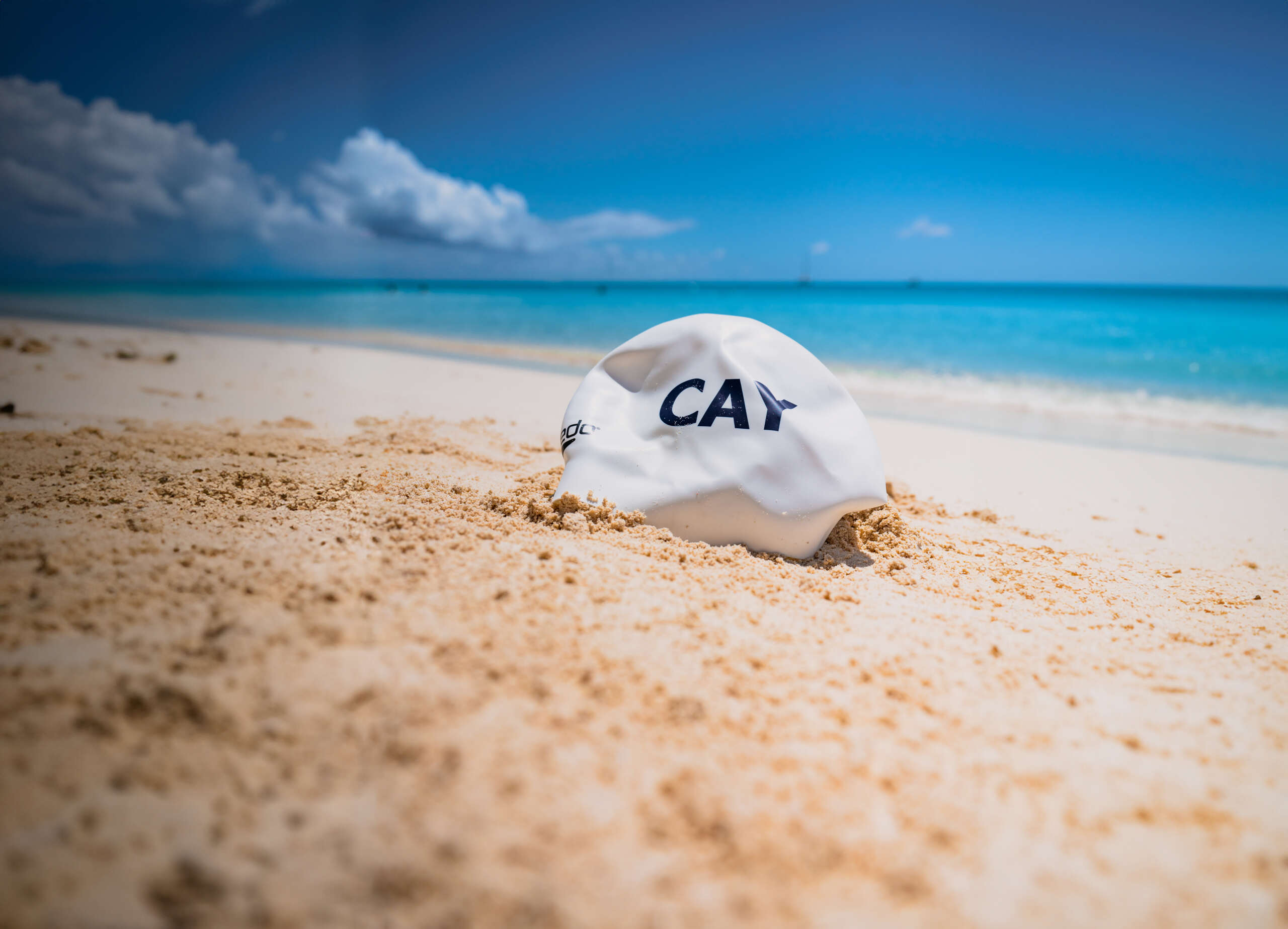
As far back as anyone can remember, football has been the Cayman Islands national sport. But the thrilling performances of the islands’ athletes in the pool have prompted a changing of the guard.
The decision by the Ministry of Sports to make swimming the official national sport is considered just reward for those successes – including the first-ever world championship gold medal.
But the implications are still being digested of swapping an accessible sport like football – that can be played on a scrap of beach or in a backyard with T-shirts for goalposts – for one where the price to participate is typically far higher.
While some celebrate the change, and point to the ocean as a free training ground for the next generation of champions, others stress the need to broaden access to opportunities to use pools and coaches – especially for public school youth.
The proposed change was announced at a National Youth and Sports Policy Workshop last month.
After gathering results from the national sports survey, which was conducted through March and into April, policies and initiatives were proposed at the workshops, held on 15-19 April, with those participating agreeing unanimously that swimming should be Cayman’s national sport.
‘Swimmers are thriving’
“At present, the swimmers are thriving,” Teresa Echenique, chief officer of the Ministry of Sports, told the Compass. “In a couple years, it may be another sport that’s thriving, and the reason that we see this is because these associations are constantly evolving and are able to support and drive our athletes.”
Echenique noted, however, that while swimming is the most successful at the moment, all the other sports will not be blotted out.
“Inclusiveness is key in all that we are doing when it comes to sports and when it comes to our young people,” she said. “We want no one to feel that they are left behind… and we don’t want the associations to feel left behind.”
During the 2022, 2023 and 2024 CARIFTA Championships, Cayman swimmers brought home 160 medals combined. Within those years, Cayman swimmers also dominated the collegiate scene and medalled at events like the Youth Commonwealth, Central American and Caribbean, and Island Games.

The greatest sporting accomplishment, however, came in 2022, when Jordan Crooks won an historic gold medal for Cayman at the World Swimming Championships in Melbourne, becoming the first Caymanian world champion in any sport. Meanwhile, the last time football (soon to be the former national sport) secured a medal was in 2015.
Crooks has no doubt established himself as Cayman’s top swimmer of all time, but there were many other Caymanians who paved the way and brought their own success to the sport over the years, including siblings Lara and Geoffrey Butler, Lauren Hew, Heather Harvey (née Roffey) and the prominent Fraser brothers Brett and Shaune.
Underprivileged Caymanians left behind?
The new national sport, governed by the Cayman Islands Aquatic Sports Association, which has more than 500 members, is viewed in some quarters as being dominated by foreign residents, but there are no statistics to confirm that perception.
Organisers did confirm, however, that at the 2024 CARIFTA Championships, Caymanians comprised the majority of athletes at that competition.
The championships featured 31 swimmers, 58% of whom were Caymanian, according to CIASA officials.
Sports Minister Isaac Rankine defended the apparently negative narrative surrounding the sport, emphasising the point of inclusiveness.
“The perception may be that there is more foreigners in it, but we do have a lot Caymanians, and more are getting involved,” Rankine told the Compass. “We have Sierrah Broadbelt, who is as Caymanian as you can get; she might not have the Caymanian last name but she is a McLean. But having foreigners in there also makes our kids competitive too.”
He added that John Gray currently has a swim club and credited CIASA for its willingness to start training athletes at Clifton Hunter High School but, according to Rankine, “an issue with the pool” is being addressed.
Swimming considered too expensive for some
However, one parent whose son took part in swimming for a number of years said keeping him in the sport became too hard on his pocket, and he opted to change sports to one where his boy trains for free.
“I’ll be real: Only people who have money are the only ones in swimming,” the parent, who asked to remain anonymous, told the Compass.
“I was talking to one of my friends in the Bahamas, and in his island, you are getting the best swimmers for free versus Cayman where you are getting the best from who can afford it,” he said.
He further noted that there are many underprivileged kids who are talented swimmers but will never be able to swim competitively for their homeland.
“I am talking about real Caymanians,” he said. “You think anyone from Windsor Park can say ‘I want to be a swimmer’? There is so much talent going to waste because parents simply can’t afford it.”
The government has purchase agreements with eight focus sports – including swimming – where they all receive $150,000 per year. However, there are no initiatives under CIASA that enable those who can’t afford the sport to train.
The Bahamas and Jamaica both have free government swimming programmes where many underprivileged athletes get the opportunity to compete and qualify for regional and international events.
Cayman’s only initiative close to those is the new Swim Free programme, which was launched by the Flowers family, conducted throughout primary schools. However, that programme’s purpose is not to identify talent, but solely to teach kids to swim.
Transportation issue
Former head coach for Camana Bay Aquatic Club Grant Ferguson, who has branched out on his own, endorses what the Flowers family has done, noting that “it’s a recipe for success”, but said once the kids move on to high school, it’s important to capitalise on what they’ve already learned.
“If it’s not done for free, nothing is gonna happen at all,” Ferguson said. “I think it’s incredibly important to attract the locals and get them involved from a very young age, but doing it correctly and slowly. From there, you put them in a development programme.”
He added that transport is the biggest issue outside of some Caymanians’ inability to afford the sport. He suggested that government allow training for those interested in competitive swimming to take place during the school day or as part of after-school initiatives where they could take the school bus home.
Ferguson has coached Crooks, and continues to train many locals for free. He recently hosted a free water-polo introduction class for at-risk Caymanian boys searching for purpose. He said some of the best swimmers are within the government schools.
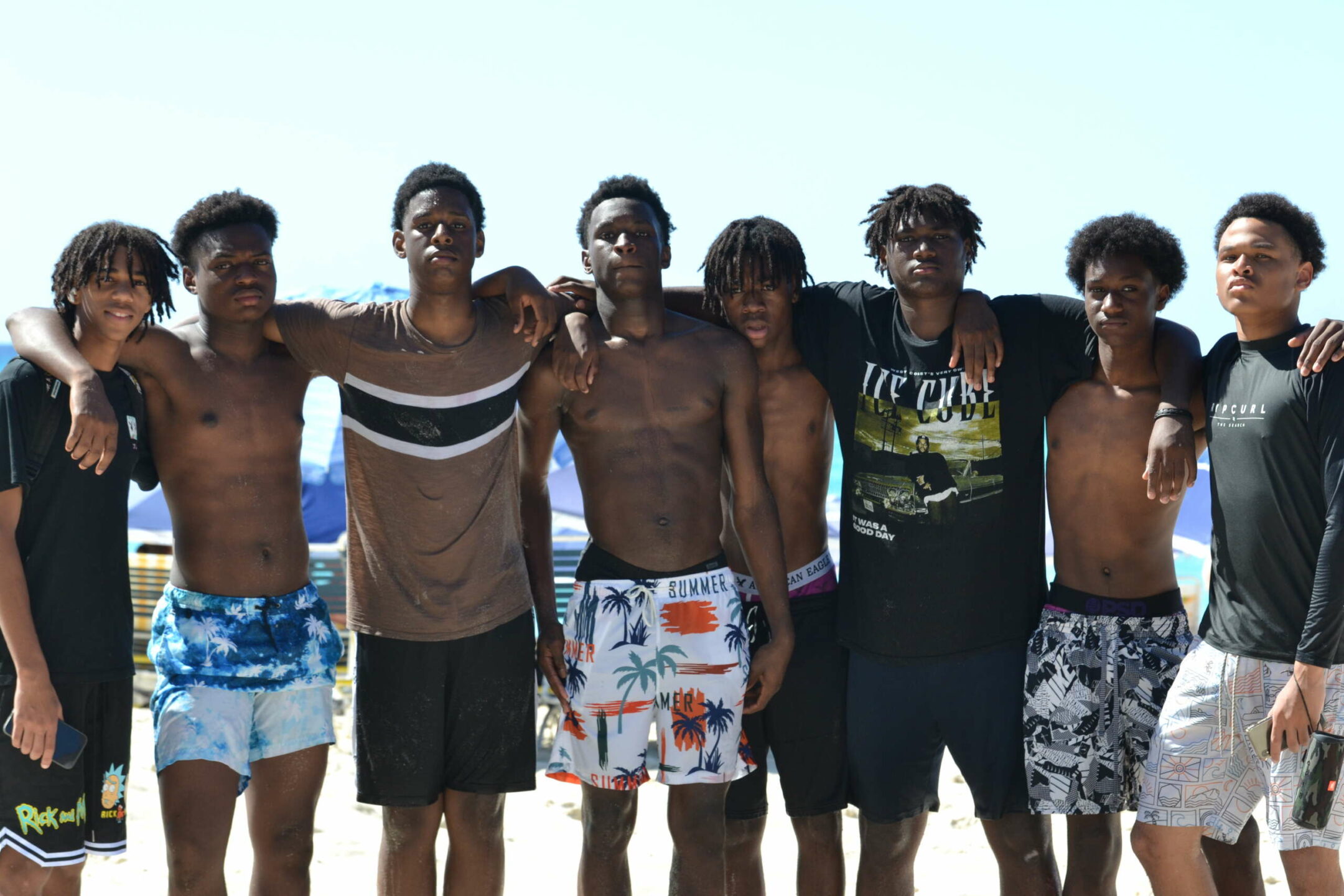
He said he has given, and will continue to give, his time for free to Caymanians, but admitted that sponsorships are needed to get the best results.
Aquatic centre update
The long-awaited aquatic centre that will feature a 50-metre pool, could start to take shape later this year, according to Rankine.
“We are hoping by the end of this year, we’ll have something to show the public,” he said.
The project, which has an expected price tag in the tens of millions, has been in the works for the last 21 years. But, since last year, movement on the centre has picked up speed.
“We are probably the only government that is really pushing to get this done, and I must credit the former minister [Bernie Bush],” Rankine said.
While it is recognised that the aquatic centre will open up endless opportunities, not just for athletes but also for sports tourism, Ferguson ended by saying students at John Gray should be given priority to use the facility.
“Can you imagine getting that new pool next to John Gray? We could send them all to the Olympics.”
Milestones in Cayman swimming
Related Videos








The new 50 meter pool would be a massive boost to our already highly successful swimmers. However I find Mr Ferguson’s suggestion that John Gray students be given priority to use the facility out of order. It’s a national facility like the track and field stadium, that is also close to John Gray, but no school is given priority there.