

Traffic incidents are on the rise in the Cayman Islands, and government officials are deciding how to respond. That could mean harsher punishments, like a points-based demerit system, to penalise dangerous driving practices.
Statistics currently show Cayman roads becoming less safe. Traffic offences reported to the Royal Cayman Islands Police Service rose 14% in 2023 to 10,716 incidents.
Eric Bush, chairman of the National Road Safety Committee, spoke with the Cayman Compass about road safety proposals from the Ministry of Planning, Agriculture, Housing & Infrastructure, where he is chief officer.
“I think the community recognises that we have too many accidents, and certainly too many fatalities,” he said. “Over the last five or so years, we’ve averaged over 10 fatalities a year.”
So far in 2024, Cayman has experienced two fatal accidents, both in March.
Bush noted that these traffic deaths are not just statistics. Each fatality means real impacts and pain for families, friends and communities. He said it will take the combined efforts of residents, law enforcement and leaders to improve road safety.
Proposed legal changes
Cayman is not alone in its traffic woes, Bush said, explaining that the islands can take guidance from best practices around the world.
One change the ministry may bring to Cabinet is implementing a demerit-based system that would track a variety of offences, in particular impaired driving, being distracted by a handheld device, and excessive speeding.
“Right now, every incident is treated singularly,” Bush said. “What other jurisdictions have done, which seems to be effective, is that they combined [the incidents].”
Bush said potential punitive measures include monetary fines, restricted driving, losing the ability to get car insurance, and imprisonment, depending on the severity of the incident.
While legislation is in the works, the government is also looking at immediate preventative measures to implement on the roads.
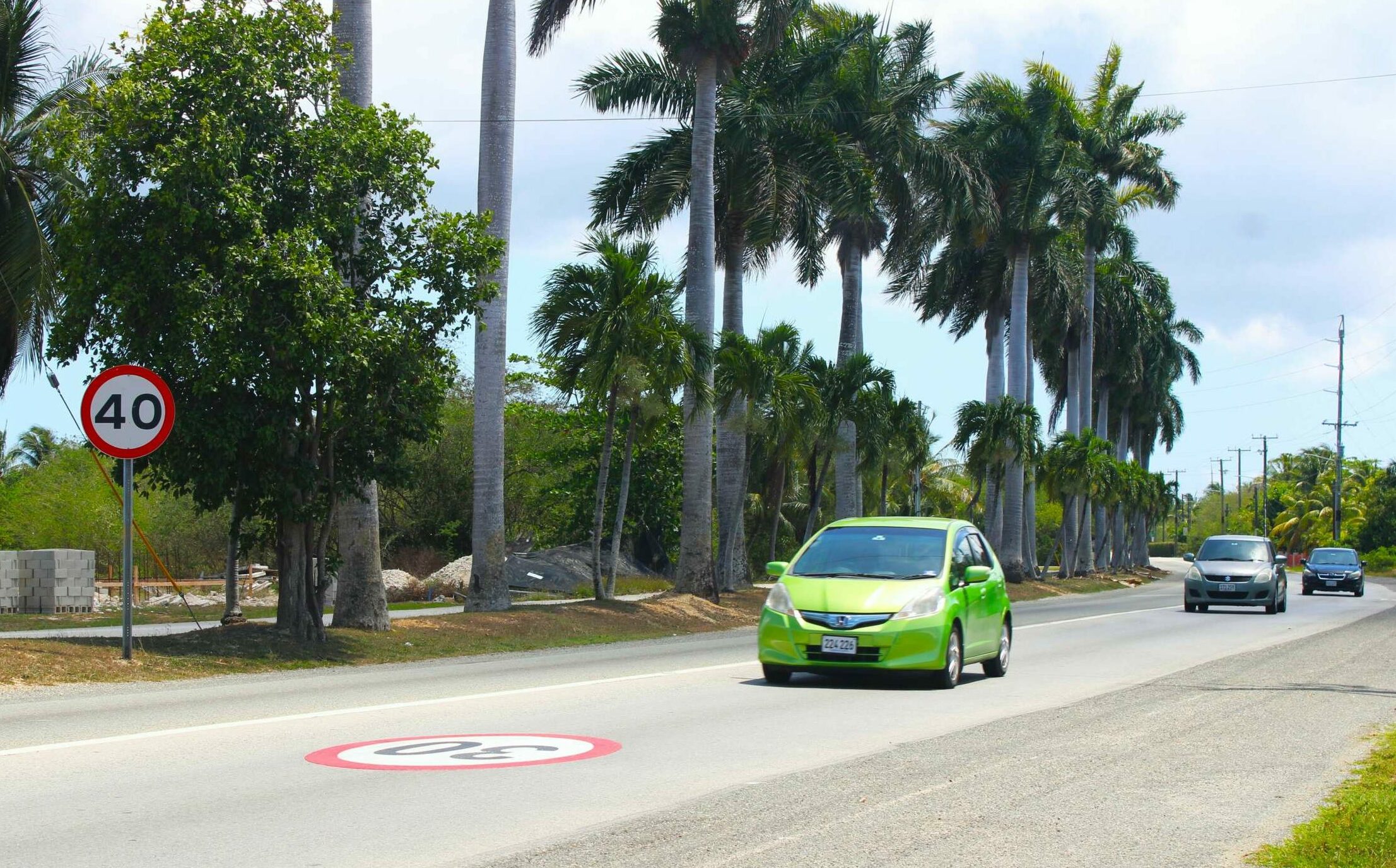
One example is painting highly visible speed limits directly on roads, like those recently added in Savannah. Crews are also installing more pedestrian crossings and radar signage to alert drivers.
Importing safer vehicles
The Department of Vehicle and Drivers’ Licensing has registered more than 50,000 vehicles to operate in Cayman. Bush added that about 300 vehicles are imported every month.
With more cars comes the potential for more accidents, Bush explained, and he wants to ensure the safety of additional vehicles entering the islands.
Faulty airbags, responsible for serious injuries, are becoming particularly worrisome, he said.
As a precautionary measure, Bush said his ministry is proposing new inspection regulations at the point of importation.
“Right now, anybody can import a car from anywhere, as long as it meets the basic standards,” Bush said. “But those standards are very basic.”
He said new standards would be akin to those in North America and Europe. While the changes would need to come before Cabinet, Bush said he has heard “nothing but support” for such safety measures.
He said government is also paying “far better” attention to vehicle recalls.
East-West extension coming
One of the most significant projects aiming to relieve some traffic congestion is the East-West Arterial extension, part of which will cut through the Central Mangrove Wetland.
The project has divided public opinion. Proponents have lauded the potential to improve rush-hour traffic and bring more amenities to eastern communities. Opponents have expressed serious concern over the impact of construction on the wetland.
While road improvements can only go so far in addressing traffic woes, Bush believes the highway will “make a massive difference to improving lives and the livelihoods of those in the eastern districts once it’s built”.
An environmental impact assessment of the project is ongoing, but Bush said it is in the final draft stages. He said the overseeing committee should soon present the government with a preferred route. Once Cabinet grants approval, residents will have an opportunity to give their feedback.
Community buy-in
While law enforcement and infrastructure changes play a role in road safety, Bush stressed that community members have to actively engage with efforts to change.
“It’s only through community buy-in and responsible driving that we can do this,” he said.
That thinking was part of the motivation for the “Road to Zero” campaign, which encourages motorists to help bring road fatalities down to none.
Representatives have promoted the mindful driving campaign at events like the Capella Music Festival and other social gatherings.
“Once you take the pledge, if you’re conscious about it, it actually changes behaviours,” Bush said. “I’ve been guilty of looking at my phone whilst driving, but one day, a month after I’d taken the pledge, I reached for it but said, ‘Nope, Eric, you took the pledge, so put it down.’ … Until the community buys into this, we’re not going to see any positive change.”
Community members can learn more and take the pledge online.
Related Videos







Toyotas, Hondas, and other Japanese brands should still come in, but from the US market as they are generally safer and equipped with more safety options.
Only allow vehicles from the United States / UK/EU To come in and ban Chinese, and Japanese vehicles from coming in on the island. (I mean Vehicles coming from Japan directly not the brand)
The Chinese and Japanese Vehicles do not meet higher standards as in the US and are mostly lighter and are not equipped with airbags, making it more probable for people to die in those vehicles. Chinese vehicles are scams, they break down and have faulty tech. Cayman should not be supporting communist countries like them.