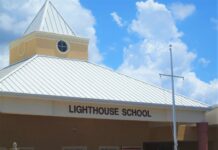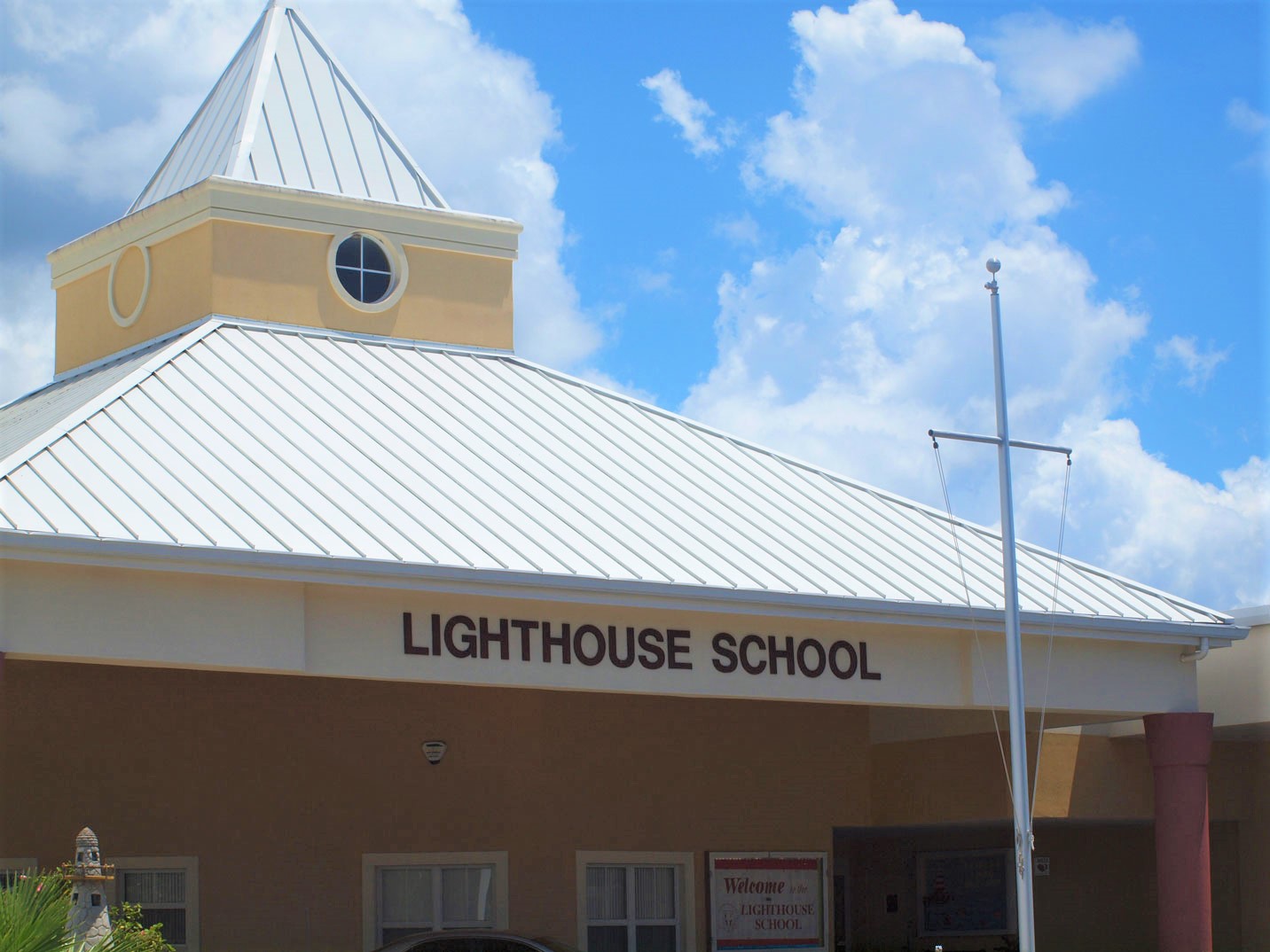
The Lighthouse School, Cayman’s only dedicated education facility for children with physical and learning disabilities, is full to capacity.
Schools are working to accommodate high numbers of young people with severe learning difficulties in mainstream classrooms. Specialist support, including ‘satellite classes’, has been provided at key schools to help meet the challenge, accelerating a move towards an ‘inclusion’-based approach to special needs students.
In the longer term, an expanded specialist school is still needed and plans have been outlined to increase capacity from 118 to 200 students.
Designs for a new building, gardens, playing courts and a hydrotherapy pool were submitted to the Central Planning Authority this month.
That project is likely to take some time to complete. Meanwhile, there is a waiting list of 25 children for the school and educators warn of increased prevalence and diagnosis of a variety of learning difficulties among students in mainstream schools.
Of those 25 children, 19 are being home schooled or attending private institutions with specialist support. Six are accommodated with intensive specialised support at mainstream government schools.
Beyond that, educators warn there is a high prevalence of students with more mild learning disabilities as well as a number of other children who may qualify for enhanced support.
The Ministry of Education says it is providing additional staff and specialist classrooms in mainstream schools to meet the demand as it progresses the expansion of the Lighthouse School.
Jon Clark, principal of Cayman’s biggest secondary school, John Gray High School, said the system in general is “doing a better job of identifying and diagnosing” issues that might have been dismissed in the past as behavioural.
But he cautioned, “The bigger picture is we have larger numbers of children with special needs.”
In the absence of sufficient places at the Lighthouse School, John Gray has, for the past 3 years, established a specialist learning support class within the campus run by trained special educational needs staff, some of whom were relocated from Lighthouse.
“It has actually been very successful for us,” he said. “Many of them have responded to raised expectations.”
John Gray’s most recent inspection reports praised the school’s “inclusion base” and programmes for those with special education and other needs.
Inclusion Cayman, the non-profit that acts on behalf of people with intellectual and developmental disabilities, has long pushed for an ‘inclusive education’ policy.
The lack of space at the Lighthouse School appears to have accelerated that approach.
Satellite classes
The Ministry of Education and Department of Education Services, in response to queries from the Compass, said it has implemented several measures to support children with diverse learning needs as it works towards the expansion of the Lighthouse School.
These include:
- a satellite class at the Joanna Clarke Primary School,
- an autism-specific class at Sir John A Cumber School,
- learning support classes at John Gray and Clifton Hunter.
“These initiatives allow us to provide specialised support within mainstream school environments, promoting inclusivity while addressing immediate needs,” the joint statement said.
“Our goal is to ensure that every child receives appropriate support, whether in specialised facilities like the Lighthouse School or through comprehensive support in mainstream settings.”
Clark believes that the number and variety of special education needs require a combined approach.
At John Gray, he said there are 160 students that are on ‘school action plans’ indicating some form of specialist need. But the range of issues runs the spectrum from academic challenges that can easily be dealt with in mainstream education to severe learning disabilities that present more complex challenges.
While he believes the school now has a more sophisticated infrastructure for addressing a much wider range of difficulties, he said there were some issues that required more intensive support.
“Expanding the Lighthouse School would be a good thing because we are seeing an increase in the number of children coming through with significant special education needs,” Clark said.
“Some students have come to us from Lighthouse and done really well. Ultimately we need both.”
Wait for evaluation
Compounding the problem are reports of long wait times for psycho-educational assessments for children identified as having potential issues.
The ministry acknowledged concerns in this area and indicated it attempts to complete such assessments inside 60 days, once a referral is made.
It acknowledged, however, that the process can span academic years. In the interim, students receive support from in-school support teams.
Related Videos