With just days to go before the country heads to the polls for the cruise pier referendum, proponents and opponents of the project are working to persuade undecided voters.
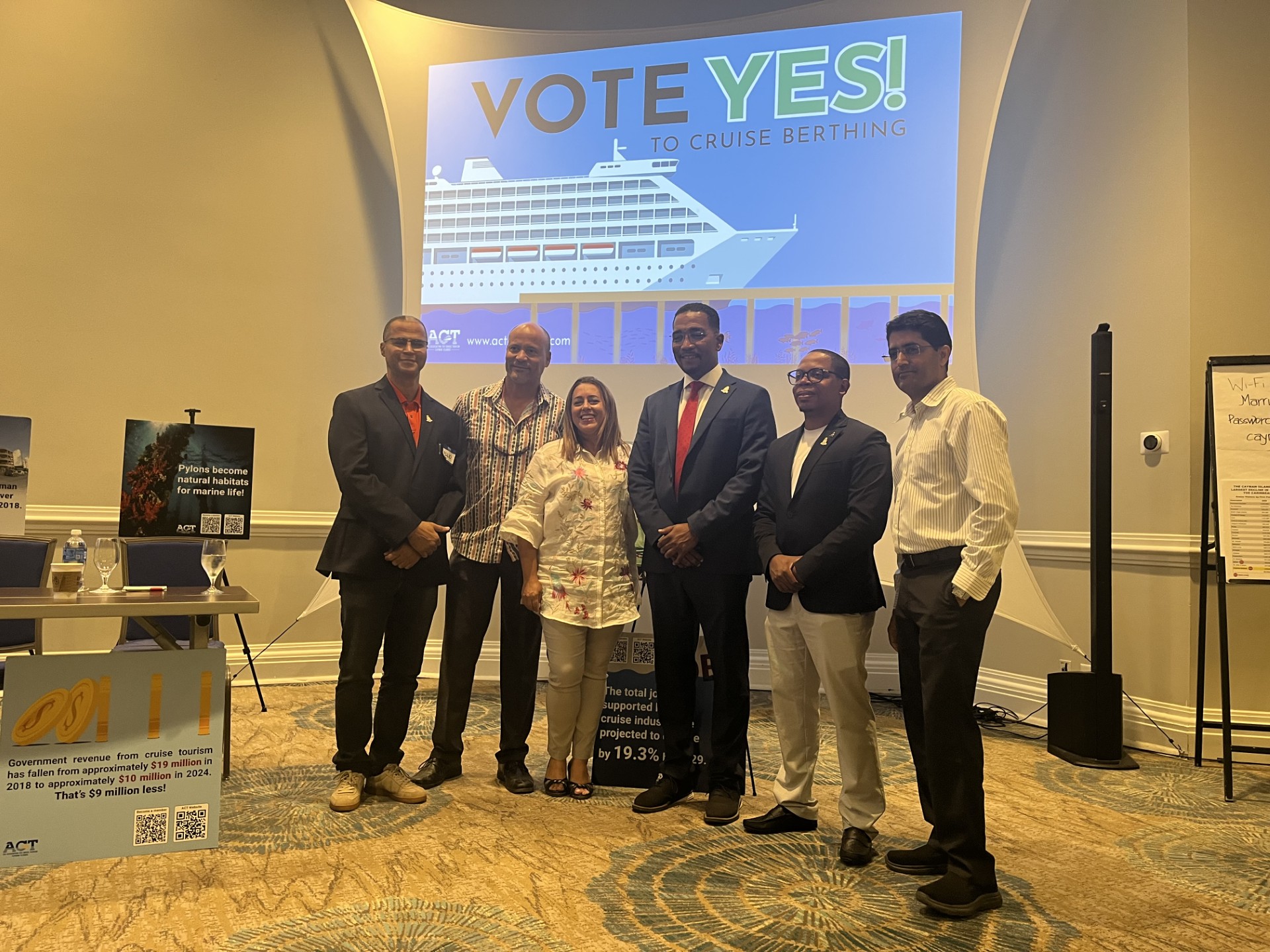
After opening a meeting on Friday with a new song by Bevan Springer in support of the cruise berth plan, the Association for Cruise Tourism continued its efforts to encourage the voting public that berthing is needed in Cayman.
“Three thousand Cayman families will lose their jobs if we don’t embrace opportunity and progress. That’s the reality of what we are facing,” Ellio Solomon, the association’s executive programme manager, told attendees.
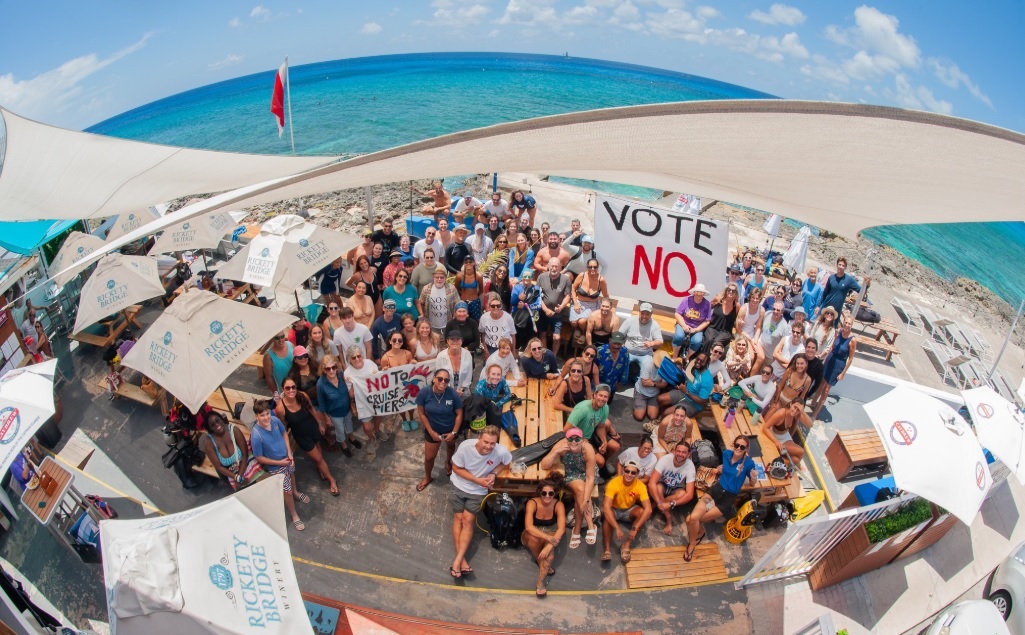
Meanwhile, opponents gathered at Eden Rock on Sunday for what was described as a solidarity demonstration, with swimmers linking arms on the surface of the water and divers holding Vote No banners underneath. The dive site is one of the nearest to where the cruise pier is likely to be if it is built in George Town.
Following a video presentation by photographer and conservationist Courtney Platt on the potential threats George Town’s marine environment will face if cruise piers are built, scores of demonstrators donned masks, fins, snorkels or dive tanks, and waved signs at the popular dive site.
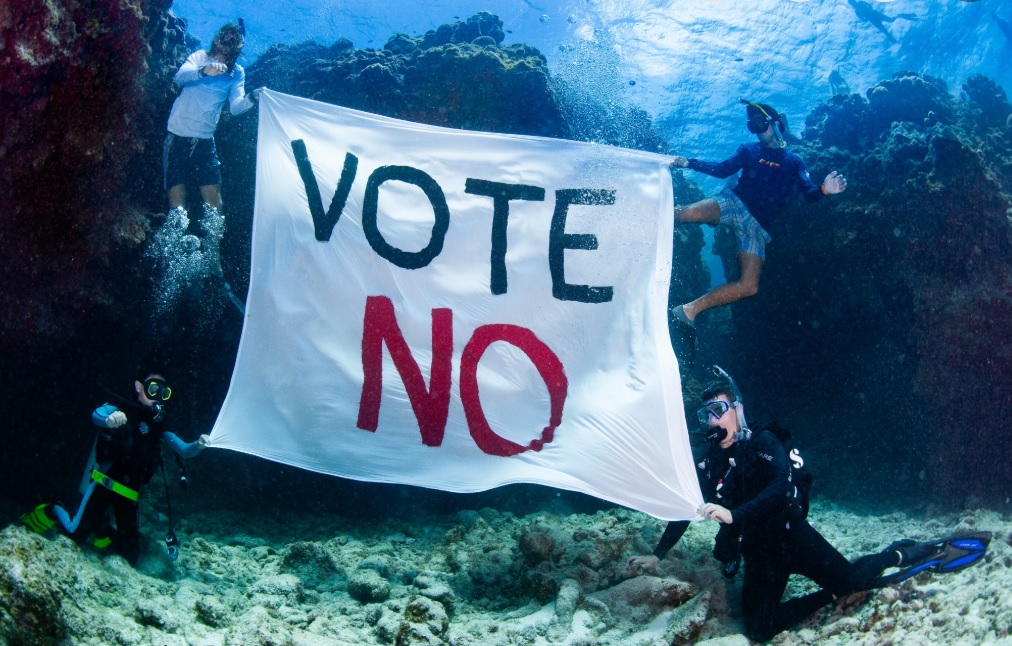
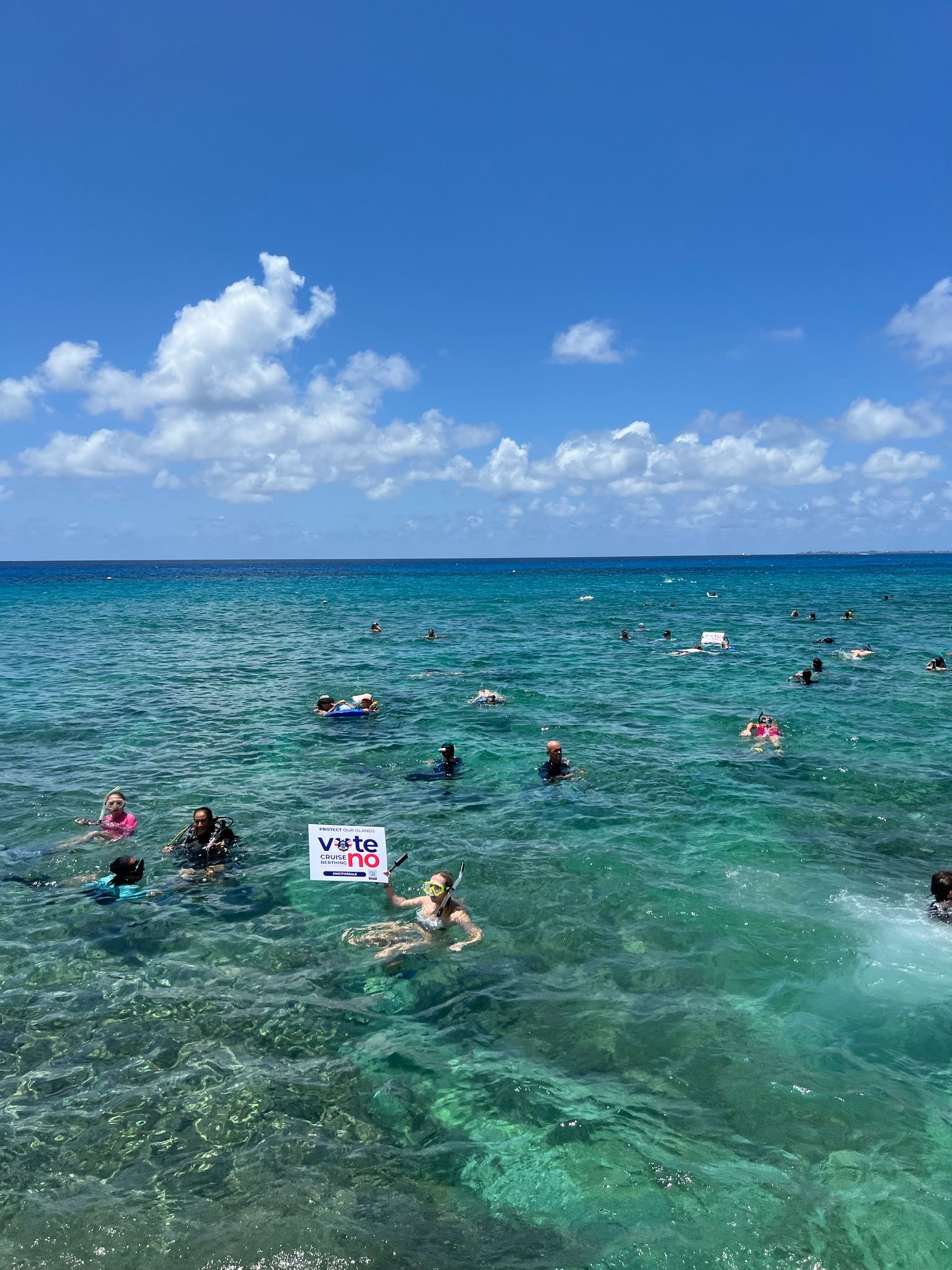
They are concerned that the environment will be damaged by dredging required to build the piers, including the popular reef at Eden Rock – if the project takes place in the harbour, as was previously proposed.
“If we absolutely must have a cruise berth (and the evidence is strong against that, with over 50 new smaller ships currently under construction while we rank 6th in the Caribbean for cruise numbers), then we’ll lose the Balboa, Soto’s South, Eden Rock and the Cali shipwreck as tourism attractions and fish nursery grounds,” Platt stated later in a social media post.
He noted that, apart from the dredging to create the piers, thrusters of mega ships would stir up silt twice daily, leading to silty and muddy water in the harbour, which he said was being experienced in other cruise ports, liked Martinique, Falmouth and Nassau. “The harbour would never be clear again. Should we take this blatant risk?” he asked.
The project’s proponents claim the opposite is true; they say the development of cruise piers will reduce coral damage and help protect the reefs.
“There have been numerous instances where ships have grounded on the corals near the harbour, including at Eden Rock,” Solomon said.
“Vessels have also repeatedly done significant damage to the reefs in the area with their anchors,” he said, claiming that these situations would be significantly reduced or avoided completely with cruise piers extending out into deep water.
Piers would be built on pilings, so sand can move freely, which would not lead to erosion on the Seven Mile Beach, he said.
The project’s opponents say removing coral to make way for piers would cause significant environmental damage. And they point to previous reports that sedimentation from a project in George Town Harbour would impact treasured dive sites like Eden Rock, where they gathered Sunday to protest.
The ‘no’ campaign says there is a lack of clarity about the proposal to build piers, along with insufficient details about how much they will cost and whether future generations will end up saddled with hundreds of millions of dollars of debt.
However, Noel March, who was part of the panel at Friday’s ACT meeting, cited the previous Verdant Isle proposal, as an example of how it could be funded with minimal cost to government.
“The heart of George Town is dying, and cruise is the best hope to bring it back,” said Monique Hamaty-Simmonds, of Tortuga Rum, claiming that without piers, ships will slowly stop coming altogether.
“We need to embrace opportunity and give our young people a chance to succeed,” she said.
“With a cruise pier, passengers will also be able to spend much more time on land, rather waiting in long lines to get on and off the ships with tenders. It is critical to the health of our economy. We must be open to change and give our hardworking people a decent chance to make an honest living.”
Opponents have argued that there is no evidence passengers will spend more time on shore with a pier or that they will spend more money at local restaurants, given that all-inclusive food and drink is part of the on-ship package.
The referendum on Wednesday will ask voters to decide if Cayman should develop cruise berthing infrastructure. The result of this vote is non-binding, meaning, regardless of the outcome, the government is not legally bound to act upon it. Instead, the vote is advisory in nature and is a gauge of public opinion on the matter.
Related Videos