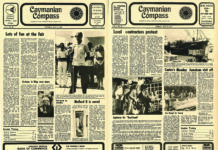
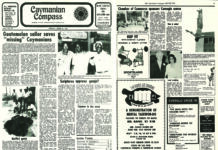
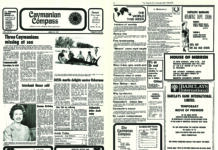
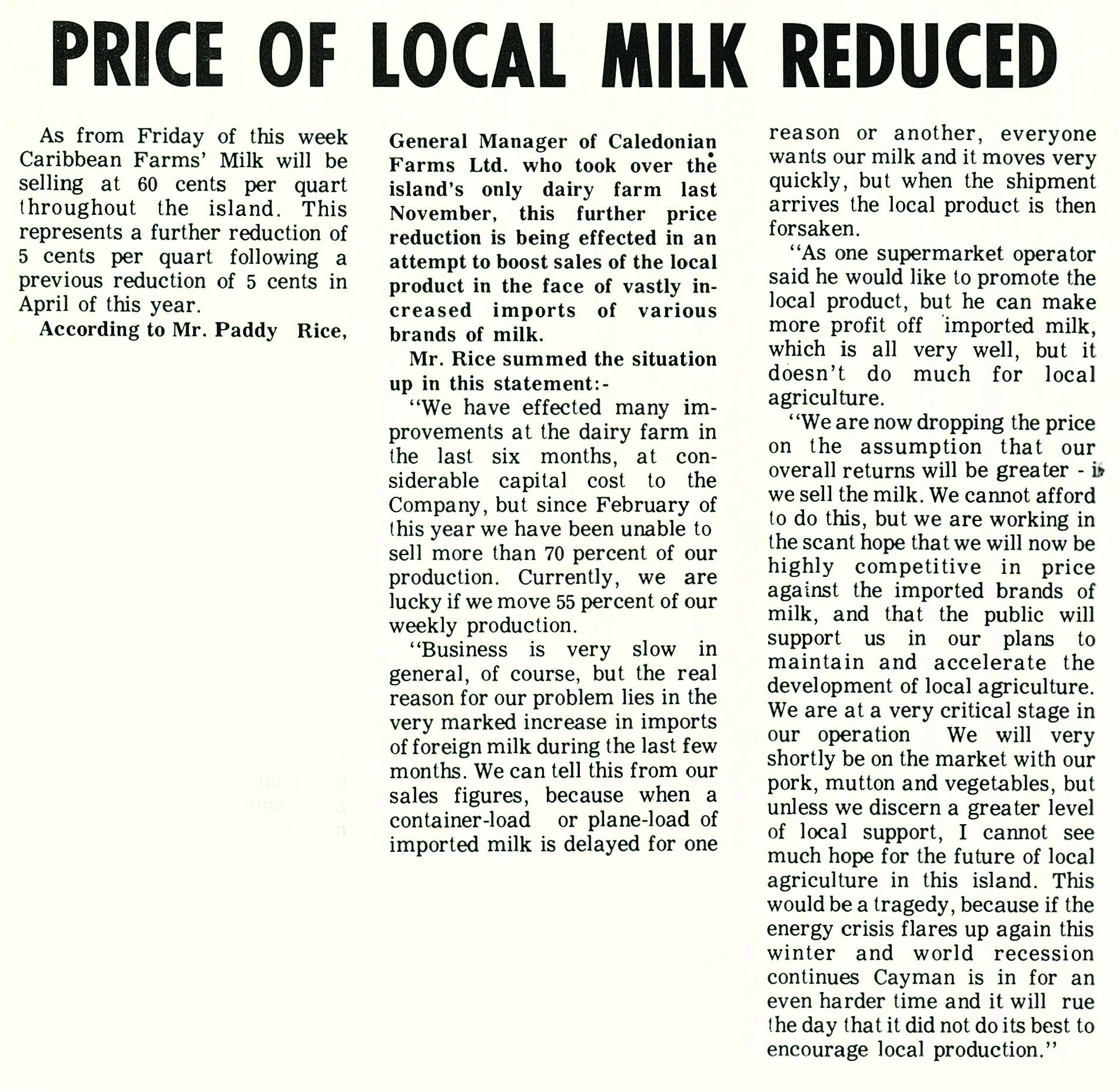
The top story in the 24 July 1975 edition of The Caymanian Compass was about directors of the Chamber of Commerce ‘marching’ to George Town over concerns that loose fill had been dumped in the sea at the end of the government wharf, just a few yards from where ships dock to unload their freight. The concern was that a “sudden nor’wester – or unusually heavy swell and wind” could sweep the fill into the slipway which could block shipping or create a navigational hazard. After the chamber inspected the fill and spoke to the company working on the project, they were assured the firm would seal the fill with concrete or move it, if necessary.
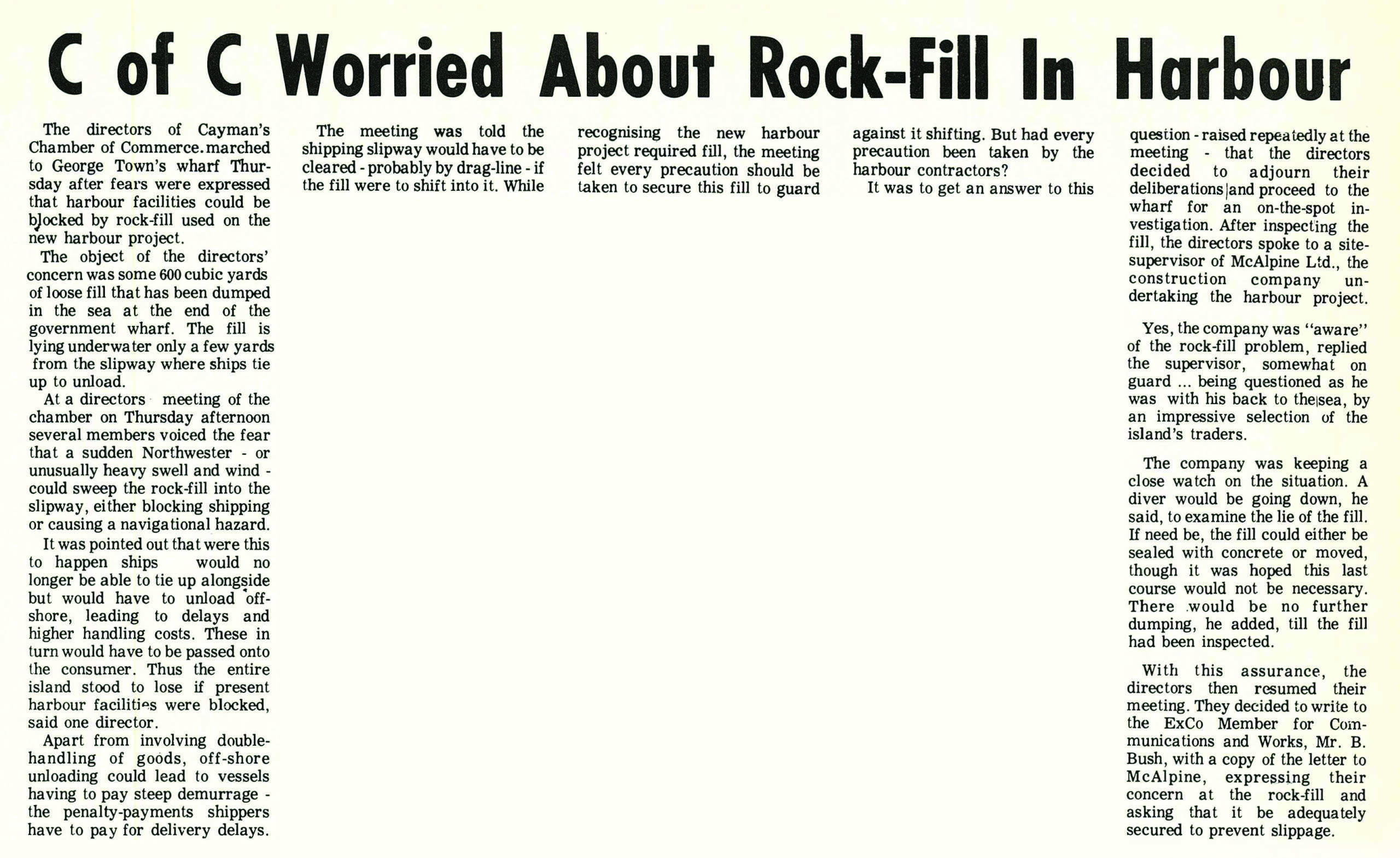
The price of milk was addressed in another front-page story, which reported that Caribbean Farms had cut the cost by another 5 cents per quart after a similar reduction in April. The general manager of the farm said it was an attempt to boost sales against the “vastly increased” imports of overseas brands, noting they could not “afford to do this” but wanted to be able to compete. He added, however, he did not “see much hope for the future of local agriculture”, which “would be a tragedy”.
The editorial noted it was “clear our accident rate could and should be cut”, and pointed out that in the first 181 days of 1975, there were 171 accidents with one fatality and 47 people injured. It said the bulk of the “accidents appear to stem from undisciplined happy-go-lucky driving habits”, and called for “beefed up” requirements for passing the driving test, higher penalties for traffic offences, better efforts to inspect defective vehicles and increased police patrols.
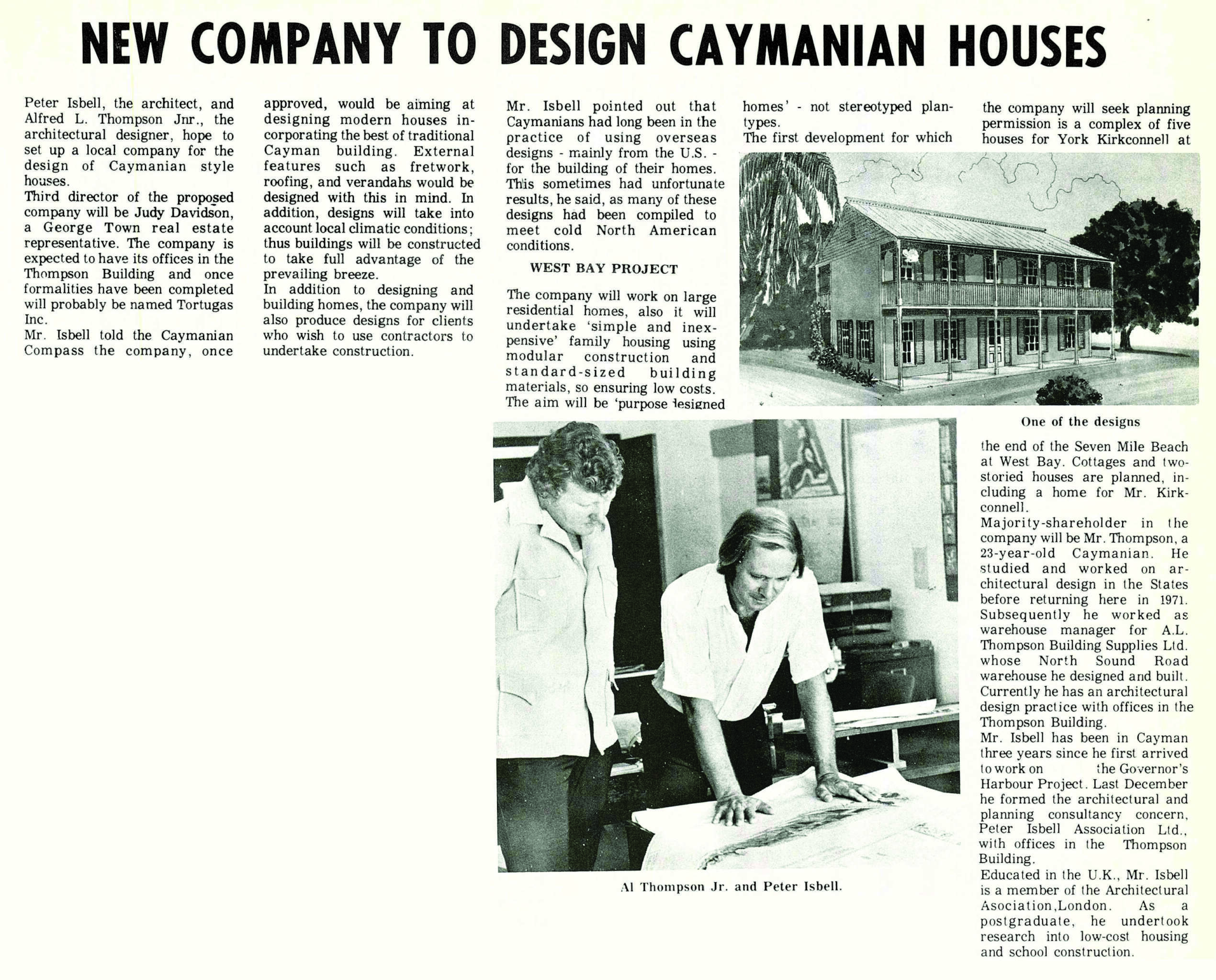
A company was being set up to design Caymanian-style houses. Architectural designer Alfred L. Thompson Jr. and architect Peter Isbell (from left in the photo) were aiming to design “modern houses incorporating the best of traditional Cayman building”, including external features such as fretwork, roofing and verandahs.
Related Videos