

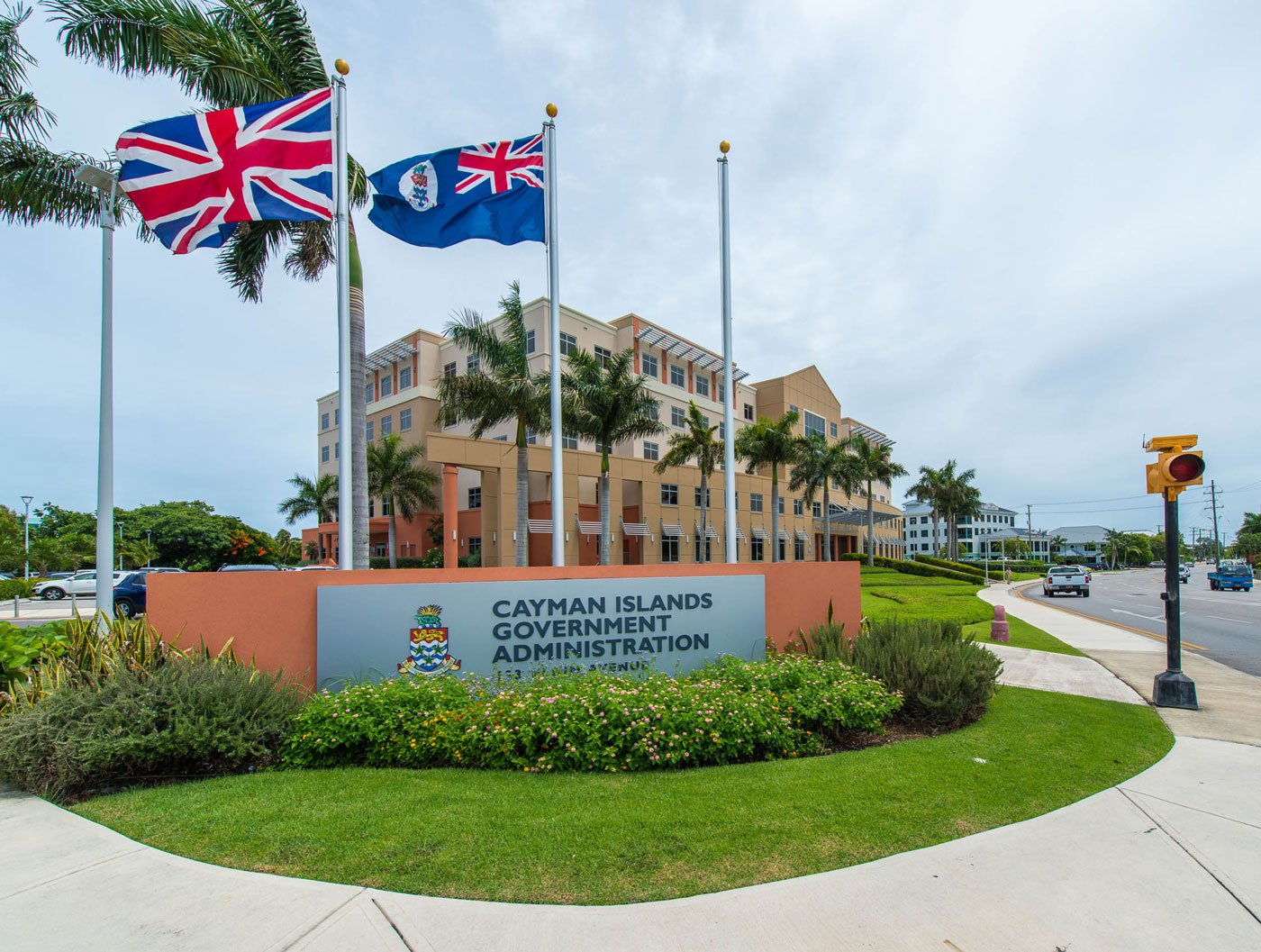
Total spending on salaries and benefits for civil servants has increased by more than $25 million over the past 12 months. Additional funding for scholarships and financial assistance also contributed to ballooning government expenses.
The figures – revealed in a new financial report – are offset by significant increases in revenue over the same period.
The overall picture for the first six months of the year is positive, with core government showing a surplus of almost $200 million. However, the country could still be in the red by the end of 2025 and increased spending on staff wages is the biggest factor.
The report notes that expenses on personnel actually increased by $8.8 million less than had been predicted in the budget.
But with multiple key positions unfilled, that could grow further in the latter half of the year.
“Costs will continue to increase as more staff vacancies are filled and projects come online over the remaining two quarters of 2025,” the report states.
“These costs will have to be diligently monitored to ensure spending is not incurred unnecessarily. If the planned increases in operating activity occur during the remainder of 2025, the current surplus is expected to be significantly reduced.”
Income today, bills tomorrow
The unaudited financial report for core government through 30 June points to a current surplus of $194 million for the first six months of the year. However, that is expected to evaporate.
Most of government’s income – particularly fees from financial services – comes in the first part of the year, while its outgoings are more evenly distributed.
MP Wayne Panton appeared on Radio Cayman recently and cautioned the island was looking at a $60 million deficit by the end of the year – more than double what was forecast prior to the general election.
Panton, now a parliamentary secretary for the Ministry of Financial Services and Commerce, said cuts would be needed in the second half of the year. He attributed the issues to the “bad decisions” of the independent-led coalition that replaced his PACT coalition, with Juliana O’Connor-Connolly as the United People’s Movement premier and finance minister.
“We’re looking at around $60 million in deficit for ‘25 so we are struggling to work through that, and the answer is not going to be easy.”
Pinpointing exactly where blame should be apportioned – if at all – is complicated by the shifting political allegiances. Five members of the UPM coalition that drafted and approved the two-year public-spending plan are now with the new ruling National Coalition for Caymanians. Three other members, including O’Connor-Connolly herself, are now with the Progressives in opposition.
Half-time scorecard
The report for the first six months of 2025 is essentially a half-time scorecard for the government finances. And while the surplus is currently good, Roy McTaggart, former finance minister in the previous Progressives-led government, cautions that the second half of the year is always when government’s biggest expenses are due.
He said the best way to analyse the report was to compare it with the figures for the same period last year. Government’s surplus at this stage in 2024 was slightly healthier.
But he said he could see no reason why the country should not be able to break even by the end of the year.
“Unless there is something we don’t know about it is hard to see how we would be in a deficit position by the end of the year. When you look at what they are projecting, that is a quarter-of-a-billion dollar swing in the space of six months.
“Either expenses are going to increase significantly in the next six months or revenues are going to fall off a cliff.”
The report highlights how expenses have grown faster than revenues with government spending rising by a total of $60.7 million compared with income increasing by only $51.5 million.
On both accounts, that is better than what was budgeted.
Nonetheless, the overall picture is that government is $14.9 million worse off than it was at the same stage last year.
Transfer payments
Another major contributor to growing government spending comes from ‘transfer payments’ – changes to the budget to cover unexpected expenses.
Over the past six months, government has spent $9.9 million more than forecast on financial assistance, $9.1 million extra on scholarships and $2.6 million extra on payments to seamen.
McTaggart said the numbers were less worrying than previous forecasts had suggested.
But he warned it was a bad sign that expenses were rising faster than revenues. He said he was particularly concerned if government has substantially increased the headcount in the civil service – because those type of expenses tend to be longer lasting, while government revenue can vary depending on the strength of the economy.
“I would like to know if there has been a substantial increase in headcount,” he said.
The report attributes the increase in personnel costs, in part, to the 5% cost-of-living adjustment for civil servants announced at the end of last year.
Related Videos











It is not unique to the Cayman Islands that governments waste money.
Typically each department is allocated an annual budget to spend. If they are thrifty and cut costs then their budget will be cut for the following year.
While this is good news for the taxpaying public it’s bad news for the head of the department. (Although it’s a performance that should be rewarded.) Therefore each department head will try to spend every penny allocated to them, and ask for more the following year.
This is a particular problem here because the Caymanian voting public pays zero direct taxes. A significant part of the government’s revenue comes from work permit fees, offshore company fees and other non-voters.
Furthermore, a significant number of Caymanians work for the government. Which political party would be foolish enough to alienate the major voting bloc?
This is very disappointing to hear the mismanagement by our leaders.
The other thing that is interesting is our government seems to go after financial service workers and inconvience these highly skilled professionals while a massive portion of revenue comes from them and pays the bills for government salaries.
Nothing , not even hurricanes and earthquakes affects the annual increase in Govt employees and their salaries.
We need a Government Department like “DOGE” to cut unnecessary spending and waste. Shouldn’t we leave something of value to our children and grandchildren other than unsustainable spending which will eventually cause hardship to all?
No! Do not follow anything the USA / Trump is doing. The latest reports show DOGE cost much more than any so called “savings”!
Juliana O’Conner Connally spending $50 Million last year on the Brac School, when government does not have these kind of funds was a waste and abusive decision for the future of our islands.
Then Juliana travel expensive for her and her delegates the last 2 years was waste and abusive spending with no return on investment.
Then recently the Department of Tourism spending Millions in hiring an advertising firm in Europe is an another waste and abusive money decision.
I am sure the waste and abuse in the government spending list is much larger.