


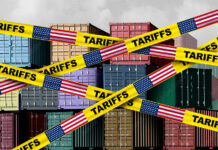
The Trump administration assumed power in January and quickly implemented a tariff policy that was felt in the Cayman Islands.
Cayman does not sell significant amount of goods to the US, so the tariff-impact on exports was never a big concern for the jurisdiction. Instead, the threat was through imports. In 2024, Cayman bought $1.3 billion from the US, which made up 80% of the jurisdiction’s total imports.
Many of the goods that Cayman imports from the US originate in other countries and are reshipped here. That meant costs increased for Cayman consumers as the goods were subject to tariffs on their way into the US.
In this 28 March special report, the Compass explained how it would push up prices for everything from avocados to construction materials.
At that time the proposed tariffs included:
• A 25% tariff on steel and aluminium imports to the US from around the world
• A 25% tariff on any imports to the US from Mexico and Canada
• A 25 per cent levy on vehicles imported into the US from everywhere else in the world (with partial exceptions for Mexico and Canada)
• An increase to 20% of the tariff on all imports to the US from China (previously this was 10%)
• A proposal to put a up to US$1.5 million tariff on Chinese-built ships – many of which are used by Caribbean shipping firms – on every US port call.
Concessions and exemption
Not all of those measures were implemented as per the proposals. Exemptions and concessions led to differing import tariffs for some goods imported from Mexico and Canada.
These countries are respectively the first and third-largest suppliers to the US and subsequently make up a big chunk of the goods that get redirected to Cayman. So those concessions mitigated some of the impact for the jurisdiction.

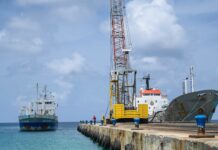
Another reprieve came with the proposed China-built ship port charge. In this 28 Apr. story the Compass reported the US had exempted the Caribbean from an executive order that could have added $3,000 to every 40-foot container shipped to the Cayman Islands.
Later, in October, Cline Glidden, the chairman of Cayman’s Port Authority, revealed that it took an extensive lobbying campaign to secure the exemption.
The tariffs didn’t just create extra work for government entities. In August, the Compass reported how Cayman businesses were adapting to the tariffs. Fortunately, the inflationary impact of the tariffs was mitigated by falling global energy prices and when the third-quarter inflation numbers came out in November, they were surprisingly muted.
The volatile nature of this US government’s policymaking means Cayman can’t rule out future tariffs. “We are not dealing with [the China-ship tariff] at this particular point in time but we don’t know what’s forthcoming,” said Glidden.
If more US tariffs were imposed in 2026, then we should expect to see a change in Cayman trade flows. “I think if significant tariffs were imposed in the future, you would see a shift in trade patterns,” said local economist Julian Morris. “Caymanian importers would start buying more goods from outside the US and use other transshipment ports like Panama and the Dominican Republic.”
Related Videos








We are concerned about 25% tariff increases, but what about the 700% increase to be levied on expat driving license fees, that’s 28 times as much!.