


The premier, regulators and reinsurance professionals are pushing for a US insurance regulatory body to award Cayman qualified jurisdiction status.
Reinsurance is one of the rising stars of Cayman’s financial services. The last 20 years have seen a significant growth in the B(iii) and D licences used by reinsurers. At the end of 2024, there were 107 reinsurance company licences issued in Cayman, with US$25 billion of written premiums and US$93 billion of assets under management.
The growth has come as the US looks to Cayman to help fill long-term capital needs. “There is a huge global gap in retirement savings, something like a US$100 trillion shortfall,” said Gary Harris, a partner at Walkers. “More sophisticated products and more capital are needed.”
“There’s increased need for home insurance capacity in the US,” said Premier and Minister for Financial Services André Ebanks. “There is also an increased need for capacity in the annuity space to secure retirement.”
One way that US insurers can address the shortfall is by using reinsurers in offshore centres like Cayman. Data from S&P Global revealed that by the end of 2024, US insurers had ceded more than US$1 trillion to reinsurers in offshore jurisdictions.
Simply put, if the US had enough domestic capital to meet its insurance requirements, then it wouldn’t need offshore centres. But Cayman’s tax neutrality and regulatory regime make it an ideal solution when you need to pool international reinsurance capital.
“Cayman provides an ecosystem where established investment structures integrate with in-depth regulatory expertise and a network of experienced professionals, creating a seamless environment for global reinsurers to deploy capital efficiently,” said Harris.
International misperceptions
But despite the growth, some international stakeholders still harbour doubts. On 6 Oct., “The Wall Street Journal” published an article that framed Cayman’s growing reinsurance business as a potential risk to US policyholders.
The article’s main point was that reinsurers opt for “jurisdictions like the Caymans that don’t require them to hold as much extra capital in case their investments turn sour.” The article was immediately refuted by the Cayman International Reinsurance Companies Association, but it’s an example of negative perceptions that some US insurance players have about Cayman.

It is true that there are differences in how reinsurers are regulated in the US and the Cayman Islands, explained a Cayman Islands Monetary Authority spokesperson, which regulates the insurance industry.
“The Cayman Islands uses a risk-based or principles-based approach. Risk-based regulation is a supervisory standard practice allowing regulators to align resources with greater risks. The US regulatory regime is broadly more prescriptive.”
But despite the technical difference in regulation CIMA works closely with US regulators and international bodies to ensure that Cayman’s set of rules achieve the same supervisory outcomes, said the authority spokesperson.
“The Cayman Islands is a founding member of the International Association of Insurance Supervisors and sits on several of its committees,” said regulator’s spokesperson. “Consequently, [we] abide by all Insurance Core Principles issued by the [association], including those on capital and solvency.”
Another reason why US insurers don’t need to fear using Cayman-based reinsurers is that, at present, all transactions are conducted on an “asset-withheld basis”, said the authority spokesperson. That means “assets supporting the reinsurance reserves are held in the US as collateral.”
Why Cayman wants status
Some of the Cayman criticism may not be based on the technical regulatory differences. As revealed in recent “Cayman Compass” articles, the jurisdiction still suffers from outdated stereotypes.
“From the US, people sometimes still think of a ‘little island’ with a historic reputation for the wrong things in financial services,” said association board member Cameron Leitch.
One definitive way to silence the doubters would be for Cayman to obtain qualified jurisdiction status.
Premier Ebanks said: “What Qualified Jurisdiction Status will do is formalise [the existing] process, in a way that CIMA and US commissioners can hold their hands up and say, we now have a concrete channel that demonstrates the consistency in the regulatory approach between the Cayman Islands and the [National Association of Insurance Commissioners].”

That seal of regulatory approval would boost the international reinsurance business in Cayman, said Faramarz Romer, vice chair of the Cayman International Reinsurance Companies Association. “It will make it easier for existing reinsurers that are assuming business from US insurers, where those US insurers currently need approval from both US regulators and Cayman regulators.”
On top of that, it will attract new reinsurers to Cayman – those who value Cayman as an already well-regulated and established jurisdiction in which to set up their reinsurance companies,” said Romer.
It’s not that status would cause a flood of reinsurance capital to suddenly come to Cayman, said Leitch, as market conditions are generally set by the US insurers, who would probably still expect assets-withheld transactions. “The main uplift from QJS is reputational,” said Leitch.
How would Cayman benefit?
Status clearly means a lot to the insurance industry. That’s why the premier, the monetary authority and the association were all part of the Cayman delegation to the National Association of Insurance Commissioners’ Fall National Meeting from 8 to 11 Dec. in Florida.
And the government’s commitment goes beyond international conferences. “QJS is now firmly part of this administration’s priority for 2026 and 2027 and budget has been allocated towards this,” said Ebanks.
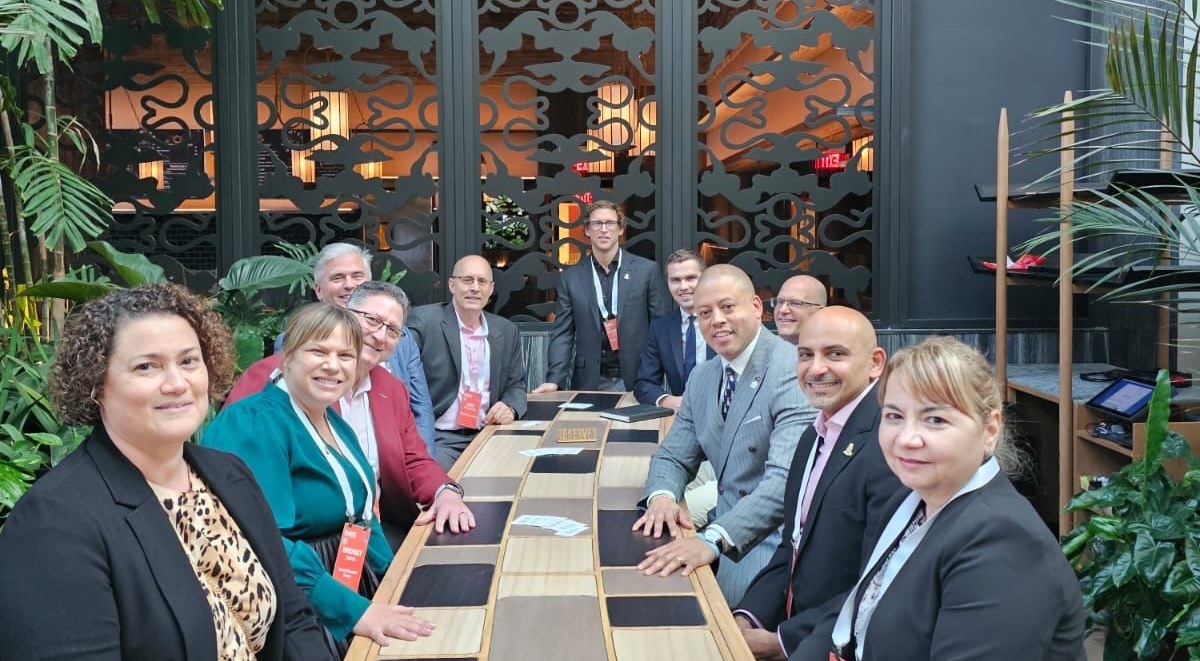
“Now, early next year, CIMA can utilise those resources from the budget, have an action plan around staffing,” said Ebanks. “They’ve already started doing preliminary work towards the application, to make sure that when it is formally submitted, they feel confident in the submission.”
That’s good news for international reinsurers but how will it impact Caymanians?
“What Cayman gets in return is entering into a new market that can provide additional jobs, an additional reputational boost that we are in another highly regulated space in a serious way and a whole other level of expertise on the island,” said Ebanks.
“I know of at least two young Caymanian actuaries finishing their training in London. They might ordinarily have stayed in the UK or elsewhere in Europe. Now they have an opportunity to come home.”
According to CIMA CEO Cindy Scotland, status would make Cayman more attractive to “larger commercial reinsurers”. These firms would have a more obvious impact on the islands.
“It’s the Class Ds that are really bringing ‘boots on the ground’,” said Romer. They are “bringing executives to Cayman and then creating roles for other positions as well. Every reinsurance company that sets up here – whether life, annuity or P&C – needs actuaries, accountants, admin staff and in the case of P&C, claims staff and underwriters.”
As a Caymanian who now works in the reinsurance industry, Leitch agrees. “What we’re building is an industry that attracts others and builds something at home.”
From 2026, the monetary authority will have the dedicated resources to pursue Cayman’s road to status. If it succeeds, then international reinsurance firms will become a far more visible part of the islands’ economy.
Related Videos













It’s funny to see Ebanks in the photo when he is clearly oppressing the finance industry as of lately that built Cayman. There has been serious reputational damage by this government done in relation to finance with the continued hiking of fees every year, new fees to pass onto clients, work permit hikes, harder work permits, moving PR and status.
Why would reinsurers want to face all these behind the scenes hurdles. Smile all you want in a photo for the press and people but this government has done more damage to the finance industry in Cayman than the past 20 years.
What is written in articles and the actual boots on the ground and numbers show different stories frankly with how finance is surviving under these new laws and fees.