

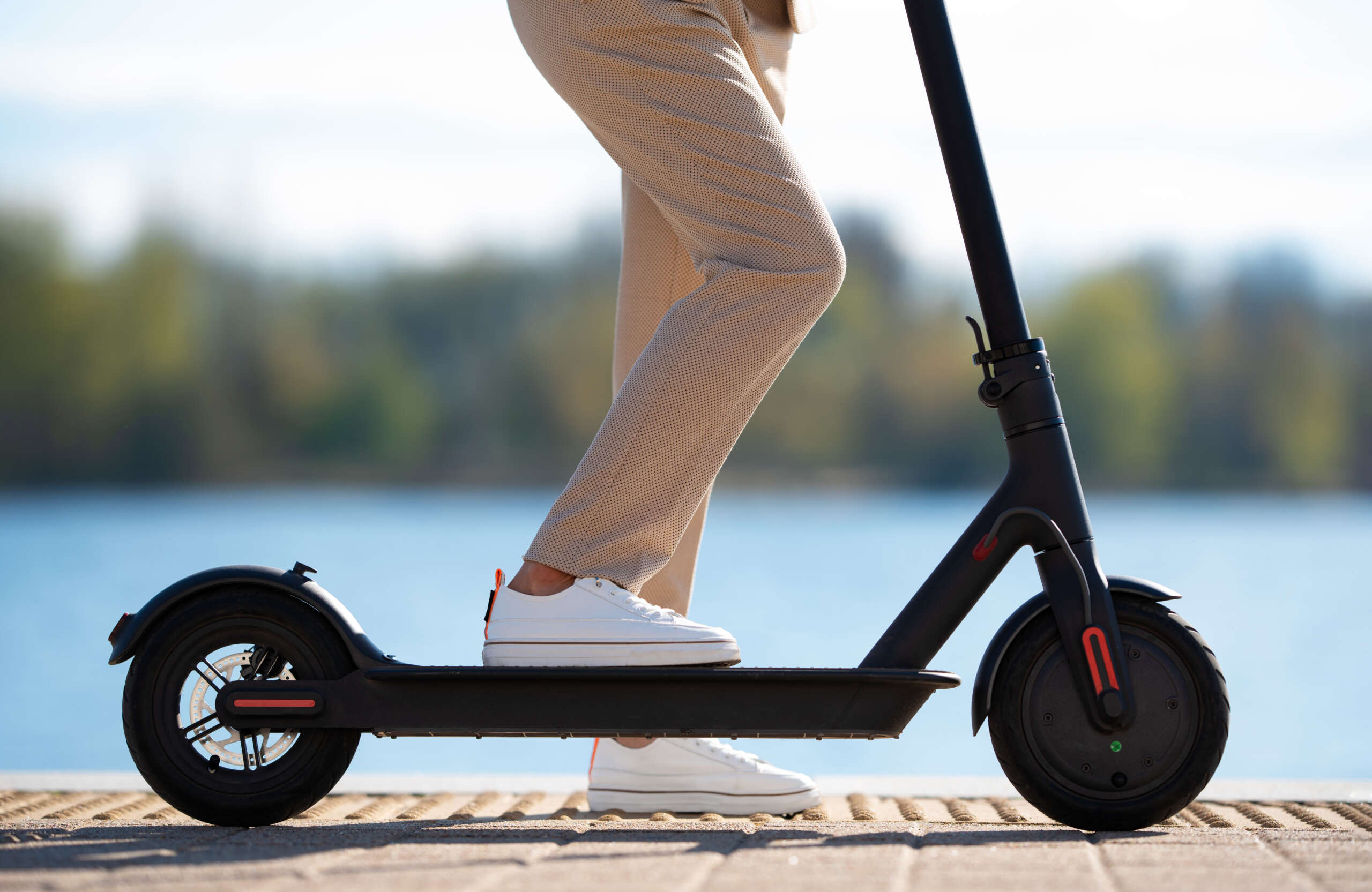
Enforcement of the Traffic Act provisions pertaining to e-bikes, scooters and other micro-mobility has been delayed until 1 March 2026.
The Royal Cayman Islands Police Service made the announcement of the delay in a press release issued the afternoon of Friday, 16 Jan., the day enforcement was set to begin.
“This delay will allow all persons and businesses sufficient time to get all documents, including licenses and insurance coverage, in order,” the press release stated, noting that the decision for the delay was made by Commissioner of Police Kurt Walton in consultation with Governor Jane Owen “following concerns raised by businesses and members of the public”.

Those concerns included that fact that only one company – Indigo Insurance – is currently providing insurance for the relevant motorised “micro-mobility vehicles” and the fact that some of the devices needed to bring those vehicles compliant with the law are difficult or impossible to purchase in the Cayman Islands.
“While we understand that many persons have been unable to complete their preparations before now, we want to stress the need for all persons using these devices to follow the required regulations,” Walton said in the police press release. “Once the enhanced enforcement begins on this new date, there will be no excuses for not being compliant.”
Walton spoke about the e-bikes issue when he appeared on Compass TV’s ‘Forefront’ episode with Governor Owen on 15 Jan. He noted that the provisions of the Traffic Act for e-bikes and scooters have been in existence since 2018 and then reaffirmed in the 2024 revision of the Act.
“So, it’s nothing new. It’s just had some additional technical language added to the 2024 revision,” he said on ‘Forefront’. “The reality is, these e-bikes, these e-scooters, are under the traffic legislation defined as motor vehicles.”
Walton acknowledged that the issue around insuring e-bikes and scooters is an emotive one, but that there’s also public sentiment asking police what they’re doing about the drivers of these vehicles who aren’t following the rules of the road and are driving e-bikes, dirt bikes and such that aren’t licensed in contradiction of the Traffic Act.
Compounding the issue is the fact there has been an increasing number of e-bikes on Cayman’s roads, Walton noted.
Although Walton said he has listened to both sides of the issue, the “reality is, this is the law, and I think that’s what’s missing from the discussion; that this is the law.”
Given that the micro-mobility vehicles fall under the Traffic Act, the requirements to operate such a vehicle require the driver be at least 17 years old and hold a valid Category 0 or Category 2 driver’s license. The driver must also wear a helmet. Another requirement is that the vehicle must be inspected, registered, licensed and insured.
Insurance availability
Although only Indigo Insurance was offering e-bike insurance as of 16 Jan., members of the National Road Safety Committee met with the Cayman Islands Insurance Association and its member companies to discuss insurance coverage for micro-mobility devices on 12 Jan.
A press release issued by the Ministry of Planning, Lands, Agriculture, Housing & Infrastructure on the same date as the meeting said the discussion included providing insurance on electric scooters, Segways and similar personal transport devices.
“During the meeting, it was further confirmed that insurance coverage for compliant micro-mobility devices is currently available through Indigo Insurance, with additional insurers expected to come online in the coming days and weeks, subject to their individual underwriting processes,” the press release stated. “As with all motor vehicles, insurance availability depends on a device meeting legal and safety requirements.”
The press release confirmed that insurance on micro-mobility vehicles must be in place before the vehicle can be registered and licensed.
“The [Department of Vehicles & Drivers’ Licensing] will not register or license a device unless insurance coverage has already been secured. Where a device meets inspection and roadworthiness requirements, it may be insured, subject to the underwriting criteria and commercial decisions of individual insurers.”
Scramble to comply
One company that offers e-bike tours to visitors, Paddle Wheel Adventures, did everything it could to comply with the law before the initial 16 Jan enforcement date, but wasn’t able to do so. Insurance was one part of the reason.
Although Paddle Wheel part-owner Paul Gates was able to obtain the required third-party liability insurance for his personal e-bike through Indigo Insurance, he was initially turned away by the company with regard to Paddle Wheel’s 21 e-bikes because Indigo didn’t have the ability to offer the insurance on e-bikes insured for a commercial entity, Gates said, adding that it wasn’t until 15 Jan. – the day before enforcement was set to begin – that Indigo agreed to offer the insurance.
But that isn’t the only issue Paddle Wheel Adventures had difficulty with to comply with the law. After obtaining third-party insurance, his personal e-bike still failed inspection at the Department of Vehicle & Drivers’ Licensing, Gates said, “because it had no high- and low- headlight beams, no indicators and no horn”.
“These things don’t come standard on e-bikes,” he said.
The next problem Paddle Wheel experienced was sourcing the equipment needed to bring the e-bikes into compliance, including the headlights, front and rear indicators, horns, rearview mirrors and brake lights. Since they couldn’t find these items to fit e-bikes on island, they sent one of the partners to the United States to buy them and ship them back. They purchased more than they need for the business so that they can offer them for sale to Cayman e-bike owners who need to get them for their personal e-bikes.
Realising that there was no way to get Paddle Wheel Adventures’ e-bikes compliant with the law in time for the 16 Jan. enforcement date, the company cancelled all its e-bike tours and rentals for a 10-day period and offered only pedal bike tours instead.
“We’re a business, so of course we’re going to comply,” said Gates, “but obviously having this happen in high season has hurt our business and caused a loss of revenue.”
Gates said the delay of enforcement until 1 March is welcomed and added that Paddle Wheel is “all for safety” and will do everything that is required to comply with the law. However, one question Paddle Wheel is still hoping is resolved soon is whether e-bikes will be able to travel in dedicated bike lanes.
Gates said motorcycles are not allowed to use the bike lanes and if e-bikes are classified the same as motorcycles, he questioned whether e-bikes would have to follow the same law. Since most e-bikes travel at much lower speeds than motorcycles – some no more than 15mph and others no more than 30mph – having them travel in the normal vehicular lanes of traffic could create a hazard for the e-bike riders and motorists in places where the speed limits are 40mph.
Additional reporting on this article by Raymond Hainey
Related Videos











These e bikes or whatever they are refered i have seen some reckless n dangerous riding of these bikes on the Cayman roadways recently
It seems like some of them exceed 35+ MPH and seem to have no brakes to stop them moving at the speed they move at and most users don’t obey GIVEWAY nor STOP signs and I presume its because they can’t apply brakes to these bikes.
I much afraid there is going to be a lot of deaths on Cayman roadways with these bikes. Very dangerous riding I see on a daily basis with them.
High beams for an ebike and scooter lol. Basically this whole thing is a tax and attack on the poor. I believe some people in the government must have ownership in the car dealerships and are lobbying so that only cars are on the roads. They feel their business is attacked since e-bikes and scooters work so well to help traffic. The people that own car dealerships want to sell cars, not scooters.
This high tax on ebike and scooter owners will push people to the $600 driver license
Dear commissioner Walton, instead of adding red tape for a few brave residents with a tiny carbon footprint and who pose no danger to anyone, how about focusing your attention to the obnoxious tailpipe pollution and jake brake noise from the hundreds of dump trucks that terrorize this island from 5am in the morning each day. I have read the law and spoken to several officers and understand that any visible smoke from a tailpipe is actually against the law so what are these doomsday devices doing on our roads? Also your speed checks on the same points and wearing visible yellow reflective jackets only catch “soccer moms”. What you need to do is do checks in the early or late hours in some random spots and pull some really bad speeders of the road that go 100mph.
To be so worried about a few people that are actually doing something environmentally sound while we have so much bigger issues in Cayman seems vet misguided..
E-bikes and scooters should be treated the same way as pedal bikes.
Not like motorcycles, except for the very heavy and fast e-bikes.
Front and rear lights, certainly. Dipped headlights? Don’t be ridiculous.
Ditto flashers.
If the drivers need to be licensed at all, create a new class of simple, inexpensive driving license. Start at age 15.
Insurance should be based on the likely damage they could do. Not a lot.
Must be nice to have a gov driver and never ride a ebike or scooter in your life. People barely have any money and the gov folks were at $400 plus Cayman cookout. I don’t think they are in touch with the reality of who is riding scooters and e-bikes to make $9 an hour.
Now they’re failing e-bikes for totally absurd reasons! How stupid can these people get! Next, will seat belts be required??
Common sense and discretion departed CIG.
In the meantime we have thousands of drivers, every day, travelling way over the speed limit with almost complete immunity.