

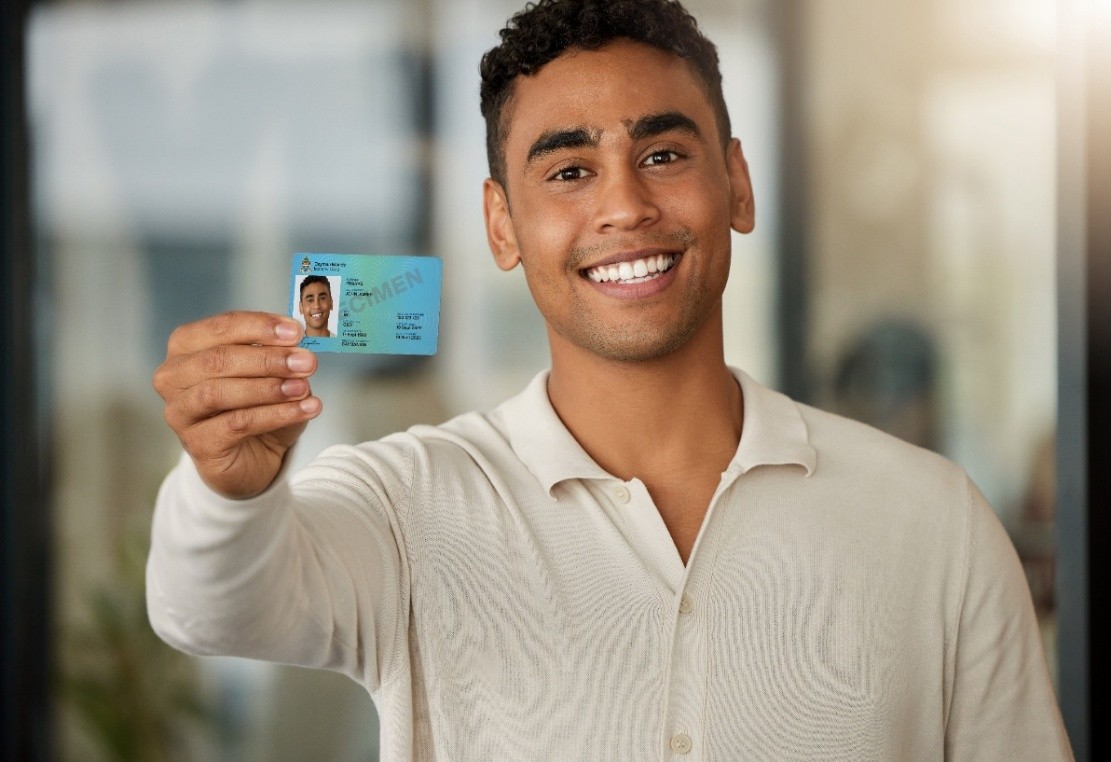
After years of discussion, Cayman’s ID card is a reality.
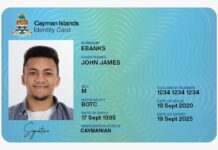
On 23 Jan., the government launched ‘My eID’, a physical identity card with digital features.
The initial public reaction has been strong, with 840 people receiving – or registering for – a card since the launch. The business reaction has also been positive, albeit with some important caveats.
“The Cayman Islands Chamber of Commerce views the introduction of a national digital ID card as a positive and long-anticipated step forward, particularly in improving how individuals interact with government services and how employers meet verification requirements,” said Chamber CEO Wil Pineau.
“There is no doubt that Cayman considerably lags other jurisdictions in the modern digital era,” said Eugene Nolan, CEO of Tortuga Rum Company. “The new ID card should go a long way towards bringing Cayman government services into the 21st century.”
Under Caymanian law, the new ID must be accepted by businesses in Cayman as proof of identity. For example, holders of the card can already use it as proof of age when buying alcohol. But for the ID card to really bring economic benefits, it needs to be incorporated into internal processes of both private-sector companies and public entities.

“Provided [the ID card] is fully integrated across all functions such as KYC [know your customer] for the Department of Commerce and Investment and other government services, this has the ability to significantly improve business operations by reducing the endless bureaucracy and ensuing delays that we face on a day-to-day basis,” said Nolan.
One big concern is cybersecurity. “Some individuals will understandably have concerns about privacy and cybersecurity,” said Pineau, adding that government representatives have indicated that the system incorporates multiple layers of security, authentication and encryption.
The Department of eGovernment, which is responsible for launching the card, believes the cybersecurity fears are based on a misperception.
“People worry about exposing data, but today many government departments already have your data,” said eGovernment Director Ian Tibbetts. “The My Info Portal associated with this card lets you manage your data and you can see when it has been accessed by a government department.”
Financial system
The biggest potential impact is in Cayman’s financial services sector, which has implemented some of the world’s strictest know-your-customer checks as part of its anti-money laundering efforts. On a local level, bank customers in Cayman are subject to lengthy checks that often delay simple procedures such as opening a bank account.
Amanda Bodden, president of the Cayman Islands Bankers Association, said, “I’m hopeful that the digital ID might enable the simplification of KYC compliance for banking clients, but CIBA hasn’t yet had the opportunity to obtain sufficient information to provide meaningful feedback. We will prioritise this with the eGovernment team now that it has been rolled out and is available to the public.”
A secure digital ID system also has potential to boost the international element of Cayman’s financial services sector. “Most KYC and due diligence requirements in the Cayman Islands relate to individuals who are not resident in the jurisdiction,” said a Cayman Finance spokesperson. “At present, those individuals cannot access Cayman’s Digital ID, which means additional solutions will be needed if the full benefits of digital identity are to be realised.”
The spokesperson continued, “The real opportunity lies in building an ecosystem where government-issued IDs, regulated digital identity providers and financial institutions work together to reduce duplication while maintaining strong AML [anti-money laundering], regulatory and data protection standards.”
The Compass contacted the Cayman Islands Monetary Authority for comment, but had not received a response at time of publication.
Related Videos









Rushing into the 21st century without properly considering the ramifications has proven disastrous.
It is only a short step from making these government issued cards available to making them mandatory.
Canada experimented with it during covid — requiring, if Canadians ventured out into the public, proof of having had vaccines. Essentially mandating vaccines which, like anything else we pump into our bodies, must remain a personal choice because not despite how important vaccination is.
The Cayman cards have been touted as enabling those without other id to access benefits both government and commercial.
Maybe it does for some. But so far the western world has avoided the social crediting China favours and this is a giant step toward it.
For those readers not yet familiar with how invasive the Beijing system of control through carding is, you have trouble getting a train or a bus in China without government-approved social accreditation and a plane? forget it.