

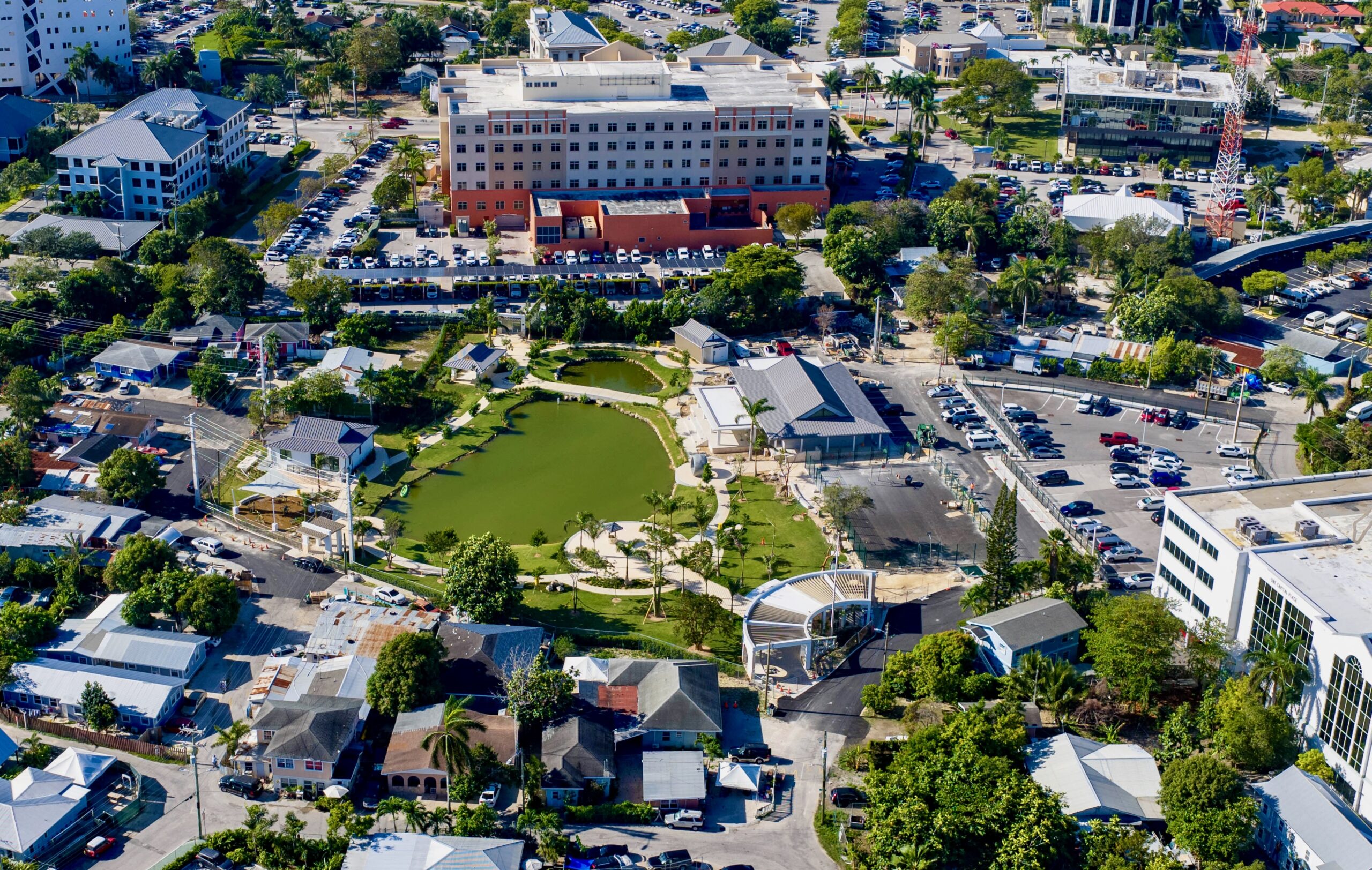
Sunlight glints on a scenic lake that forms the centrepiece of a striking new community park in George Town.
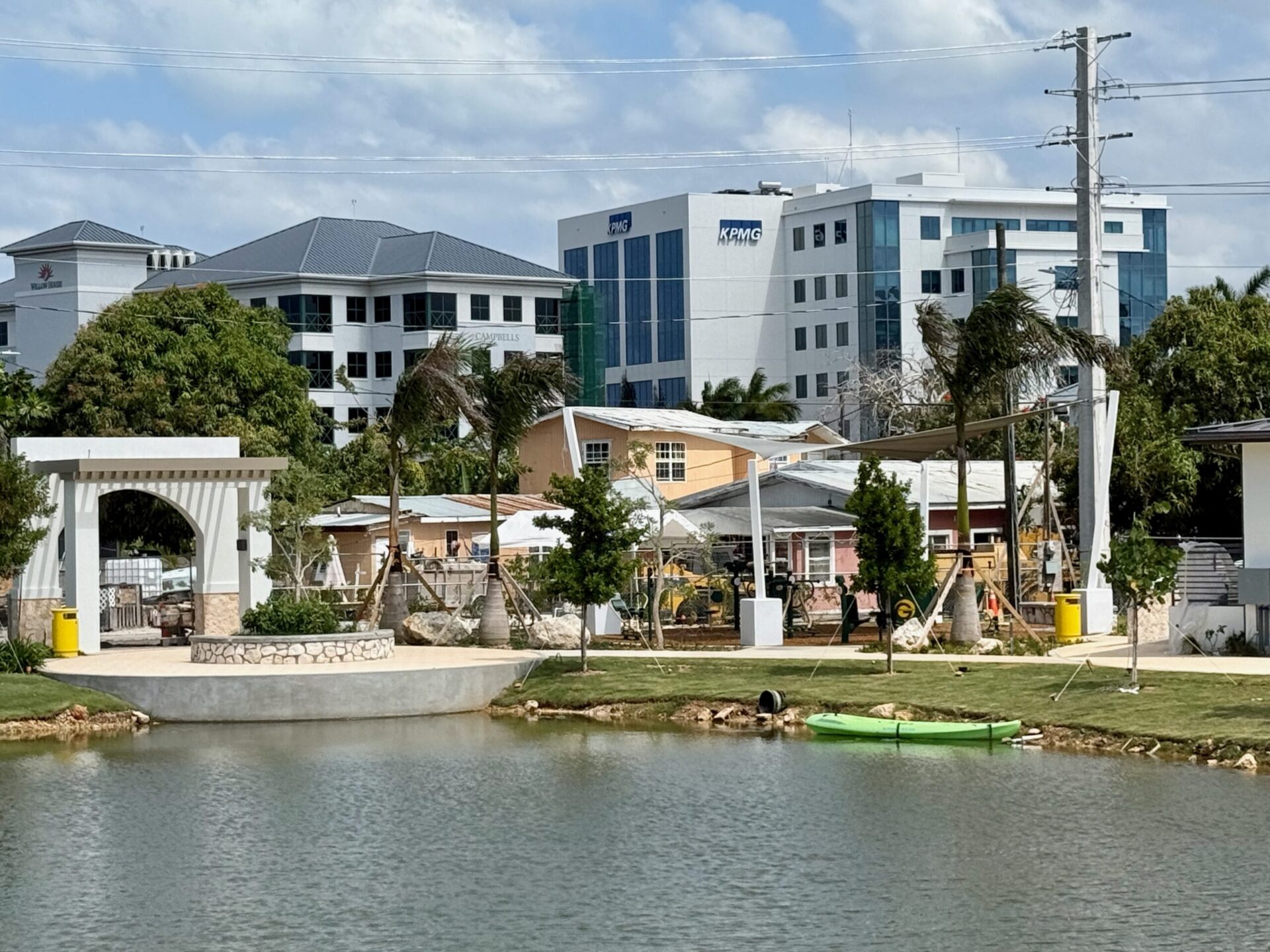
The mirror-smooth surface carries the reflection of adjacent offices, the nearby government building and the zinc and timber roofs of more humble dwellings in the surrounding streets of Scranton.
The park represents close to $10 million investment by government, over several years and political administrations, dropped on a seam of land between disparate sections of the capital.
The spending is part of a broader government policy to acquire land for public open space.
Area MP Kenneth Bryan describes it as a mini–Central Park in George Town’s own central district, an area with a mixed history, at times impacted by gun violence, housing challenges and inequality.
Residents say Scranton is changing and they are hopeful that the park will be a place that brings communities together.
The demolition of the Globe Bar has quieted some of the violence that once punctuated life in the neighbourhood, including infamous gun murders in 2015 and 2016 and a double homicide outside the bar in 2021.
Expanding office space from the Cricket Square complex has further enmeshed corporate Cayman into this much older enclave of the capital.
The area still has its share of crime and social issues, but residents remain proud of their community.
Urban renewal in central
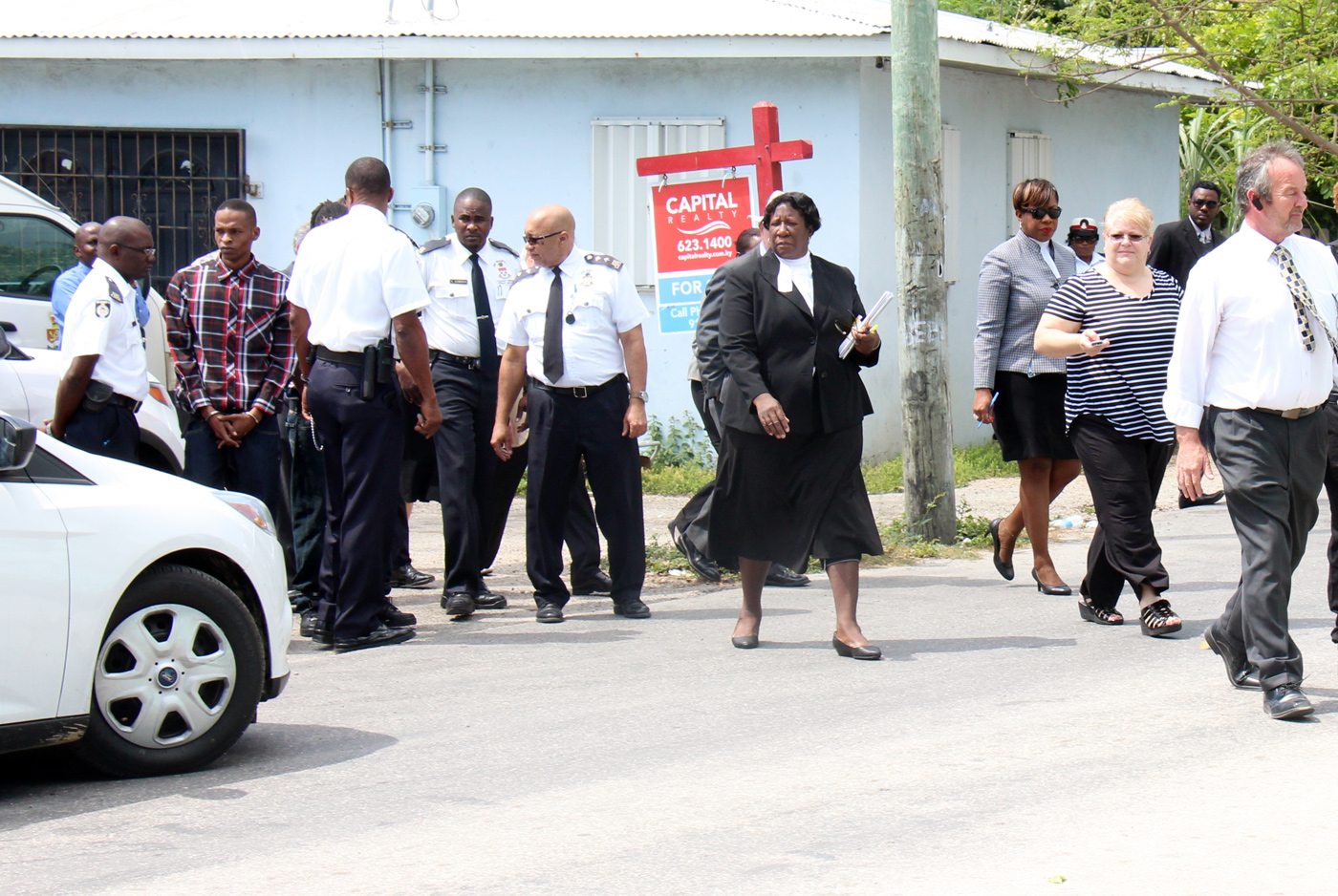
On a hot afternoon recently, pavers rolled fresh tarmac on the narrow roads surrounding the park as neighbours peered through construction fencing at the new landscape taking shape.
At the entrance, a path leads through an ornate stone archway, past a restored well, to a sculpted lake surrounded by picnic benches. There is a calisthenics park, a youth club, a seniors centre and sports courts nearing completion ahead of an anticipated grand opening in April.
Across the street, Glen ‘Roy’ Gall leans on his rake and gestures toward the wrought-iron fence that rings his well-kept yard.
“Roll it back,” he says, nodding at the razor wire coiled along the top. “My kids tell me it looks like Northward prison.”
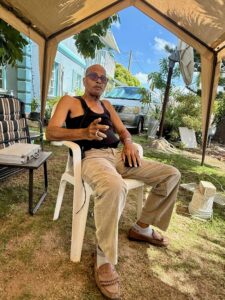
Gall put up the heavy-duty barrier after police repeatedly chased suspects from George Town’s main streets into the back roads behind his home. He has lived here since 1972, when Scranton was mostly family homesteads and small wooden houses, and the Jammin’ Smokehouse was a neighbourhood landmark.
Since then, rising office buildings have replaced many of those older homes and cast shadows over those that remain. Gall is phlegmatic about it. His son works in one of the nearby office blocks and he sees both sides of Cayman’s growth
“Anywhere you go, there’s two P’s,” he says. “One is progress, one is poverty. And I don’t want to see poverty. I want to see progress.”
Gall rejects Scranton’s past reputation as a crime-blighted neighbourhood, suggesting most of the issues came from outside the community.
Martin Drive resident Vilora Sinclair said, across Cayman, the issue of gun crime had calmed in recent years.
“All of that has settled down, but I am not gonna allow them to say it was all George Town Central,” she said. “It was the whole of the Cayman Islands.
“We still have issues where people say, ‘Oh, you come from George Town Central, I am not coming down there.’ It’s not like that anymore.”
She believes much of the violence that once drew headlines was not connected to the community, but “outsiders that came in”.
She is excited to take her grandchild to the park and happy to see money being spent in her district.
“The improvement has really lit up the neighbourhood with the park,” she said. “It’s extremely awesome to see George Town Central could get something like that.”
Others are more cautious. One resident who lived near the now-closed Globe Bar says the biggest change did not come with the park or the new offices.
“Them not being there anymore – it’s more than a blessing,” Sinclair says of the bar’s closure. “It’s more quiet and peaceful.”
Asked whether the park would uplift the area, she shrugs.
“It can be a good thing and a bad thing. It depends on the public.”
Seven-year makeover for dilapidated park
Seven years ago, the community park looked very different.
A rusted pole with a single hoop and a broken backboard towered over a scruffy sun-bleached basketball court. Empty bleachers sat on a bare patch of land, weeds pushing through the gravel at the edges. In 2019, members of the Scranton community committee began pushing to revive it. Bryan, newly elected at the time, joined those discussions and began sketching ideas for something more ambitious.
At the time, he says, not everyone could see it.
“It was just a vision. A lot of people didn’t realise what it was going to be,” Bryan said.
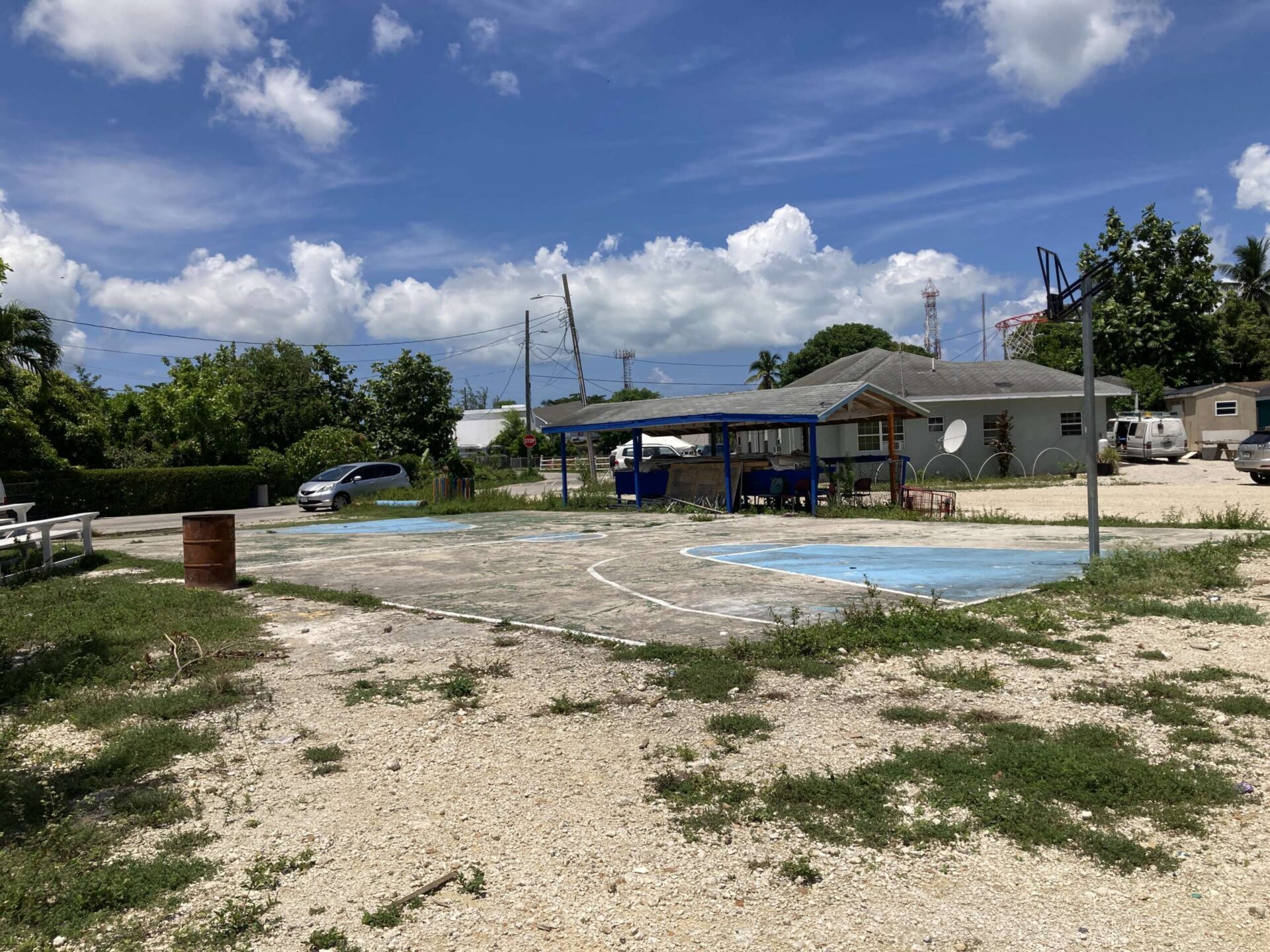
Since then, successive governments have bought in to the idea, acquiring additional land to expand the scope of the project and enlisting landscape architects to help redesign and reshape.
Pearl Bodden has watched that transformation take place from her front porch.
“Thinking back, I used to question how it would come,” she says. “But I think it is wonderful.”
Seniors at the centre
The upgrade has not been without interruption. The Christmas teas and senior gatherings paused during construction.
Residents say the park has always been more than a court and bleachers; it has been a place to gather and celebrate in a sometimes troubled corner of the capital.
Gall remembers buses bringing elderly residents from across George Town.
“They used to have Mother’s Day dinner … Father’s Day … Christmas time … before this million-dollar thing here,” he says.
He hopes that spirit survives the upgrade.
“Hopefully, they will figure out a way how to still take care of these people,” he says.
Bryan insists the seniors are at the centre of the new design.
“The main building in here is a senior centre,” he said.
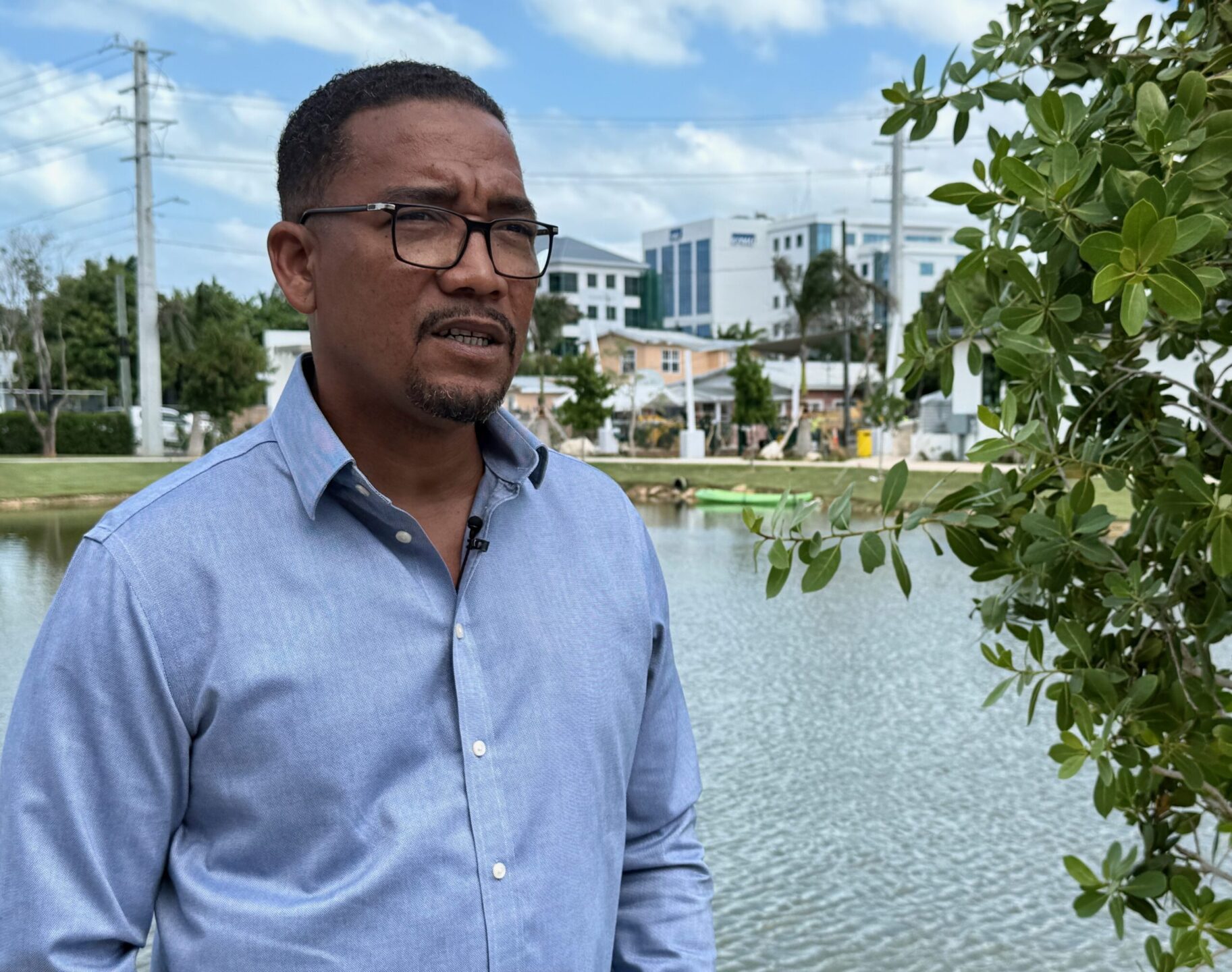
“We don’t treat seniors well enough in this country. They’re the ones who built what we have today.”
Sculptor Al Ebanks, who grew up a short walk from the park, attended the same community events now remembered by residents. Today, his commissioned steel arch, echoing the shape of a turtle shell, has pride of place at the centre of the soon-to-be opened facility.
“It is kind of inspiring for the elderly to see this open space come to life,” he said.
Bryan believes the park will help preserve the history of the area and keep a space for people as Cayman continues to develop and the neighbourhood changes.
“You can’t stop the growth that’s happening in town,” he says. “You can probably slow it down, but you can’t stop it.
“The best way to protect that memory and that history is to build a national park…. This will always be here.”
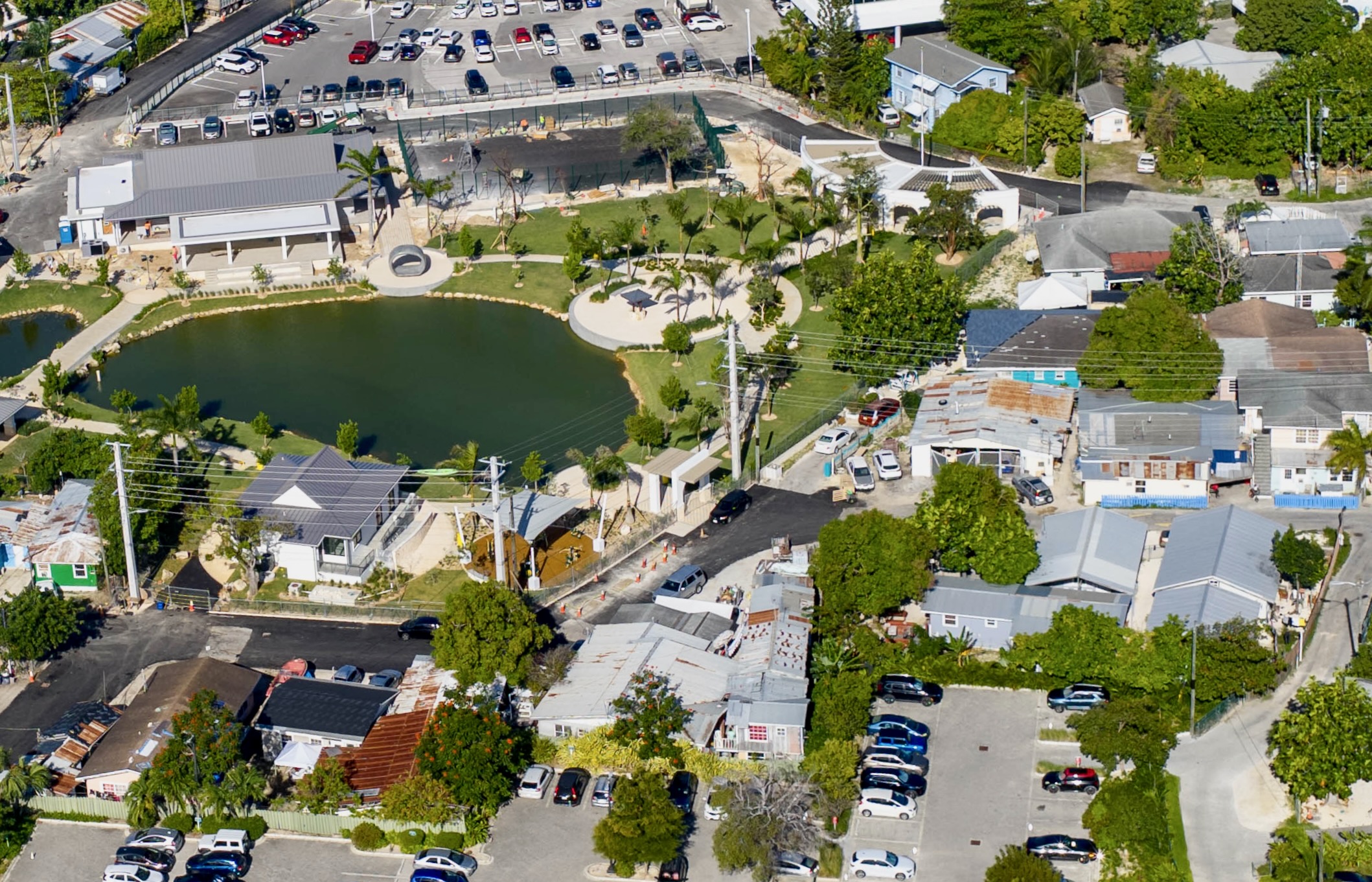
What makes the park stand out is not only the scale, but the setting, between the government administration building and expanding offices, with the back streets of Scranton curling around its entrance.
It is envisioned as a space where neighbouring residents, like Sinclair, can bring their grandchildren to play, where seniors and youths can gather at new facilities and where civil servants and white-collar workers can take their lunch.
When the park closes at night, Bryan says, it will not be left unattended. But he believes community buy-in will make it a safe space.
“There will be guards here when it’s closed,” he says. “But everybody who lives in this area is also a protector of this park.”
Several years, and several coalitions in the making
Support for the project has crossed political lines. Jay Ebanks, now minister for lands and infrastructure, and a Cabinet colleague of Bryan in a previous coalition, said he had always supported the project, versions of which have spanned multiple administrations.
Even after political alliances shifted, Ebanks said he believed in the idea and worked across the aisle to get it completed.
“It just shows the commitment that the government has made,” he says, describing the Scranton park as one of “the most distinctive public spaces” built in Cayman in recent years.
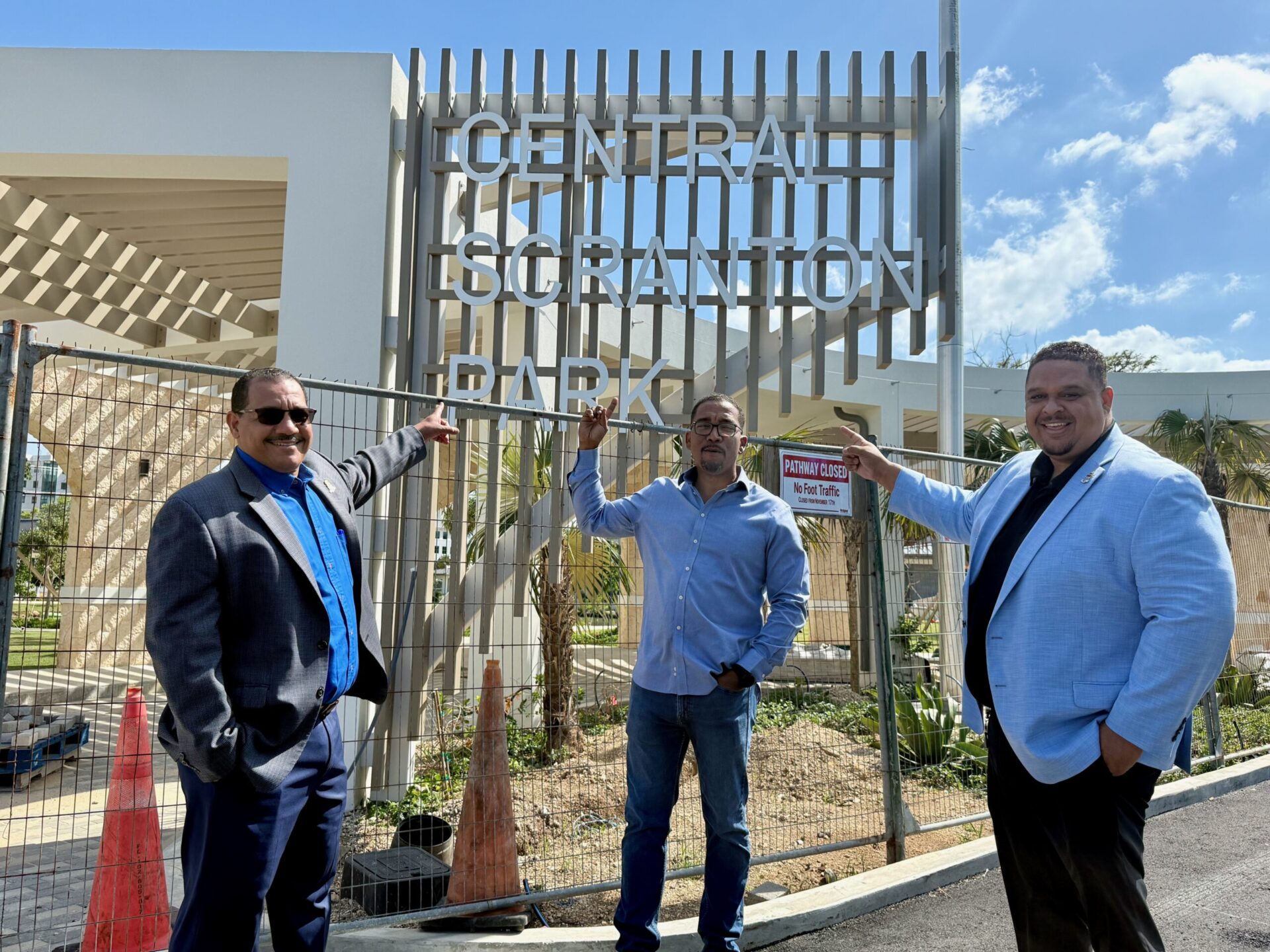
He said government was spending significantly on public parks and beaches as part of a broader investment in wellbeing.
“With mental health being such a serious issue, this space allows opportunity for you to just relax, exercise, get silent and quiet away from the hustle and bustle,” he said.
Project cost
Officials could not confirm a final audited price tag for the park, but previous Compass reporting gives a sense of the scale of public commitments.
A $2.3 million Phase 1 contract was signed in October 2024 for core infrastructure work, landscaping, pathways and park entrances, and a $4.49 million Phase 2 contract was awarded in late 2024 for the community centre, multi-sport court, fencing, seating and related amenities.
A total of around $2.1 million was spent on acquiring land for the park, according to previous reporting, suggesting a final price tag likely close to $10 million.
Related Videos










Is it just me, or is the park missing from the article photos/not started yet?
All I see is a large pond that seems to be overgrown with algae.
Imelda, a succinct comment. Also what’s the point of the “bridge” almost at the far end of the “pool”?. It would have made more sense to put a swimming pool there, the children would love it, right now it seems to be more suitable for iguanas.
I watched a couple of videos to see what I was missing.
First of all, this multi-million project doesn’t look like a public park, but rather like haphazardly placed structures of unknown purpose. A bench here and there, some are shaded, most are not. There are lots of palm trees, but they are not even visually appealing, let alone providing shade. Cities like Miami Beach and West Palm Beach are replacing palm trees, which offer minimal canopy shade, with shade-producing hardwood trees to combat the “urban heat island effect”.
The walking path, as it is, is unusable taking into account the scorching sun year-round. Walking paths in a small, tropical park can be effectively shaded using a blend of natural, lush landscaping and architectural elements.
What is the purpose of the ponds? For aesthetics? biodiversity? to provide a cooling effect? I’d say none of the above. What is the maintenance cost? What about potential odor, algae growth and mosquito breeding if not properly managed?
My vision for a small public park in the middle of an urban setting is a green oasis with plenty of shaded rest areas and a shaded walking path, rather than the scorching pan it looks like now.
Who is it built for? Who would have easy access to this so-called park, and why would they want to spend time in it? It says the entry from the government building will be keyed. Why?
These are just a few points (and questions) that are hard to miss; I bet others would have plenty more questions.
Who is Georgetown being revitalized for? As long as cruises are dumping 20,000 people a day into Georgetown most residents avoid town (and will continue to avoid town) like the plague. Camana Bay is eating Georgetown’s lunch for securing office space with many big firms moving out of town into Camana Bay – to avoid the headaches and traffic caused by the cruisers. So if we are spending millions that benefit the cruisers shouldn’t they be the ones paying?