As the second month of the 2026 hurricane season begins, local officials are urging families to ensure older relatives and neighbours have enough medication, functioning medical equipment, reliable caregivers and a clear plan if severe weather threatens.
“Preparedness extends beyond securing our homes,” said Minister for Social Development, Isaac Rankine. “It also means looking out for the people who may need extra support. I encourage every member of our community to take a proactive role in ensuring older persons are ready for hurricane season.”
A review of 120 international studies found that older adults consistently face greater risks during hurricanes because of their medical, social and communication needs.
The review found that older adults often need additional support in five key areas during disasters: healthcare; evacuation and shelter; financial and social assistance; access to reliable information; and cultural and social needs.
Researchers also found that emergency planning often relies on a one-size-fits-all approach, which can leave older adults without support that reflects their circumstances.
Hazard Management Cayman Islands said it is working with the Older Persons Council to better incorporate the needs of older adults into emergency planning, including shelter operations and preparedness information.
“Readiness is a partnership – by listening to older adults and involving them directly in how we plan, we build a system that works better for everyone, especially when it matters most,” said Danielle Coleman, director of Hazard Management Cayman Islands.
Medication and medical equipment
Healthcare workers said advance planning is especially important for older adults who rely on medication, medical equipment or regular care.
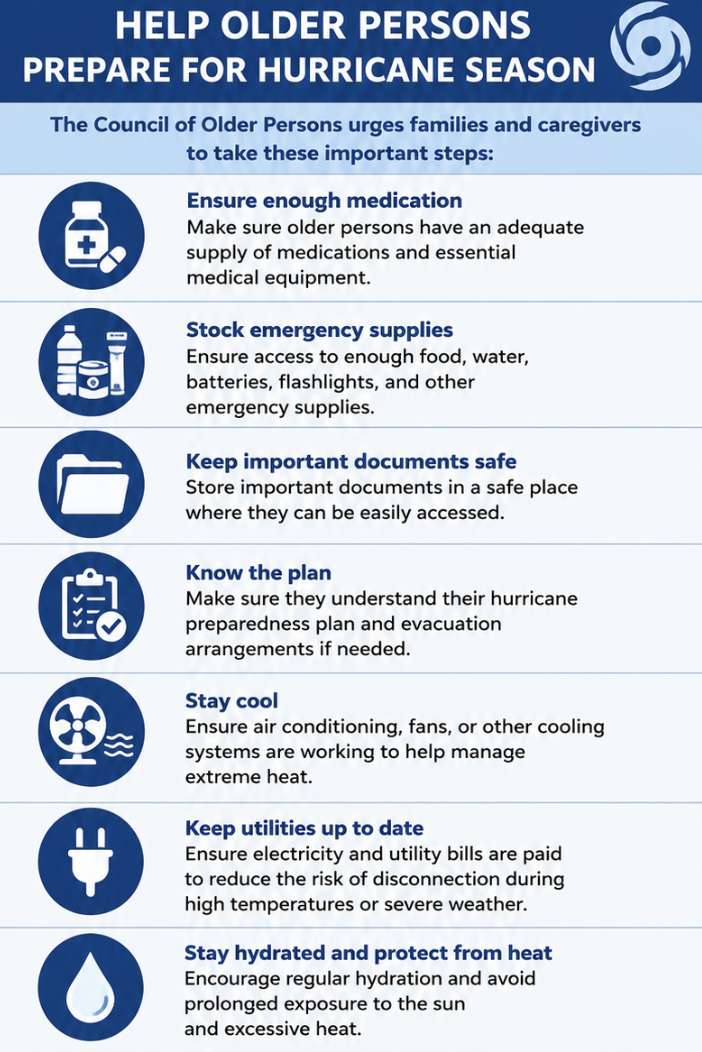
“This hurricane season and throughout the summer heat, we remind all residents to check on an older person,” said Dr. Glaister Bell, chairperson of the Council of Older Persons. “Make sure they have food, water, medication, a working cooling system and a plan for emergencies.”
That preparation should begin well before a storm is approaching, according to general practitioner Dr. Lorna Jackson.
Jackson said older adults should ensure they have enough medication before any warnings are issued. During hurricane season, many prescriptions can be refilled with an additional two-week supply, while people taking controlled medications should discuss emergency arrangements with their doctor.
Yasmin Wheatle-Smith, a registered nurse with the Health Services Authority who works in Emergency Medical Centre shelters, said anyone relying on oxygen, nebulisers or other medical devices should ensure their equipment is working properly, bring their own supplies if they need to evacuate, and be accompanied by a caregiver or family member.
“The medical team is there if you need support, but your caregiver or a family member needs to come with you to the medical shelter,” she added.
Rakiesh Francis, deputy facilities manager responsible for biomedical maintenance at the Health Services Authority, says caregivers should routinely inspect equipment before storms threaten, checking batteries, oxygen levels, tubing and other accessories while keeping instruction manuals close at hand.
“If you haven’t started, you need to start now,” he said.
Preventing isolation
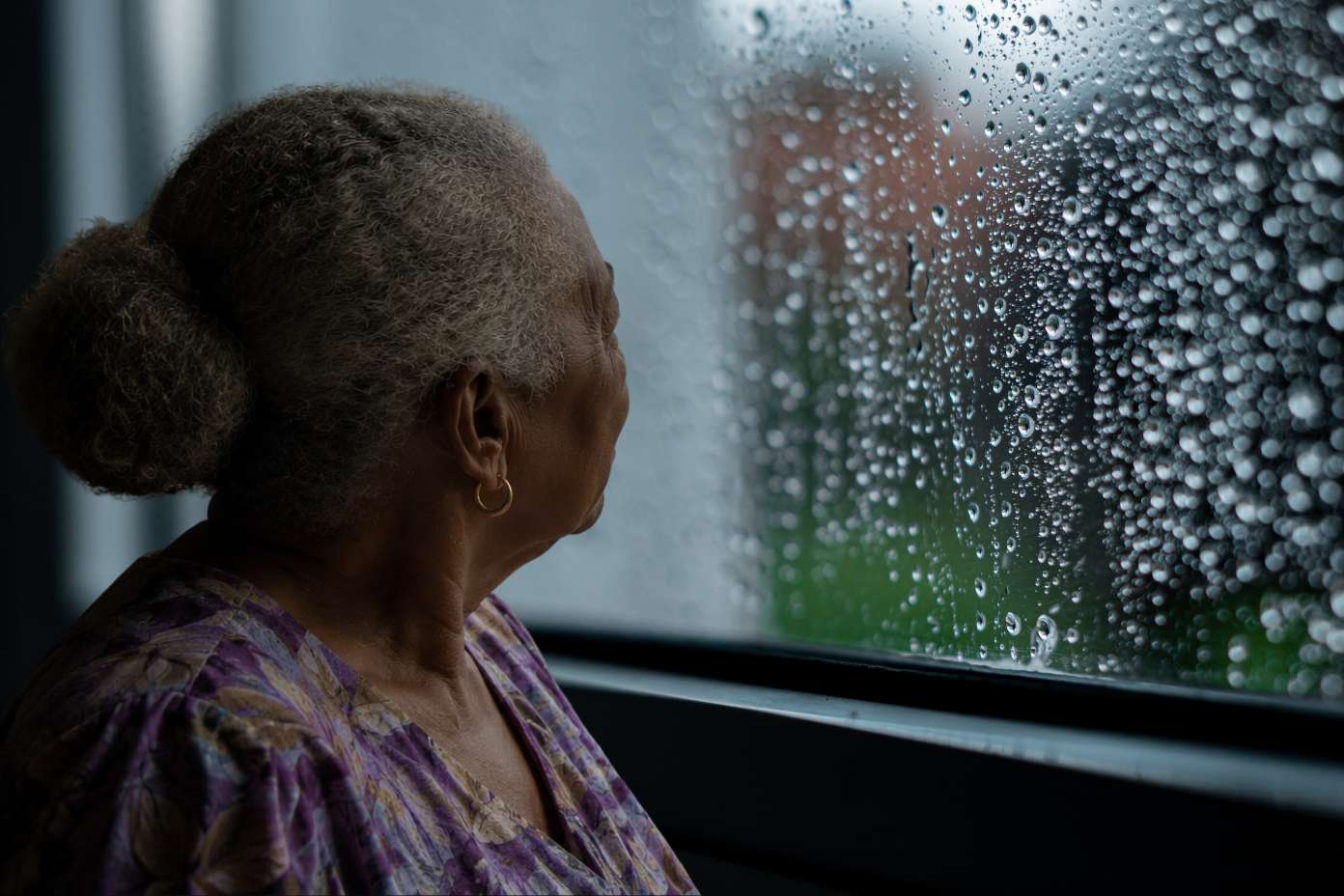
Jackson said older adults should avoid riding out a hurricane alone whenever possible.
She encouraged families to decide well in advance where older relatives will stay if severe weather threatens, particularly if they rely on others for transportation, medical care or daily assistance.
During a hurricane, support networks can quickly disappear as caregivers evacuate, services are suspended and family members are unable to travel, leaving older adults at greater risk if they need medical care or emergency assistance.
“Dependency on others makes older adults more vulnerable,” said geriatrician Dr. Matthew Nelson, who is affiliated with the University of Rochester Medical Center in New York.
Relationships and routines
Older Persons Advocate Lucille Seymour said inclusive planning is a fundamental part of an age-friendly society, noting that hurricanes do not create vulnerabilities but expose those that already exist.
“One of the things people often overlook is how much older persons rely on daily routines and relationships to stay well,” she added.
When home-care visits are interrupted, clinic appointments are cancelled or medications become harder to access, the consequences can extend beyond physical health, affecting confidence and independence as well, she said.
Seymour believes stronger community connections are just as important as emergency supplies. She wants to see more ‘buddy systems’ among older adults and greater confidence using phones and messaging apps so seniors can stay connected before, during and after emergencies.
Annette Vaughan, deputy chairperson of the Council of Older Persons, said those community connections can be as simple as checking in on someone who may need extra support.
“Many older persons may need additional assistance to prepare their homes, access supplies, understand weather alerts, or make arrangements should an emergency arise,” Vaughan said. “A simple phone call, visit or offer of help can make a significant difference.”
Related Videos