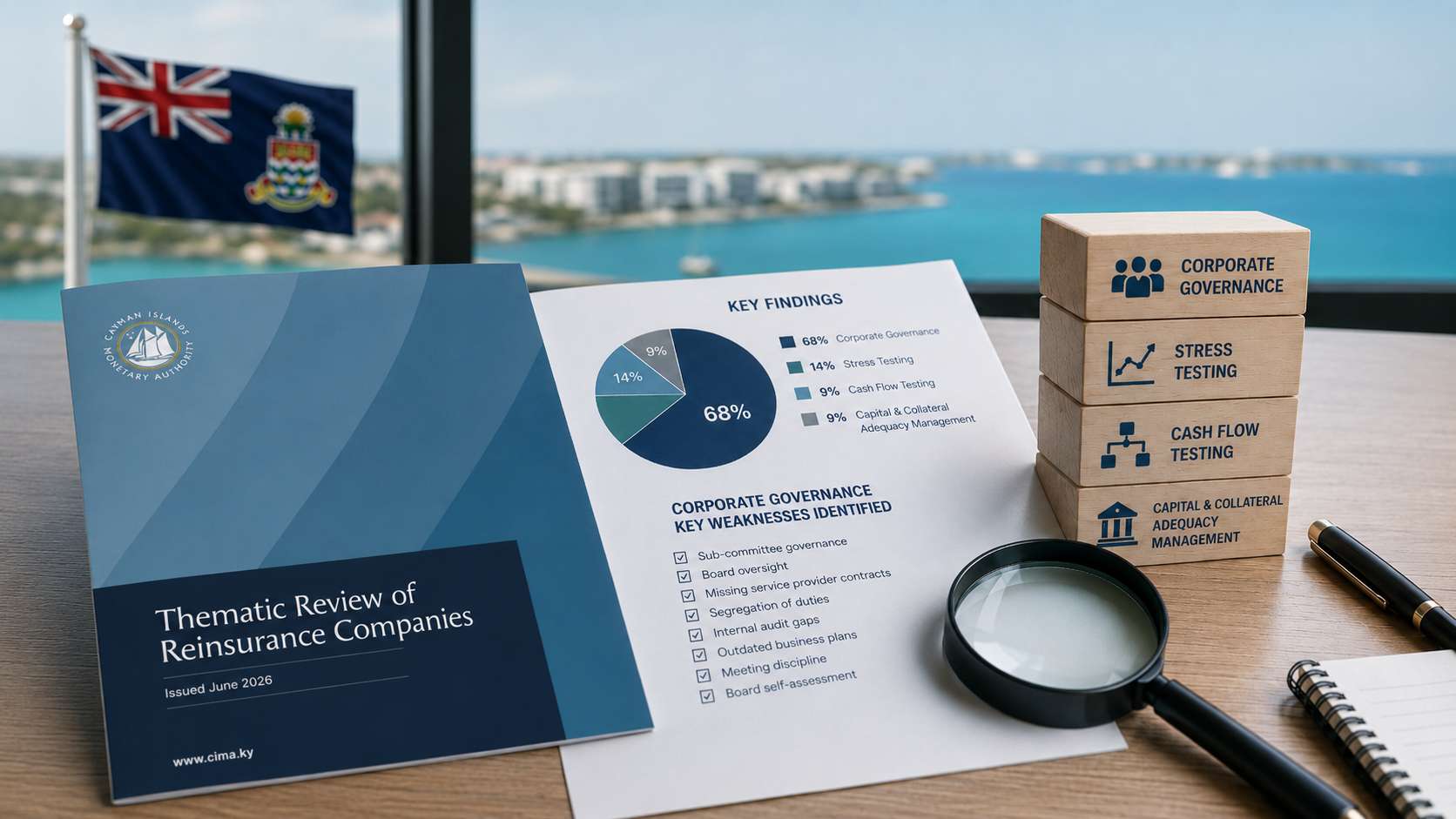
The Cayman Islands Monetary Authority’s ‘thematic’ review of selected reinsurance companies with Class B(iii) and Class D licences found that corporate governance framework accounted for the majority of the weaknesses identified.
The review, which was published in June, comes amid increased local and international interest in Cayman’s fast-growing reinsurance sector. The jurisdiction’s reinsurance companies held US$101.5 billion of assets at the end of 2025, up from US$23 billion in 2020, while the number of reinsurance companies has reached 113, up from 58 in 2020.
In April, Premier and Minister for Financial Services André Ebanks announced that Cayman would submit its bid for Qualified Jurisdiction Status from the National Association of Insurance Commissioners by the third quarter of 2026.
Gary Harris, a reinsurance-focused partner at Walkers, believes that CIMA’s first dedicated thematic review for the reinsurance sector demonstrates the growing importance of the industry in Cayman. “It shows the regulator now treats reinsurance as a major pillar of Cayman’s financial services industry, significant enough to examine on its own terms.”
In an advisory note that he co-authored with Walkers colleagues, he wrote: “The message to boards is clear: Cayman is aligning its governance expectations with the institutional standards that cedants, their US state regulators, rating agencies, and other key stakeholders already expect from major reinsurers.
“This is a sign of jurisdictional maturation and a call to action to strengthen documentation, processes, and service-delivery frameworks across the industry,” he continued.
Faith Dube, chair of the Regulatory Committee of the Cayman International Reinsurance Companies Association, also sees the review as a positive development. “CIRCA welcomes the publication of CIMA’s thematic review of reinsurance companies.”
Dube noted that one benefit of the report is that it “provides valuable insight into the Authority’s supervisory expectations”.
Corporate governance highlighted
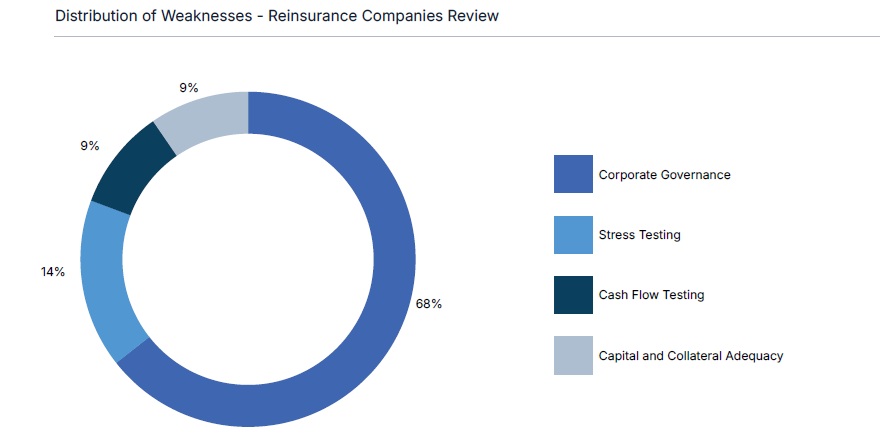
The review, which was published in June, may be a positive sign for the jurisdiction but it also pointed out weaknesses in Cayman’s reinsurance sector. It focused on four areas: corporate governance; stress testing; cash flow testing; and capital and collateral adequacy management.
“Gaps in corporate governance framework accounted for the majority of the weaknesses identified, representing 68% of all findings,” read the report. Stress testing accounted for 14% of the weaknesses, with cash flow testing responsible for 9% and capital and collateral adequacy management for the remaining 9%.
Within corporate governance, some of the main flaws were: sub-committee governance; board oversight; missing service provider contracts; segregation of duties; internal audit gaps; outdated business plans; meeting discipline; and board self-assessment.
Walkers noted these particular focus areas “align with the governance fundamentals emphasised by the IAIS [International Association of Insurance Supervisors] Insurance Core Principles and the NAIC’s guidance on affiliated investment management agreements”.
In the wake of the report, Dube said, “individual firms should consider the observations and recommendations in the context of their respective business models, governance structures, and risk management frameworks”.
Related Videos