The Cayman Islands already has in place a good arrangement for dealing with emergencies, and this will form the basis for expansion into an organisation that prepares the country for any disaster.
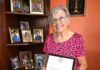
This is the view of Dr. Barbara Carby the designated director of Cayman’s soon-to-be-established National Emergency Management Agency, states a GIS press release.
Ms Carby’s comment on Cayman’s state of preparedness in event of a national emergency comes as the Islands join the rest of the world in observing the International Day for Disaster Reduction today.
‘The present structure that Cayman has can be easily adapted for any disaster response. There isn’t a need for any major restructuring. There is a structure in place, let us look at how we can expand it to respond to other types of disasters,’ she said.
‘Government has made a commitment to look at all aspects of disaster risk management, especially reduction and not just response. The thinking behind it is hitting the nail on the head,’ said Ms Carby, who has over 15 years’ experience in disaster management and reduction. She spent the last nine years as head of Jamaica’s Office of Disaster Preparedness and Emergency Management.
She said Cayman’s current structure provides for an executive to make policy decisions which are implemented by the National Hurricane Committee. She noted that the NHC has many sub-groupings to address all of the issues that may arise in times of a national emergency.
She pointed out that national emergencies can come about in a wide range of areas dependent on the location of the country. In addition to planning for natural disasters such as hurricanes or flooding caused by rain or storm-surge, she said a hazard vulnerability analysis for Cayman would include examination of economic exposure. Issues in this area include risks to the financial industry, factors that can affect tourism, and any possible failure of information technology applications. In addition, she said consideration should be given for accidents on land or sea, or in the air; along with the spilling of hazardous material.
She said that applying principles of mitigation is crucial to disaster reduction. As an example she cited the case of Cable and Wireless in Jamaica. Learning from the experience during Hurricane Gilbert in 1988, the telephone company placed its cables underground. This resulted in the company suffering minimal damage to its landlines when Hurricane Ivan hit the island in 2004.
The theme devised by the United Nations for observance of the International Day for Disaster Reduction is ‘Disaster Risk Reduction Begins at School’. Consistent with this forward-thinking approach, Ms Carby said that the best way to lessen the effect of national disasters is to plan for them and not just respond. ‘Pre-planning is so very important. You need to think it out thoroughly. A national public awareness programme is essential to disaster risk reduction.’
‘If you are talking about disaster management planning, you really want to get everyone involved. Each resident of the Cayman Islands needs to understand that they have a part to play in the success of the national disaster risk management programme for hurricanes or any hazard,’ she said.
She advised that an important part of being prepared is having the relevant information. ‘Information really is your best defence.’
Though not ruling it out, she classed as ‘minimal’ the risk of Cayman being hit by a Tsunami with the force similar to the one that struck countries in the Indian Ocean in 2004.
Tectonic plates [movement of which causes earthquakes] in the Caribbean are slightly different to those found in the Indian Ocean, she said. Another source of tsunamis could be under-water volcanic explosions. The only submarine volcano in the Caribbean is Kick-em-Jenny, which lays six miles off Grenada.
‘From what we know of the volcano of Kick-em-Jenny, it is highly unlikely that an eruption would generate that type of tsunami.’
Computer models have shown that should this volcano erupt, the resulting tsunami would diminish so that it will be only one metre high by the time it gets to Antigua.
While advocating for monitoring, forecasting and warning systems as well as advanced planning to take advantage of that information, Ms Carby none-the-less advises how to recognise a Tsunami threat and what to do if you are faced with one without warning: ‘If you are on the beach and you feel a large earthquake, it is time to move inland. If you see the water recede it is time to run, time to get to a higher point.’
Related Videos