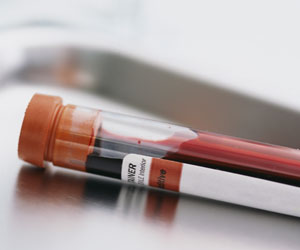
In spite of a well publicised shortage of blood, the Blood Donation Services Department is still turning away many prospective donors.
Anyone who lived in the United Kingdom or spent a cumulative time of three months or more there between 1 January, 1980, and 31 December, 1996, is ineligible to donate blood in the Cayman Islands.
This exclusion affects not only British citizens but also many Caymanians who might have attended school in the UK during that time, or even made regular business visits.
The exclusion is in place due to the possibility of the blood being tainted with variant Creutzfeldt-Jakob Disease. The disease can be caused by the consumption of beef or beef products tainted with Bovine Spongiform Encephalopathy, better known as Mad Cow Disease.
Many prospective donors are questioning whether this ban, or permanent deferral as it is referred to in the medical community, is really necessary.
According to prospective donor Sarah Graham, the situation is very frustrating.
“My husband and I have been on island for 6½ years. Prior to that we were in the UK and were regular blood donors; a practice that we intended to continue here. We were first turned away in 2003. Since then every time I have heard of a shortage I have contacted the donor centre again in the hope that something might have changed,” she said.
The Cayman Islands Blood Bank uses the standards of the American Association of Blood Banks as its guide for accepting blood donors, while also including recommendations of the Pan American Health Organisation.
The selection criteria when it comes to prospective donors who may be at risk for vCJD seems to be more relaxed than those of the American Association of Blood Banks, as the organisation recommends “Individuals with diagnosis of TSE as well as those who received
extract derived from human pituitary gland, dura mater or corneal grafts; those with family risk of human TSE; those with behavioural risk of vCJD; and those who received transfusions in the UK from 1980 to 1996 should be deferred as blood donors”.
However, according to Judith Clarke, laboratory quality coordinator for the Cayman Islands Health Services Authority pathology laboratory interprets the term “behavioural risk of vCJD” to refer to the presence of the prospective donor in the UK or continental Europe between 1980 and 1996.
According to Ms Clarke, the deferral is likely to remain in place until the standards change.
“This change would be guided by scientific evidence,” she said.
At present the incubation period of vCJD is still unknown, which makes it impossible to predict when the deferral could be lifted.
“There are people still incubating the disease and showing no clinical manifestation,” said Ms Clarke.
Although vCJD was originally thought to have an incubation period of 15 years, which would have made it possible for the deferral on blood from the UK or Europe to be lifted soon, research now suggests the incubation period can be up to 30 or even 50 years.
There is no test available to check for the presence of vCJD in blood.
“We improve wherever we can, but in terms of finding a test, it is bigger than us,” said Ms Clarke.
Although there have been a very limited number of cases of vCJD in the United States linked to exposure to BSE, all these cases are believed to have originated outside the US, with two traced back to infection taking place in the UK with another believed to have taken
place in Saudi Arabia.
The deferral has had a devastating impact on the ability of the blood bank to keep blood reserves at an acceptable level.
“The impact is great as some of our most faithful donors are from Europe and we hope that one day very soon they will perfect a test or be able to determine the incubation time,” said Ms Clarke.
“This deferral is like any other deferral rule in place to protect the recipients of blood or blood products. Rules are in place to also protect the blood donor,” said Ms Clarke.
Although the deferral in place for people who spent time in the UK during the indicated period has the biggest impact on the local blood bank, there are numerous other deferrals in place.
In fact, the questionnaire that has to be filled out by prospective donors every time they come in to donate blood has close on 40 questions on it and answering yes to even one can lead to the donor being at least temporarily deferred.
These include questions on medication, travel, country of origin, current health and sexual practices.
In the UK there is concern that the blood supply may contain some contamination caused by exposure to BSE. According to a position statement on vCJD, found on the UK Blood Services website, the UK Blood Services imports fresh frozen plasma from US volunteer
donors for the use in children born after 1 January, 1996.
“The rationale for this cut off date is that children born since 1996 are considered to have received minimal exposure to the BSE agent because of the effectiveness of the animal feed ban, which was fully implemented from 1996 and the exclusion of animals above 30
months entering the food chain,” according to the statement.
Although the risk of a blood recipient in Cayman contracting vCJD from a blood donor in Cayman would appear to be remote, Ms Clarke is quite clear on the fact that it is not a change the local blood bank is willing to take.
“Even that one life, that one death, we wouldn’t want to risk it,” she said.
Ms Clarke urges any prospective donors to contact the blood bank to find out whether they would be able to donate, as the donor pool in Cayman is still woefully short of the number of donors needed.
According to World Health Organisation suggestions for a population of Cayman’s size, a pool of 2,600 active donors would be ideal. At present, Cayman has only around 750.
In spite of the shortage of donors, Cayman is still one of the only countries in the region to have 100 per cent voluntary donation.
For more information on donating blood, contact the blood bank at George Town Hospital on 244-2669.
Related Videos