

A loophole in the new Human Tissue Transplant Bill allows for the buying and selling of human organs, former Health Minister Ezzard Miller has claimed.
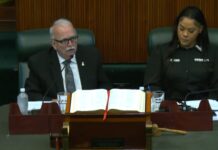
Mr. Miller is requesting amendments to the legislation before it is passed into law. The North Side legislator held a news conference on 21 March to outline a series of concerns. He said he believes the bill was deliberately debated in his absence from the Legislative Assembly in an effort to push the law through without his objections being noted.
“It is accepted as normal practice that human tissue is not bought and sold and otherwise traded across borders for financial gain, especially by third or middleman parties,” he said. “In my view, the bill, as proposed, does allow this kind of trading in an underhand way.”
A clause in the bill appears to allow for human tissue to be sold in accordance with a permit. Section 21, clause 3, states: “The council may by permit or in writing authorise a person to buy tissue (other than spermatozoa or ova) or to take tissue (other than spermatozoa or ova) from the body of another person, subject to such conditions and restrictions as may be specified in the permit, if the council considers it desirable by reasons of special circumstances to do so.”
Mr. Miller has called for several amendments to the bill removing this clause and others which he believes allow for some form of organ trading to take place. “My big concern is, in my view, the ability (in the bill) to sell organs,” he said. “That is frowned on internationally and I can’t support that.
“I’m having nightmares that if you can sell kidneys and stuff locally some of the drug addicts around here will be on dialysis because they will sell both kidneys.”
Health Minister Mark Scotland said the bill explicitly outlawed individuals from selling their organs and prohibited the purchase of organs.
He accepted there was an exception for licensed “tissue banks”, which he said was designed to cover expenses, such as importation costs. And he said the controversial clause 21 (3) which allows the purchase of tissue in “special circumstances” subject to written permission from the Human Tissue Transplant Council, was not designed to facilitate trade in organs.
He said that stipulation meant that, for example, a patient with a sibling overseas who had been identified as a suitable kidney donor could offer to pay for the donor’s airfare or other costs associated with the post-surgery recovery.
Mr. Miller believes the law, as it stands, puts too much power in the hands of a politically appointed council. He wants further changes made to the bill to ensure the Human Tissue Transplant Council is made up of experts.
He said the medical director of the Health Services Authority and two internationally-recognised medical experts, such as the dean of the medical school at the University of West Indies, should be on the panel.
“I believe it should be more intellectual, rather than appointed by politicians in Cabinet,” he said.
The law mandates a minimum of one medical practitioner. Mr. Scotland said the five-member council’s remit went beyond medical concerns and would require some expertise in legal matters as well as ethics and human rights.
“They have an oversight role to ensure best practice is adhered to in terms of the policies and procedures for consent and to ensure that human trafficking concerns are being adequately addressed,” he said. “They will also act as a licensing body for tissue banks and provide procedures and oversight of importation of tissue.” Mr Miller has also called for various amendments to the Health Practice Bill, which was also debated during his absence from the Legislative Assembly on 15 March.
Related Videos









Cayman is already perceived, however wrongly, as one of the Global villains of Money Laundering. What we cannot afford, is to be similarly perceived as a jurisdiction which facilitates illegal trade in human organs. This is a very subjective issue, and could result in extremely negative publicity for the islands, particularly in the US.
Mr. Miller is right to be concerned. This bill has not been thought out. At a time when the US, the EU and the UN are all working to prevent the trafficking in human organs Cayman needs to be very careful to ensure that nothing that is put into law here could be in any way be perceived as assisting criminals involved in the trafficking of human body parts for profit. The joint EU/UN project to stop trafficking in human body parts is set out here:http://www.ungift.org/knowledgehub/en/about/trafficking-for-organ-trade.html.
The law clearly outlaws the sale of organs.
Mr. Miller is using scare tactics to frighten people when there is no loophole whatsoever to permit what he suggests could happen.
Please Mr. Miller, concentrate your talents in the areas we should really be afraid of…the current crime wave.