

At a glance
- Cayman’s statutory boards show ongoing gaps in operations, compensation and transparency
- Premier André Ebanks confirms HSA shakeup/audit is a part of a wider review aimed at improving governance across all public service
- MP Chris Saunders said board chairs should go through a confirmation process, similar to how the US Senate approved key presidential nominations
They oversee multi-million-dollar budgets, thousands of staff and critical public services, yet the operations, compensation and transparency of Cayman’s statutory boards remain uneven and opaque.
A Freedom of Information-led investigation by the Cayman Compass reveals significant disparities in how the islands’ key public boards are paid, how members are selected, how often they meet and how transparently they operate.
Including core government entities, there are more than 100 boards in Cayman, responsible for everything from deciding planning applications or work-permit appeals to approving new veterinarians and doctors to practise in the islands.
The Compass focused its investigation on 10 of the biggest and most influential boards in charge of statutory authorities and government companies.

The data set – including FOI responses from the Cayman Islands Health Services Authority, Cayman Airways, the Cayman Islands Airports Authority, the Utility Regulation and Competition Office (OfReg), the Cayman Islands Monetary Authority, Water Authority – Cayman, the Port Authority of the Cayman Islands and the National Roads Authority – shows there is no consistent framework governing meeting frequency, remuneration models or publication of board minutes.
While the operations of some boards are necessarily private for commercial or client confidentiality reasons, that is not the case for many.
A formal guidance on remuneration for members of public bodies, issued by the Deputy Governor’s Office in 2024, sought to set some guardrails recommending a sliding scale of caps on ‘annual honorariums’ for public bodies. For example, the guidance recommended a maximum pay cap of $3,360 per month for the chairs of the biggest commercial bodies, overseeing revenues in excess of $100m.
The FOI disclosures reviewed by the Compass indicate that actual compensation varied widely in 2024 and 2025, from stipends that in some cases amounted to more than $100,000 annually, to token contributions of $150 per meeting, or, in one case, no money at all.
There is no open public process for recruiting the people who oversee these government entities. Board members are typically appointed by ministers and approved by Cabinet under enabling legislation and the Public Authorities Act. Several authorities confirmed vacancies are not publicly advertised.
The situation has prompted calls for a review of how boards are appointed and how they operate. Independent MP Chris Saunders argues that board chairs should go through a ‘confirmation process’ in Parliament, similar to how the US Senate approves key presidential nominations.
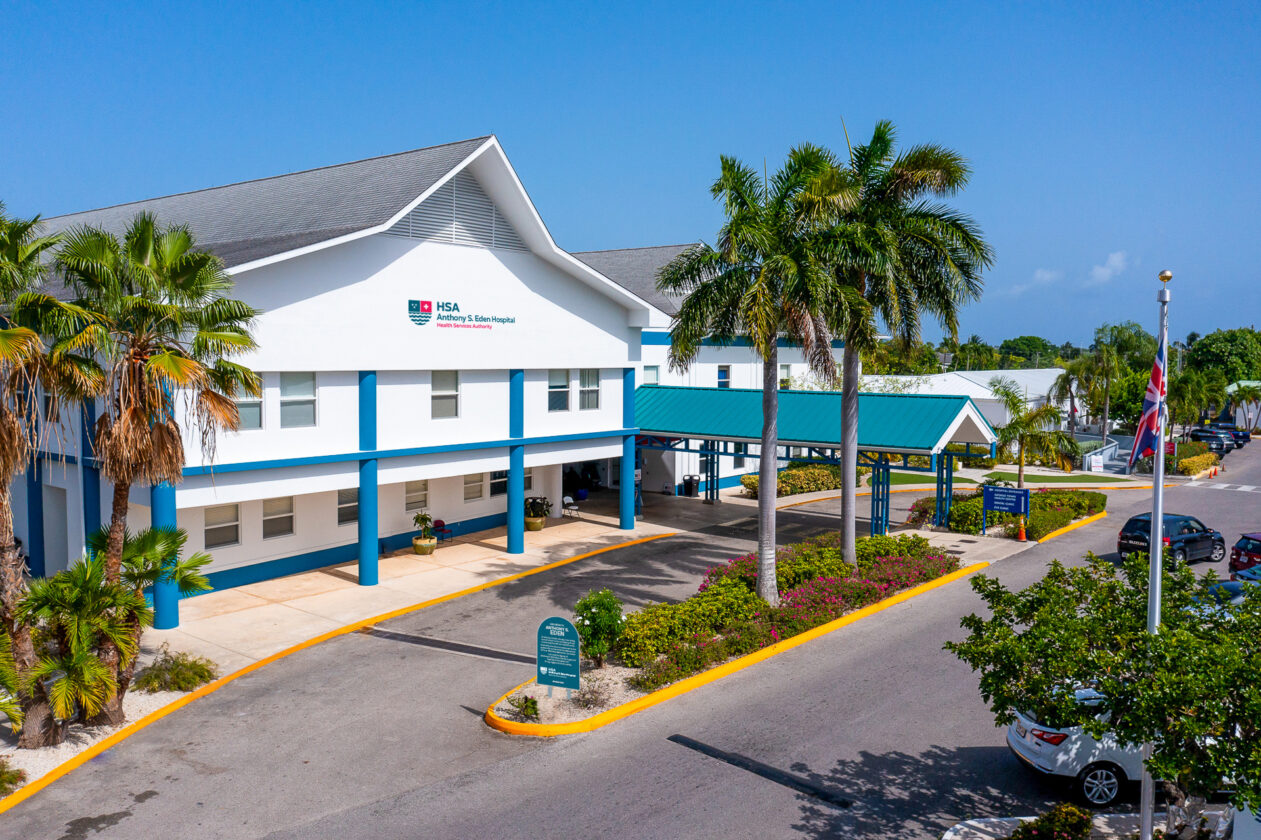
Some reforms are already taking place. The Health Services Authority is undergoing an independent audit alongside a shake-up of how board members are paid, following widely publicised concerns over compensation and separation of powers between the lay board and paid executives.
Premier André Ebanks told the Compass the reforms at the authority were part of a wider review aimed at improving governance across the public service.
HSA an outlier in meetings and pay
The FOI data confirms, as the Compass previously reported, that the Health Services Authority convened 190 meetings between January 2024 and June 2025 – comprising 130 meetings in 2024 and 60 in the first six months of 2025.
Over that same 18-month period, HSA directors were paid a total of $490,850 in stipends.
No other board in the survey reported meeting volumes or remuneration at that scale.
Board meeting data
- Cayman Islands Airports Authority held 10 meetings in 2024 and six in 2025 (through June).
- Water Authority – Cayman held 11 meetings in 2024 and four published meetings in 2025 (through June).
- The National Roads Authority held 22 meetings in 2024 and 10 in 2025 (through October).
- OfReg recorded 11 general and three special meetings in 2024, and six meetings in 2025 (through June).
- The Cayman Islands Monetary Authority held five meetings in 2024 and three in 2025 (through June).
- Cayman Airways held 12 meetings in 2024 and 10 in 2025 (through December).
*The time periods for responses varied based on when the FOI responses were submitted.
Wide variation in pay
The FOI responses also show marked differences in how directors are compensated.
The highest paid boards, other than the Health Services Authority, according to the FOI responses for the time period reviewed are OfReg and CIMA.
The OfReg chairman receives $4,500 a month under a flat-fee structure, while the CIMA chair receives $4,000-a-month. The complex and involved work of these regulators has previously been cited to explain the differences in their pay.
By contrast, the entire National Roads Authority board received $23,000 collectively in 2024 and a similar amount in the first half of 2025, the records suggest. Cayman Airways board members are not paid at all, but receive free flights when available, according to the FOI response.
Board pay data:
- Health Services Authority: $490,850 over 18 months (Jan. 2024 to June 2025). Per-meeting payment model (since replaced).
- OfReg: $332,673.91 over 18 months to July 2025, flat fee model.
- CIMA: $264,000 over 20 months between Jan. 2024 and Aug. 2025, flat fee model.
- Port Authority: $142,910 over 18 months to July 2025.
- Airports Authority: $106,000 in 2024 $85,500 Jan.–Sept. 2025. Flat monthly stipends.
- Water Authority: $44,352 in 2024. $15,648 in first half of 2025.
- National Roads Authority: $23,000 per year in total stipends, approximately $150 per meeting per member.
- Cayman Airways: Directors receive non-revenue flight benefits valued at US$33,962.85 in 2024 and US$26,286.03 in 2025 through November.
Transparency uneven
The FOI exercise also revealed significant variation in record keeping and publication practices.
The Water Authority, OfReg and National Roads Authority publish detailed minutes online, though they appear to be posted in batches and updates are not always current.
The Cayman Islands Airports Authority publishes note-form minutes, currently up to date through June 2025.
CIMA does not publish its minutes proactively, but they are available through FOI, though they were almost wholly redacted in the disclosure.
Cayman Airways minutes are retained in accordance with statutory requirements, but are not required to be held in public. The Compass rescinded its FOI request due to the scale of redactions that would have been applied.
The HSA indicated it would defer disclosure of minutes until 31 Aug. 2025 while preparing them for release. Subsequent follow-ups did not produce the requested minutes, and the matter is now under appeal with the ombudsman.
The Cayman Turtle Centre did not respond to the FOI request or internal appeal, citing staff illness, and no disclosure was provided on board pay, meeting minutes or attendance.
Reform under way
Scrutiny following Compass reporting and investigation by government’s internal audit unit and the auditor general led to a change in how the Health Services Authority board operates and how members are paid.
Former Maples attorney Tim Ridley and Chamber of Commerce president Omari Corbin were appointed to a new-look board last month, and KPMG was commissioned to perform a 10-week governance audit.
The switch followed a decision by government to replace its per-meeting payment model with fixed monthly stipends, effective from last December.
Health Minister Katherine Ebanks-Wilks said, “Transparency, accountability and strong governance standards must guide the stewardship of public resources. This revised remuneration framework responds directly to concerns raised by residents and oversight bodies, ensures better value for money, and reinforces the principles that underpin effective public-sector governance.”
Asked if the changes at the HSA could be a blueprint for wider reform of Cayman’s board structure, Premier Ebanks said government was looking at the issue as part of a wider drive towards better governance.
He said he assumed “positive intent” in the case of the Health Services Authority board, and the KPMG audit was not designed to be punitive, but to look at what lessons could be learned and applied more generally.
He said government has looked across “100 boards”, and developed an internal framework aimed at merit-based appointments, avoiding conflicts of interest and considering inclusion and diversity.
While some appointments – for instance, deputy chair of the Central Planning Authority Handel Whittaker’s inclusion on the National Conservation Council – have drawn public criticism, he said this was a deliberate move to help build bridges and ensure better communication between the two bodies. The National Conservation Council and the Central Planning Authority have clashed in court, but Ebanks said they needed to be able to collaborate and resolve issues without costly legislation.
Ebanks added that government could not always attract the people it wanted to fill all the slots on the numerous boards that help keep Cayman running.
Standardising how boards are paid and how they operate is complex, he said, because of the different roles they perform – some dealing with highly sensitive private information – and differences in the enabling legislation.
“It’s going to be different horses for different courses,” he said. “We know that good governance is a big topic, and boards is a subset of that.”
Guidance document advises on pay cap
The Deputy Governor’s ‘Guidance on remuneration of members of public bodies’ document sets out some basic principles for payments to those serving on boards.
It establishes that civil servants are not entitled to additional compensation and that remuneration for other board members is discretionary and linked to the time investment and complexity of the role.
It also sets recommended caps on compensation levels for each up to $13,440 per year, $3,360 per month or $840 per meeting (with a 50% reduction for meetings under two hours). In cases where boards are compensated on a per-meeting basis it advises a set limit on the number of paid meetings per year or an alternate approach to compensation if it is felt likely to bring ‘better value for money’.
A foreword to the document states that there is currently no formal framework on board pay and stresses its recommendations are advisory and not intended to increase burdens on the public purse.
The document adds that compensation should not be expected in all cases and that those who step up to serve have traditionally done so out of community spirit or a desire to contribute to the ‘prosperity of the Cayman Islands’.
It states, “Many choose to provide such services for little or no reward, recognising the innate value of public service.”
It acknowledges, however, that the workload and complexity of some of those roles has meant compensation is necessary in some cases.
Widening the pool
Compass columnist Simon Cawdery, called for a broader and more transparent approach to board appointments.
“Any government should want the widest possible pool of candidates from whom to choose, so that it can select the best persons,” he wrote, urging ministers to “introduce a public transparency initiative” setting out board roles, required skills and compensation, and inviting applications from the public.
Saunders, the independent MP for Bodden Town West, who has campaigned for reform of the HSA board, agrees that more oversight on appointments is needed.
He said boards, like the Health Service Authority, the Central Planning Authority, the Immigration board and others, are critical to the smooth functioning of Cayman, and need to be taken seriously and have additional layers of accountability.
“These are hugely important public roles, with decisions that have significant consequences for Caymanian people,” he said.
In terms of pay, Saunders insists he is not against board directors being fairly compensated. He said the right approach likely lies somewhere in between volunteerism and professionalisation.
Certain boards require expertise, and government may need to pay to attract it, but compensation should remain proportionate, transparent and accountable, he added.
In response to earlier criticism of its meeting load and pay structure, the previous HSA board released a detailed statement in its defence.
The board said it carries the heaviest responsibilities of any statutory authority, overseeing a health care system with more than 1,200 staff, multiple facilities, and complex financial and regulatory obligations.
The statement cited an “exceptional period” that required an unusual number of meetings to manage issues, including Joint Commission International accreditation and some complex clinical legal cases.
Long-standing concerns
A 2019 Public Interest Report by the Office of the Auditor General found there was “no overarching remuneration structure” governing statutory boards, with inconsistent payment models across entities.
The report followed the introduction of the Public Authorities Law 2017, which was intended to provide a governance framework for statutory authorities and government companies.
Nearly a decade later, the latest FOI data suggests that while reform is now underway at the HSA, significant variation in board pay, meeting frequency and transparency remains across Cayman’s public authorities.
Related Videos









“Waste and grab all you want, we’ll tax more”!
It’s the usual poor leadership and unaccountability of appointed memebrs of a banana replublic