


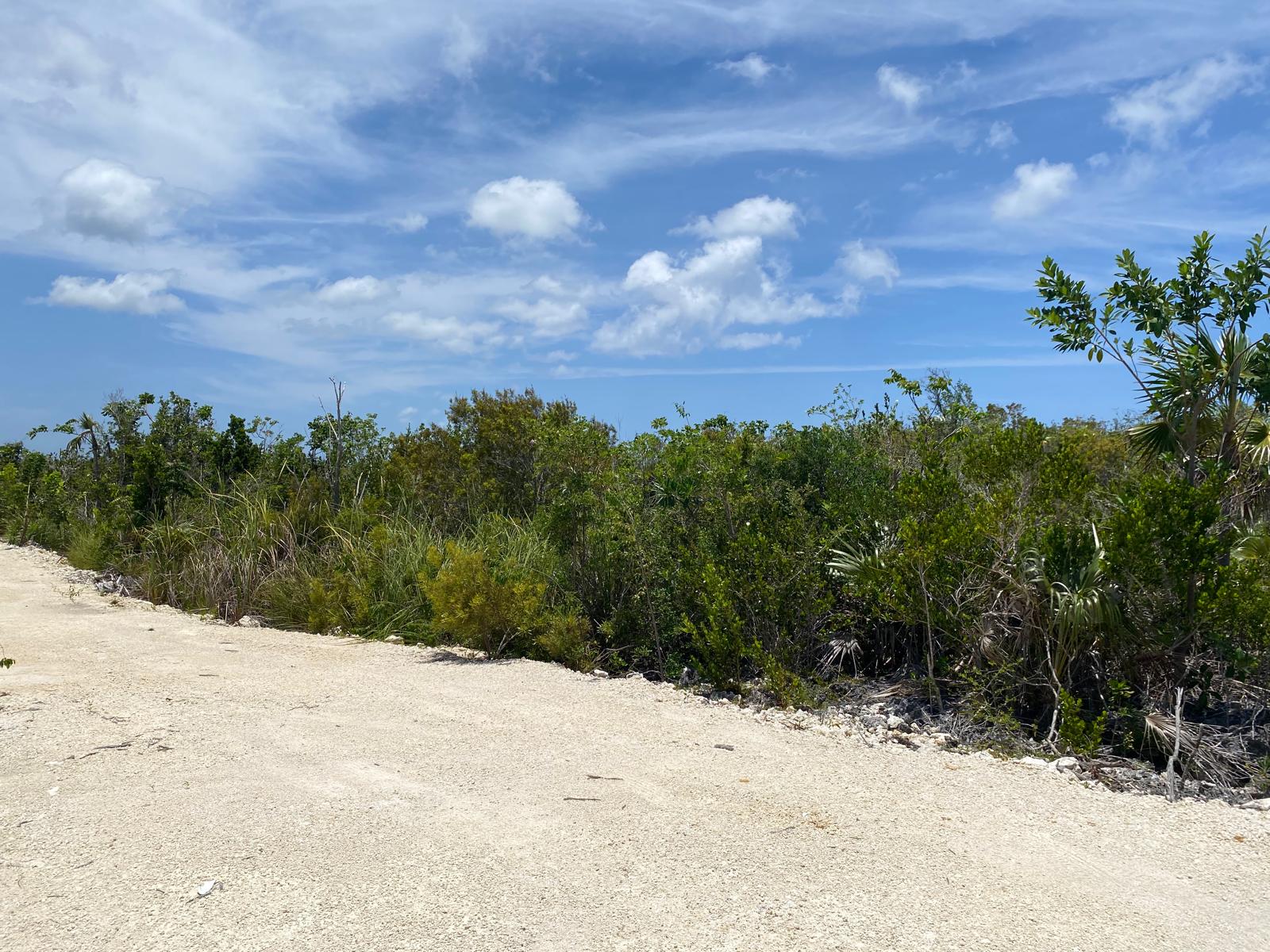
After-the-fact planning permission for a private road that cuts through blue iguana habitat in Grand Cayman has been quashed in another court victory for conservation officials.
The Grand Court ruled that the 2023 decision of the Central Planning Authority to grant retrospective permission to land owner Bon Crepe Ltd for the two-mile road on private property in East End was unlawful.
Because the road impacted the critical habitat of a protected species – the blue iguana – the decision should have been referred to the National Conservation Council, the court confirmed.
The court’s ruling comes against the backdrop of political debate over the National Conservation Act, with some politicians pushing for revisions that would limit the power of the council and remove its capacity to go to court to settle such disputes.
Conservation council chairman Stuart Mailer hailed the ruling saying it showed why the council must retain the “ability to challenge questionable decisions”.
It is the second time the courts have ruled in favour of the conservation council in a clash between two government bodies over contentious planning approvals that impact protected species and areas.
Summarising the background, Justice Jalil Asif KC said the case centred on what wildlife guardians have described as an important and endangered species found nowhere else in the world.
“The NCC states that its action in this case is motivated by a desire to protect for the benefit of present and future Caymanians the recovery from near extinction of the Cayman blue iguana, and its habitat, on which many millions of dollars have been spent, as well as protecting areas of mangroves, which are also under threat within the Islands.”
James Bergstrom, a Caymanian lawyer who is the owner of the land through the holding company Bon Crepe Ltd, has indicated that he had intended the road for personal use to open up access for recreation and farming.
Bergstrom acknowledged Thursday that the judgment means he will need to reapply for planning permission and must jump “two hurdles” and ultimately obtain approval from both bodies.
He has stated that he believed he could build a road without specific planning permission because it was an internal route on his own land over an existing right of way.
The Department of Planning had indicated it shared this view, the ruling states. However Justice Asif wrote that the law clearly mandates that planning permission should be obtained before construction in such circumstances.
Bergstrom was not represented at the hearing and the case focussed more on the legality of the Central Planning Authority’s decisions and the interplay between the planning body and the conservation council.
An ‘unfortunate clash’
It is the second round in what Justice Asif described as an “unfortunate clash” between two government bodies.
On both occasions, the courts have affirmed that the National Conservation Council has the final say on planning applications that impact protected species or areas.
The judgment noted that, prior to the court action, the Attorney General’s chambers had indicated that planning permission was required for the construction of the road, whether or not it was over a right of way, and that the National Conservation Council would need to be consulted.
Despite this, and the fact that it recognised that its initial planning approval had been unlawful, Justice Asif wrote that planning officials had declined to voluntarily submit to a quashing order. Lawyers for the Central Planning Authority argued that its later decision to modify the planing permission had sufficiently dealt with the problem.
However, Justice Asif ruled this later decision was also unlawful. He went on to question why the Department of Planning did not take enforcement action in the face of repeated requests from environment officials as road construction took place.
Kate McClymont, of Nelson’s Legal, which represented the National Conservation Council, said the judgment underscored the planning board’s “continued failure” to properly understand and apply both the environmental and planning legislation.
“We are pleased to see the Judge’s acknowledgment that it was the CPA’s refusal to agree to the NCC’s reasonable settlement proposals that led to expenditure of public funds in this instance.
“We hope the CPA will cooperate with the NCC more sensibly in future, to ensure such issues are resolved without recourse to litigation.”
National Conservation Council Chairperson Stuart Mailer, said the judgment, in tandem with a previous court decision concerning planning permission to rebuild a cabana and sea wall in a marine park, emphasised the importance of the council’s role.
A spokesperson for the Central Planning Authority said it was assessing the ruling and currently has no plans to appeal.
“The CPA is in the process of reviewing the decision and, while disappointed with the outcome, respects the judicial process.”
- James Bergstrom is a former owner of the Cayman Compass
Related Videos












How rare to get some good news from Cayman.
Thank Goodness.
Well DONE
Why wouldn’t politicians push for revisions that would limit the power of the council and remove its capacity to go to court? It’s the only way these crooks could get away with doing what is best for THEM and not the islands, its flora and fauna, and the people they work for.. how blatant to point out the fact that they just literally want free reign and power to make their own decisions based on what will work best for them, their projects, and filling their deep pocket. Come on.. what a joke. I would hate to see what this planet would look like without the people fighting for what needs to be looked after, preserved, respected and cared for. We all know the blue iguana needs all the help it can get.. placing a road through its habitat is clearly, and obviously, not going to help.