
Questioning the necessity to continue a costly legal battle between two government bodies, the Court of Appeal has turned down a Central Planning Authority application to appeal to the UK’s Privy Council over the court’s quashing of planning permission to replace a West Bay seawall and cabana.
The issue has led to an unprecedented, drawn-out courtroom dispute between the planning board and the National Conservation Council. It arose from a controversial planning application in 2021 from Cayman Property Investments to demolish and rebuild a cabana and seawall on an eroded section of beach along Boggy Sand Road.
The Central Planning Authority had granted permission to the company to demolish and replace the structures, contrary to a directive from the National Conservation Council not to approve the project due to the harm it was likely to cause to the protected marine environment.
Part of the legal arguments at the initial judicial review before the Grand Court in June 2022 had centred around whether the conservation council had the power to order another government body to take a certain action.
The Court of Appeal in September this year quashed the planning permission, sending the application back to the Central Planning Authority for review. In their ruling at the time, the appeals court justices confirmed that the conservation council has the ‘final word’ on applications that are likely to have adverse effects on marine parks or other environmentally protected areas.
The planning board then appealed to the court for permission to take the matter to the UK’s highest court, the Privy Council.
Appeal concerned relationship between two public authorities
The Court of Appeal judges – Sir Richard Field, Sir Alan Moses and Sir Michael Birt – in their ruling on the Privy Council appeal application, noted that Cayman Property Investments, which is listed as an interested party in the case, did not dispute that the planning board’s decision should be quashed.
Instead, the appeal “was primarily concerned with the relationship between the powers and duties of the two public authorities, the CPA and the NCC,” the judges wrote.
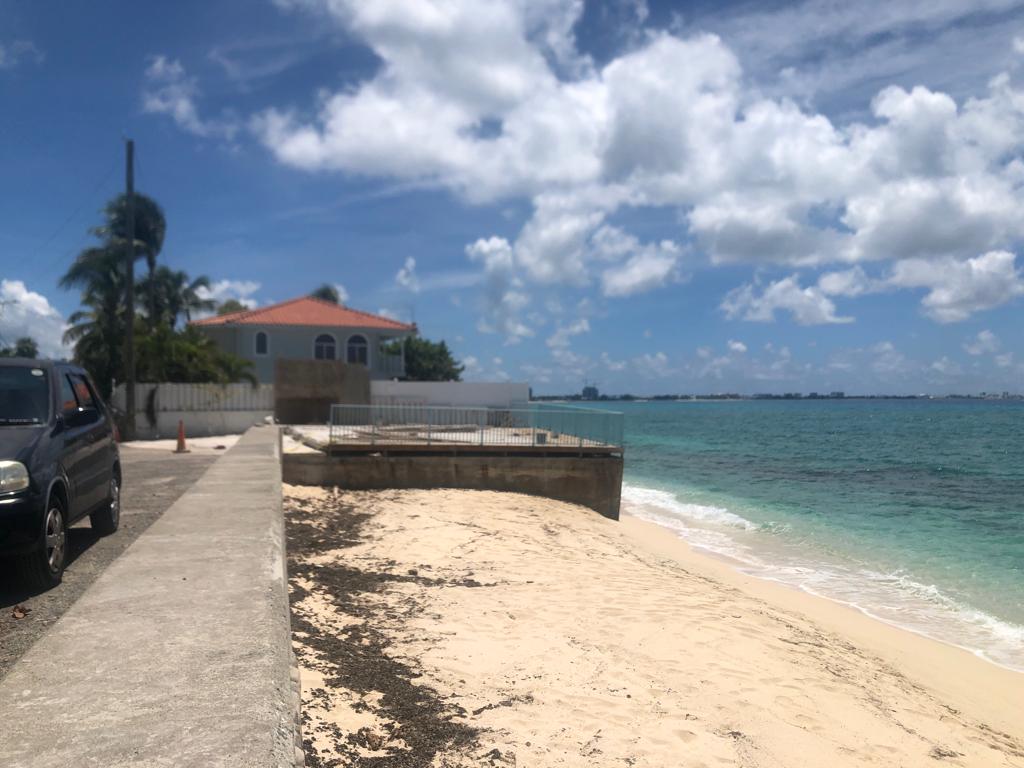
They noted that since the earlier court judgment, the cabana had been demolished and the area that would have been used for remedial operations to alleviate a risk of silt-laden water affecting the nearby protected site had been developed.
The judges said a new application for planning permission will therefore be needed.
One of the points of appeal, the justices stated, dealt with the interpretation of Section 41 of the National Conservation Act, which they said “may be a matter of public importance”.
That section requires every entity, in accordance with any guidance notes issued by the National Conservation Council, to consider any views of the council before taking any action which “would be likely to have an adverse effect on the environment generally or on any natural resource”.
However, the judges said, “In the light of the destruction of the cabana and the development of the site in which it was proposed to take precautionary measures, the question is academic”.
Dispute already resolved
The judges said the dispute had already been resolved in a way which leaves both departments with a clear procedure to follow, which gives them “ample opportunity to make their views known, should they differ as to the planning merits”.
They added, “It is difficult to see why the further expenditure of public time and money is necessary.”
The judges also pointed out that, in order to succeed in its appeal, the Central Planning Authority would need to establish that the reasons for upholding the quashing order were incorrect.
The fact that the Court of Appeal, in its earlier ruling, had determined that the planning board had failed to consider section 41(4) of the National Conservation Act and had not given “any cogent reason” for disagreeing with the conservation council, which was “fatal to the appeal”, the judges said.
That had been determined, at the judicial review, by a “straightforward scrutiny of the record of the [CPA’s] meetings and decisions”.
The judges noted that the questions of whether the National Conservation Council could delegate its power to the director of the Department of Environment and whether it had the power to issue guidance notes “are peripheral, and do not touch on the quashing order”.
They also stated that there was no need for any further clarification of the powers of the National Conservation Council under the existing legislation.
“For all these reasons, the court refuses leave,” the judges concluded.
In a separate ruling on costs, the Court of Appeal justices upheld the lower court’s ruling that had ordered the Central Planning Authority, the appellant in the case, to pay the legal costs of the National Conservation Council.
Related Videos