

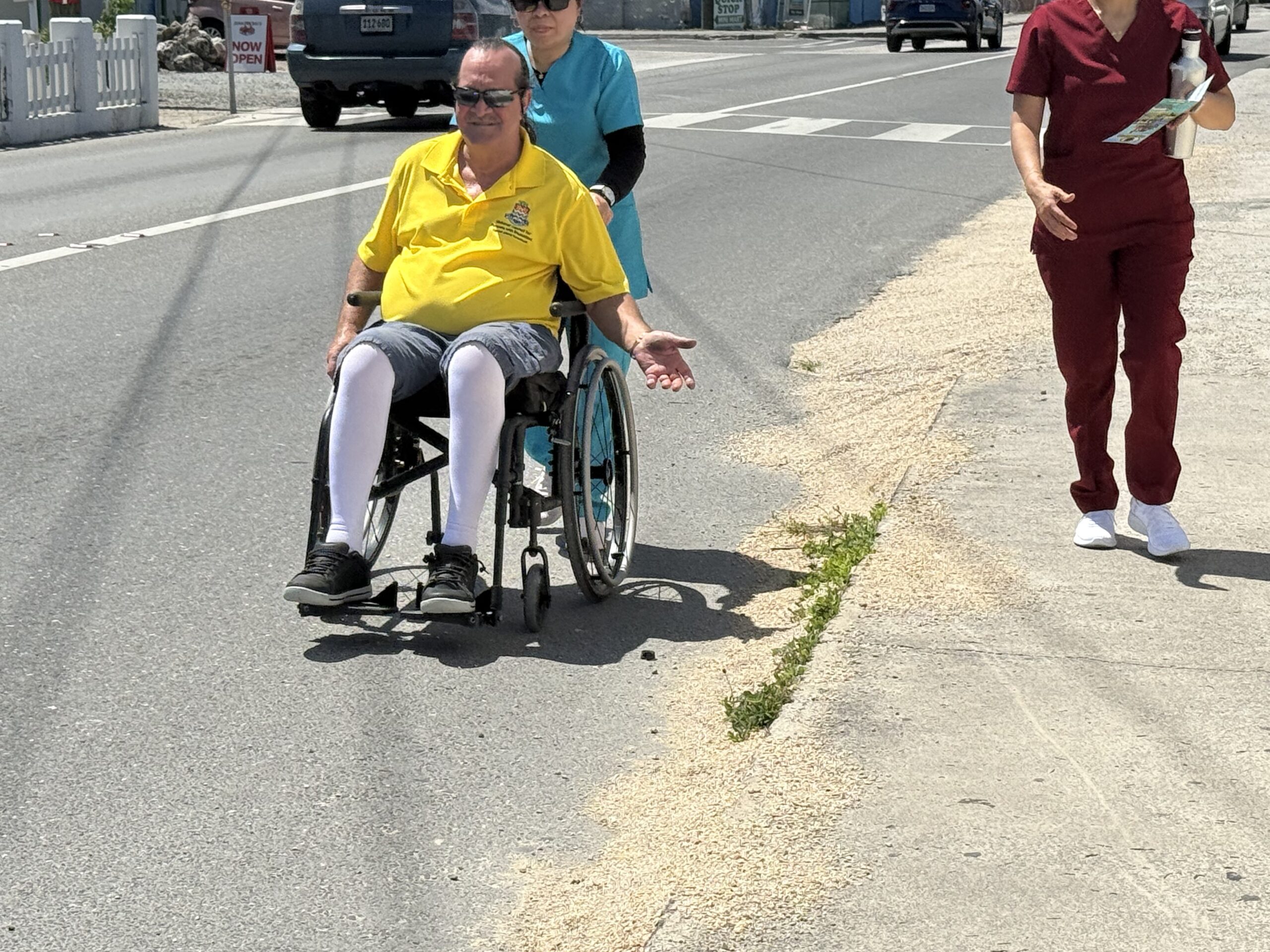
After a serious automobile accident left him paralysed from the chest down, Kenneth Ebanks, who was – and remains – a board member of the Central Planning Authority, spoke to his fellow board members about making Cayman more accessible for people with disabilities.
“I made an appeal to my fellow board members that we have been overlooking many things in George Town and in the Cayman Islands in general for people with handicaps,” Ebanks said.
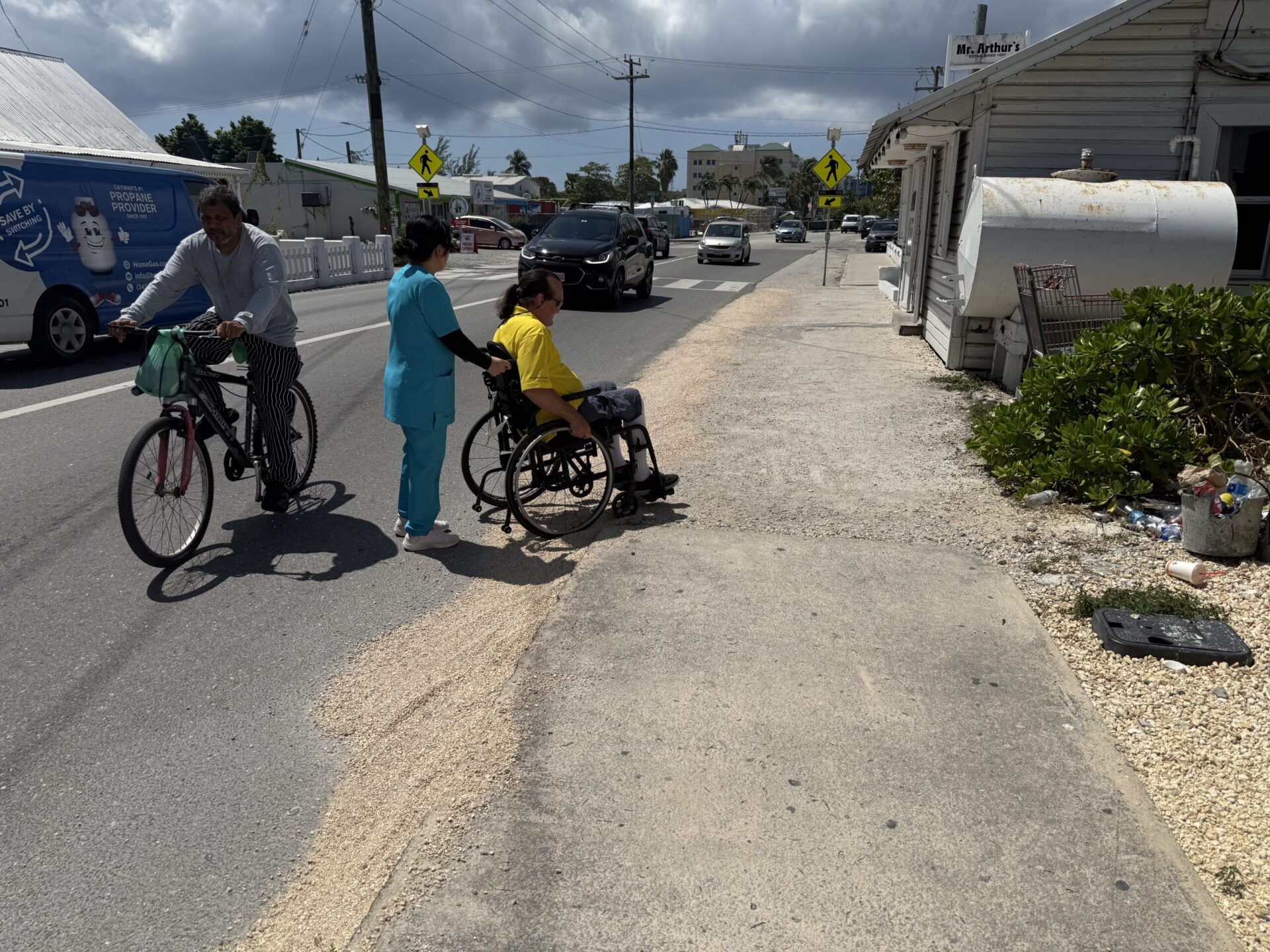
On 21 April, Ebanks – who also sits on the National Council for Persons with Disabilities – took a trip along the George Town waterfront in his wheelchair to demonstrate how difficult it could be to navigate the roads. He travelled from the Bayshore Mall, past the harbour and cruise ship terminal, and then up towards the Lobster Pot restaurant on North Church Street.
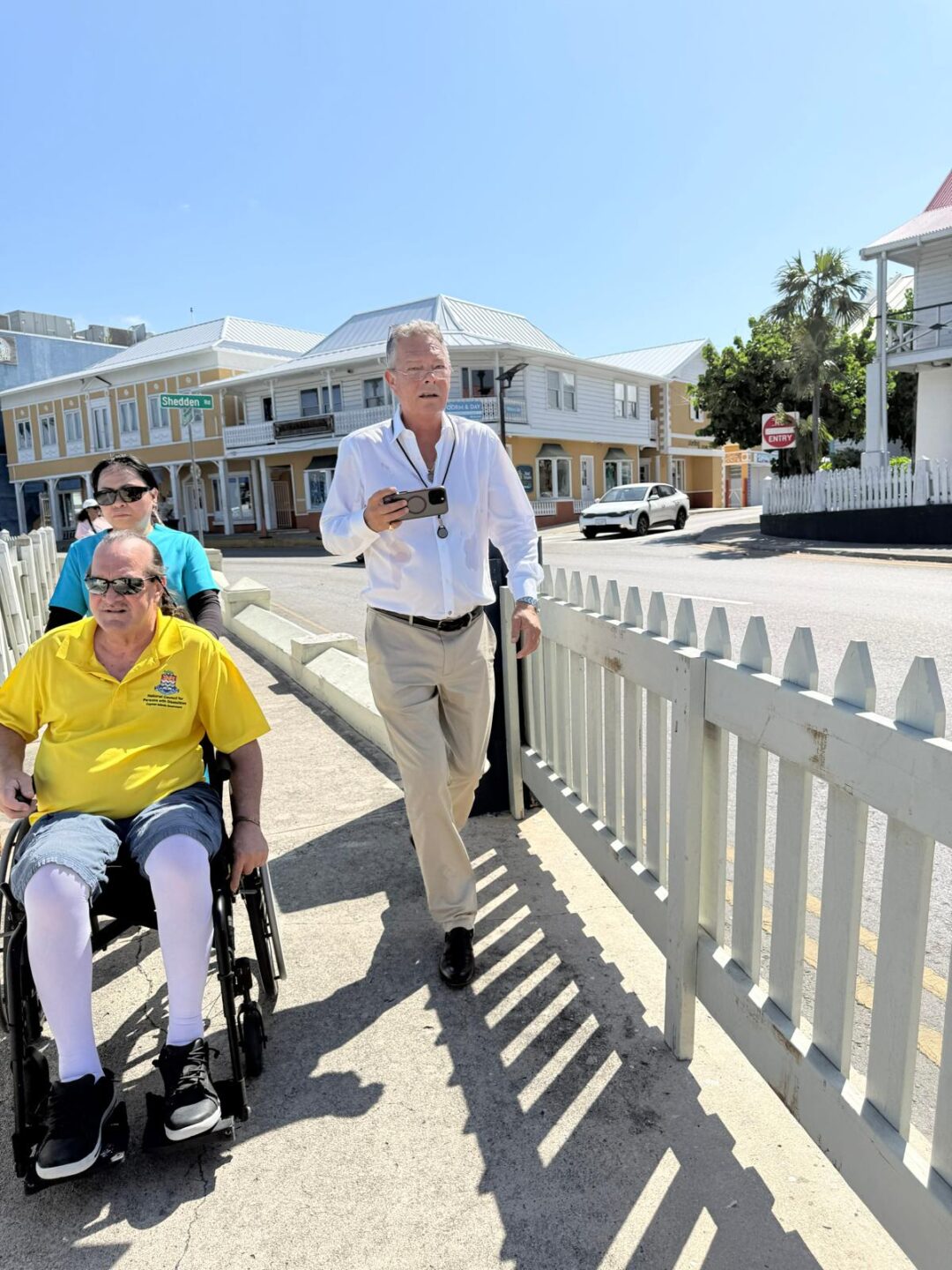
Along the journey he said, “We see this morning that the National Roads Authority has done a tremendous job of fixing these transitions from the road to the sidewalks but there is still work to be done.”
While the path along Seafarers Way was generally accessible close to the harbour, where the cruise ship passengers arrive, issues started to crop up as Ebanks headed up North Church Street.
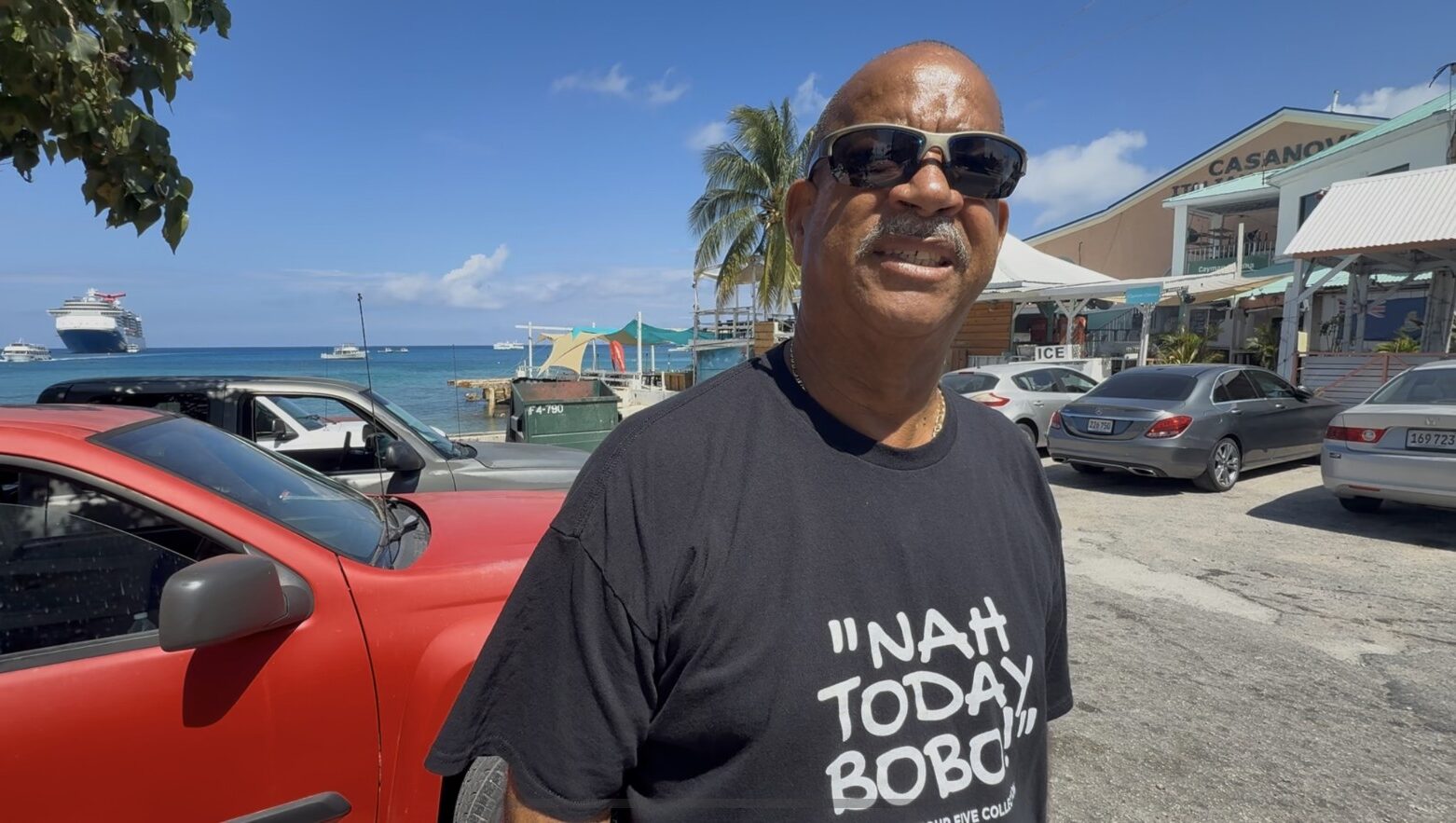
Across from the Red Spot Bay fish market, local resident Kenneth Bush pointed out a steep and angled sidewalk transition that he said is a serious problem. “I have seen people topple over in their wheeling chairs on two occasions,” he said, adding, “One time, they fell right over into the road, they were lucky not to be hit by a car.”
Further up along the waterfront near the entrance to Bodden Road and by Burger King, the sidewalks had no transitions, and Ebanks was forced into the road to pass these areas.
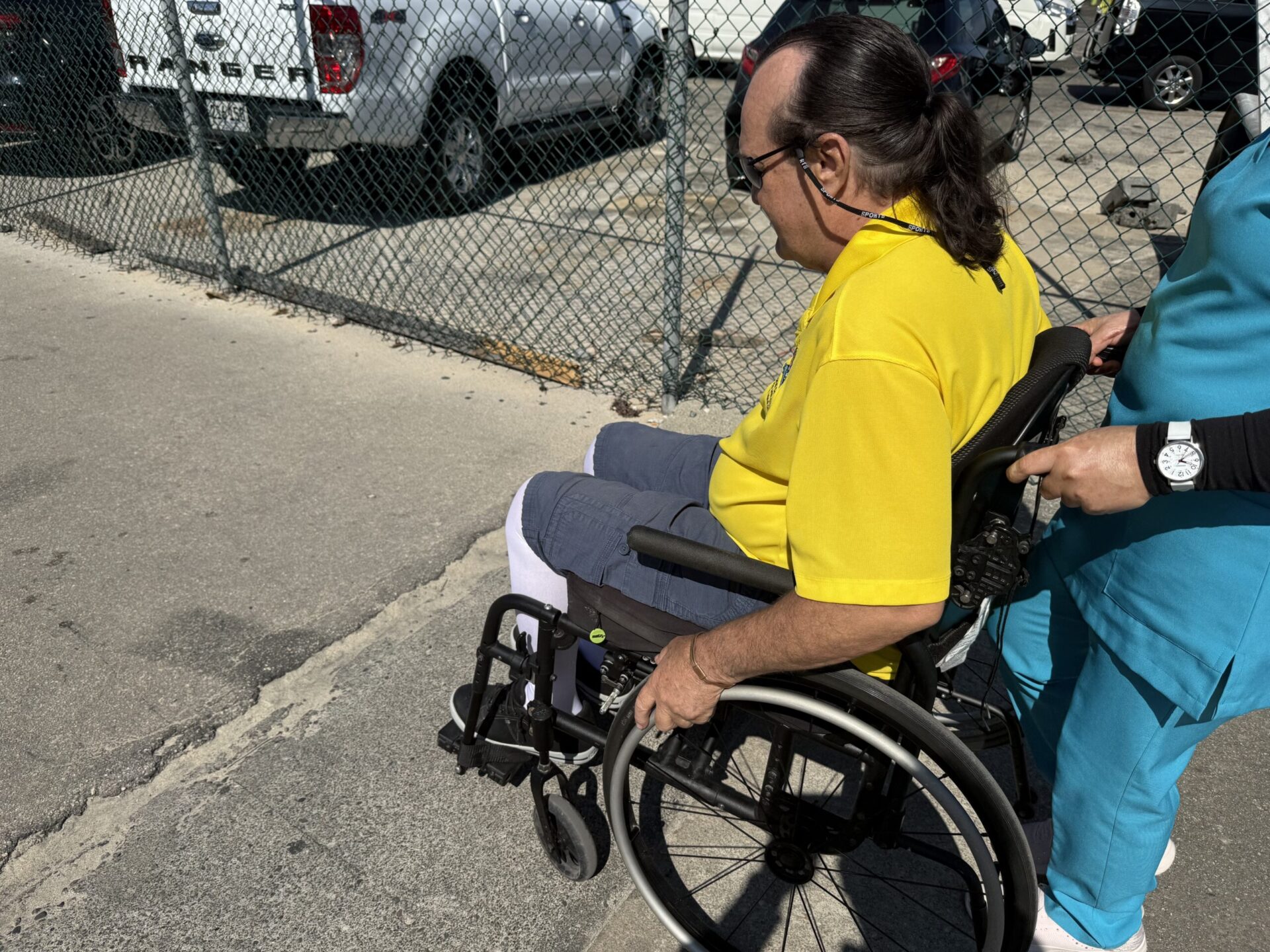
In some locations, gravel that had spilled onto the road and sidewalks made it especially hard for Ebanks to navigate in his wheelchair.
Delroy Watson, from the advocacy group Inclusion Cayman, said they were pushing for improvements, “It’s one of the targets of Inclusion Cayman; more accessible sidewalks, more accessible buildings, especially for wheelchair users and for persons with any sensory or physical disability.”
While Ebanks said that after making the journey along the waterfront, he came away feeling generally positive about the work that has been done by the Planning Department and National Roads Authority. Still, he would like to see the improvements to continue.
“Now that I am a handicap, I am asking you to see from my eyes please,” he said. “Let’s get this place cleaned up. Some of the transitions from sidewalks to roads are horrible. There are issues accessing some of the buildings and more could be done to ensure proper parking spaces.”
Anne Kensington-Lott, head of communications and PR for the ministry of planning said, “Improving road infrastructure and public accessibility remains an important and ongoing priority for the ministry, including efforts to enhance safety and inclusivity across our public spaces.”
Related Videos






Some 20 years ago or more, the DoT asked stakeholders for ideas to expand Cayman’s tourism product. As the CIAA representative, I did research and presented to DoT recommendations to cater more to handicapped visitors. My research, from Morritts to Spanish Bay Reef (open and active at the time), revealed only 2 properties with wheelchair access, or other handicapped facilities – Plantation Village had a wooden ramp at one unit and Colonial Club had a single owner-outfitted handicap unit.
Hopefully by now, more tourist properties have increased their accessible facilities, although I’m not sure. I do not know if the CPA has enacted any requirement for new multi-resident or tourist facility construction to include minimum accessible facilities beyond ramps, i.e. fully equipped accessible rooms/units.
I made the recommentation that more accessible facilities could attract a new segment of visitors.
I also made advances for the airport to acquire appropriate equipment to deplane and board handicapped passengers with dignity. They were being lugged aboard in an airchair. The CEO approved the purchase, only for it to be removed from the budget when cost-cutting directives came down from the Ministry. Fortunately, the management of Island Air took the initiative and purchased an airststair with a seat for the purpose. Later, other airlines deployed sloped ramps and these remain the current deplaning and enplaning process. So, the airport now has some method which offers dignity.
However, some years prior, my late father who was wheelchair-bound, was the main proponent of legislation for public wheelchair accessibility, including designated parking. He worked with Savannah MLA Heather Bodden to get existing legislation enacted. Further, the Public Transport Board enacted a requirement that any operation under its remit with more than 3 vehicles must have at least one handicap-accessible vehicle; this remains in effect.
But generally, handicap accessible facilities are still lacking. Now the matter has surfaced again, ironically by a member of the CPA. Perhaps Mr. Ebanks and his colleagues on the CPA will now see and appreciate the full impact of poor or non-existent facilities for accessibly-challenged persons, across the entire user spectrum and expand the requirements for all new construction, including that in the tourist sector.
Accessibility travel has been a large market for decades but Cayman has missed out for lack of foresight and worse, refusal to accept good ideas from people who are not “consultants”.