

At a glance:
- Middle East disruption could cut up to 28 million travellers from the region in 2026, redistributing global demand.
- Caribbean interest is surging, with holiday searches up 81% and airline bookings rising sharply.
- Cayman is seeing early spillover, though still limited.
- Growing European market share presents a key opportunity for Cayman
The impact of the escalating Middle East crisis is reshaping global travel patterns in ways that could deliver a meaningful boost to Caribbean destinations, including the Cayman Islands.
According to UN Tourism, the Middle East accounted for nearly 100 million international arrivals in 2025 – around 7% of global tourism. When the conflict between the United States and Iran erupted on 28 Feb. and then spilled over to other countries in the region, that market was abruptly fractured.
Airspace closures, rerouted flights and operational disruptions have already triggered thousands of cancellations, forcing airlines to redesign global route networks.
UN Tourism estimates that, depending on the duration of disruption, the Middle East could lose between 12 million and 28 million international visitors in 2026, translating into as much as US$40 billion in lost tourism receipts.
Despite geographic distance, evidence shows that the Caribbean is emerging as one of the beneficiaries of that shift.
Search data offers an early signal. In the first two weeks following the outbreak of hostilities, online searches for Caribbean holidays surged by 81%, according to UK travel platform TravelSupermarket. Turks and Caicos saw a 119% jump in search share, the Dominican Republic 100% and Jamaica 49%.
Airlines are already responding. Virgin Atlantic reported a sharp rise in Caribbean bookings, with transatlantic revenues up 34% in April alone. The carrier has benefited not just from increased demand but also from weakened competition.
The cruise industry is undergoing a similar recalibration. MSC Cruises has cancelled its Arabian Gulf winter programme for its flagship MSC World Europa, redeploying the vessel to the Caribbean for the 2026–2027 season. The ship, capable of carrying nearly 7,000 passengers, will now operate itineraries including the French Antilles and Barbados, effectively transferring thousands of high-value travellers from the Gulf to Caribbean waters.
Tour operators say the pattern is not one of cancellations, but of rerouting. TUI Group has reported hesitancy around Middle East travel, with customers opting instead for the Mediterranean and Caribbean. Crucially, direct long-haul Caribbean routes, particularly to destinations like Jamaica and the Dominican Republic, are seeing the strongest demand.
A strategic opportunity for Cayman
The disruption presents an opportunity for Cayman to gain a larger share of the European market.
European visitors have historically made up a small but steady portion of Cayman’s stayover arrivals, accounting for between 4% and 5% of total visitors in recent years.
In 2025, Cayman recorded 21,186 visitors from Europe, accounting for 4.7% of total arrivals. That share remained largely unchanged from the 4.79% recorded in the pre-pandemic peak year of 2019, suggesting a market that is stable but still relatively small.
Early 2026 data suggests that pattern is holding, with 4,657 European visitors so far this year, or 4.84% of arrivals.
However, the current disruption could shift that balance. The European Aviation Safety Agency has advised airlines to avoid large parts of Middle Eastern and Gulf airspace through at least late April, affecting both European carriers and flights connecting through major hubs such as Dubai and Doha.
As a result, destinations that offer direct, stable and politically distant alternatives stand to benefit. The Caribbean, and Cayman in particular, could become more competitive for European travelers seeking long-haul options that avoid disruption.
The timing aligns with Cayman’s own push to expand its European footprint. In 2025, the Cayman Islands Department of Tourism appointed W Communications as its UK and European public relations agency under a five-year contract aimed at raising awareness and diversifying source markets. The strategy is designed to position Cayman as a warm-weather destination for UK and European travellers, while building resilience beyond its core North American base.
There are some indications that Cayman is already beginning to capture a small share of that redirected demand.
“We have seen a few bookings at our hotels from stays that were originally planned in the Middle East or other places like Bora Bora or Fiji. However, nothing substantial for now,” said Enrique Tasende, senior vice president of active investments at Dart Enterprises, whose portfolio includes The Ritz-Carlton, Grand Cayman and Kimpton Seafire Resort + Spa.
However, the picture is not entirely straightforward. The same forces driving demand toward the region are also pushing up costs.
Growing cost of travel
Nigel Chalk, director of the Western Hemisphere Department at the International Monetary Fund, has warned that Caribbean economies that are heavily reliant on tourism could face disproportionate pressure from rising oil prices linked to the ongoing Middle East conflict.
The IMF official said the outlook for the region is a growing concern, given how closely tourism performance is tied to fuel costs and global travel demand.
Mindy Hennings of Cayman Travel Services said that airlines have begun introducing incremental fare increases, higher baggage fees and surcharges. The increases remain modest for now, she said, but could escalate depending on how long the disruption lasts.
Fiona Brander of Travel Pros Cayman points to the British Airways direct Cayman-London route as a clear example, noting that fuel surcharges and taxes have climbed by 9.3% per adult in economy, even before the base fare is applied. In premium cabins, the increases are even more pronounced.
These rising costs create a tension at the heart of the strategic opportunity. On one hand, demand is shifting toward the Caribbean, driven by safety concerns and disrupted connectivity elsewhere. On the other, higher airfares risk pricing some travellers out of the market altogether.
Related Videos













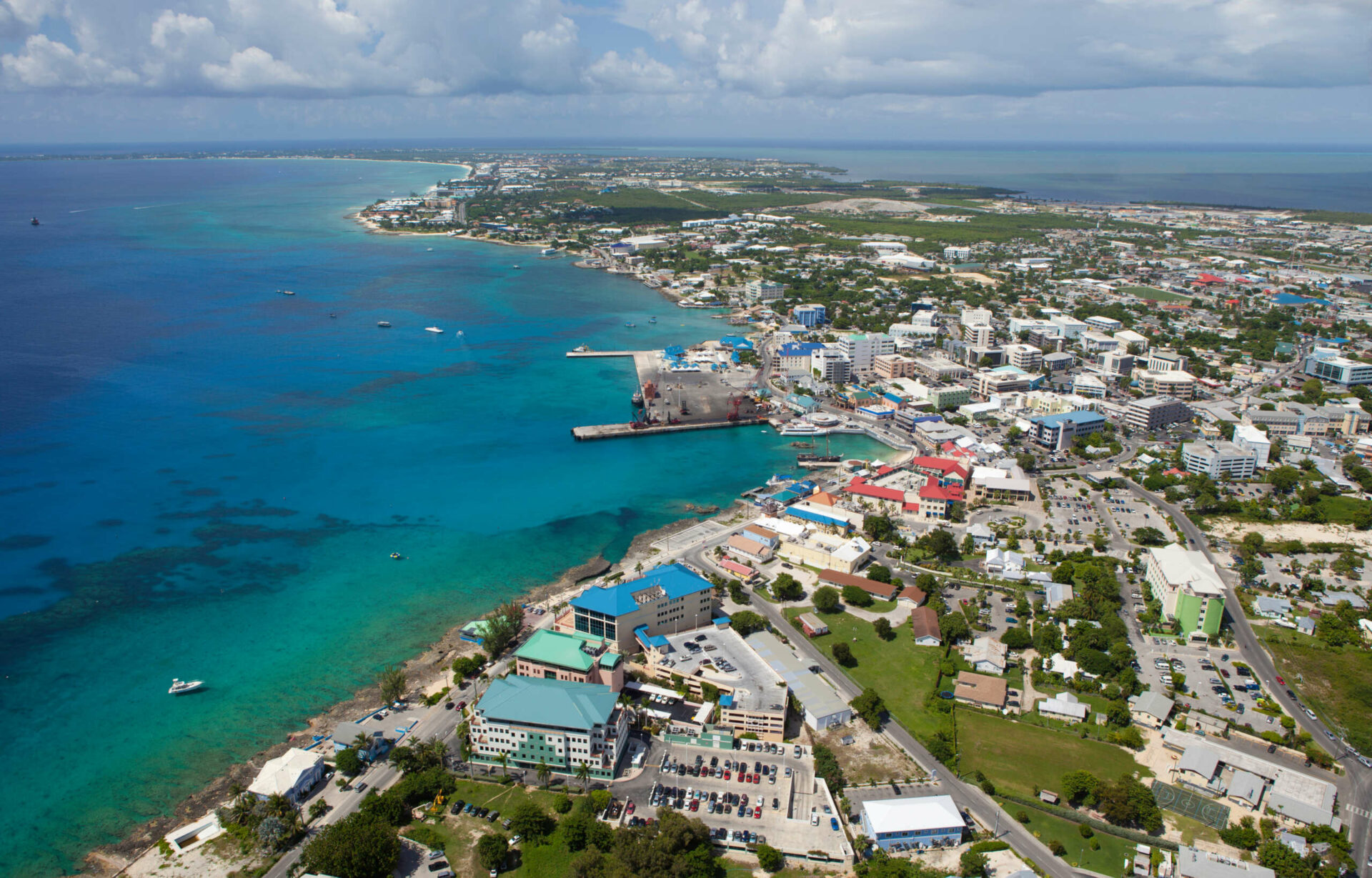
The cover photo of this article says it all: Grand Cayman is no longer a beach destination because there is no beach left. The coastline looks like an industrial zone—a far cry from the pristine, albeit artificial, beaches of Dubai. I don’t understand why anyone would visit. Miami is cheaper, has better beaches, and offers far more entertainment.
Exactly how does Govt define European visitors?, take out the business visits, relatives visiting family living here and how many actual tourists paying six hundred or more dollars a night for hotels, with little in the way of island attractions, are you left with?.