A decision to remove duty on fuel to cut the cost of living has been backed by the Opposition People’s Progressive Movement and an energy industry expert.
The PPM noted that announcement came after MP Roy McTaggart tabled a private members’ motion to waive fuel duty as the summer arrives and fuel consumption peaks.
The PPM said, “Mr. McTaggart’s motion … set out a practical and immediate solution to address rising fuel costs.
“The government’s subsequent announcement reflects the growing recognition of the need for action in this area.”
The multi-million-dollar relief package to cut the cost of fuel and electricity was announced just before McTaggart’s motion appeared on the order paper for the Parliamentary session on 30 April.
The party added, “While the government has presented this as its own achievement, the timing is noteworthy.
“The proposal advanced by the opposition weeks ago contributed to bringing this to the forefront and shaping the response now being seen.”
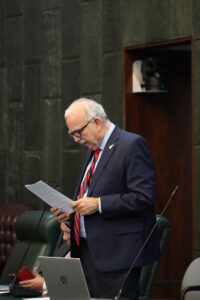
McTaggart said, “We brought forward a clear and workable proposal weeks ago because families and businesses cannot afford to wait.
“We welcome this step and look forward to ensuring that the measures introduced provide meaningful and sustained relief for our people.”
Rolston Anglin, the finance minister, refuted the idea that it was McTaggart’s motion that spurred the government to act. He said he had written to senior civil servants and Nickolas DaCosta, the district administration minister, on 12 March to set up a discussion on what could be done to cut the cost of fuel in light of tension in the Middle East and Venezuela and rising oil costs,
He highlighted that he had specifically mentioned “waiving duty being paid on those surcharges, etc.”.
Anglin added, “This wasn’t the government trying to jump out in front of a motion. … I had been reviewing this and coming up with what I was going to propose to the caucus as to a structured approach to try and alleviate the cost of living for Caymanians with this an interim measure, necessary, but an interim measure.”
He added that the government continued to work on longer-term measures to help bring down the cost of fuel and power.
Immediate price relief
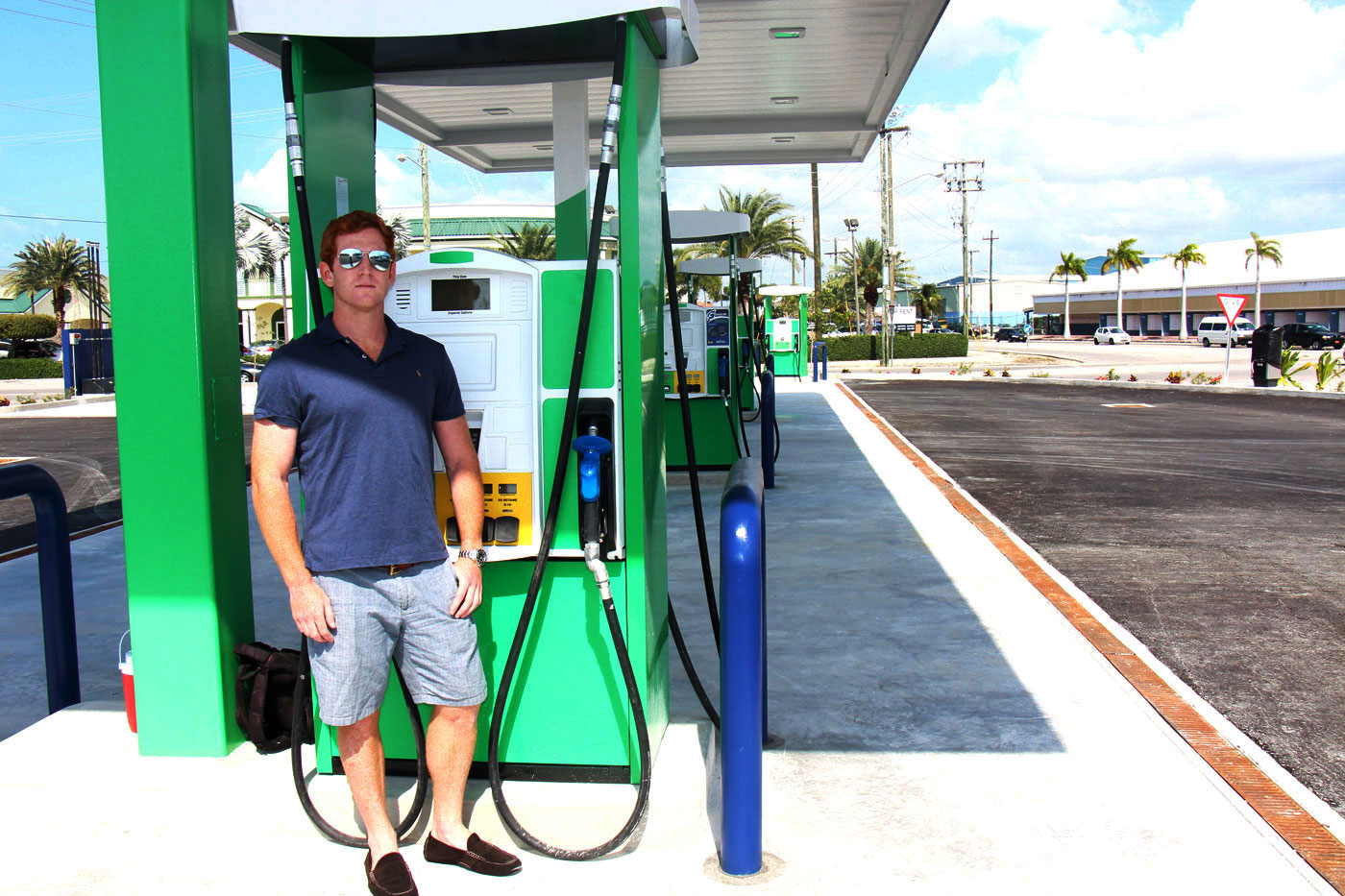
Dow Travers, the founder and CEO of Refuel gas stations, said there was “absolutely” a case for the cut.
He added that Refuel would “immediately pass on the weighted average of the reduction” as soon as duty was removed.
Travers said, “Refuel has always passed on as much value as possible to help consumers as lower prices benefit far more people than high prices.
“During COVID, when everyone else lowered costs by 40c a gallon, to much fanfare from the Cayman Islands Government, Refuel had actually already passed on even more and was $1 a gallon below the national average.”
The coalition government announced the $9 million package of cuts on 29 April, which will cover gasoline, diesel and propane.
The move came amid an escalation in conflict in the Middle East, which has led to a global surge in oil prices.
OfReg figures showed regular gas stood at an average $6.34 a gallon in Grand Cayman when the announcement was made, compared to $4.69 the year before.
Diesel went up from $5.10 a gallon to as high as $7.09 a gallon over the same period.
The average price of gas between Wednesday, 29 April and Tuesday, 5 May stood at $6.13 and diesel was at $6.83.
The emergency measures will run for four months, covering consumption from June to September, and include a cap of $0.18 per kilowatt hour on what power firms CUC and Island Energy can charge residential customers.
Government estimated the electricity cap alone will save a household that uses 1.750 per kilowatt hour a month up to $105 on their bills.
Travers added that he did not think a prolonged, or stepped up, conflict in the Middle East would lead to shortages and highlighted that the US was the world’s largest exporter of fossil fuels.
“Panic buying might pull demand forward, but in the long run it’s unlikely there will be systemic issues,” Travers said.
“The market will continue to react to global declines by finding new higher price equilibriums, but physical supply disruption in this region is a tail risk.
“What is more likely to happen is you will see demand destruction as prices rise – airlines are already cancelling flights, for example, people are driving less and recessions have a history of being triggered when oil remains above US$100 [a barrel] for three or more months.
“This lower demand will then further alleviate the supply risk.”
Related Videos