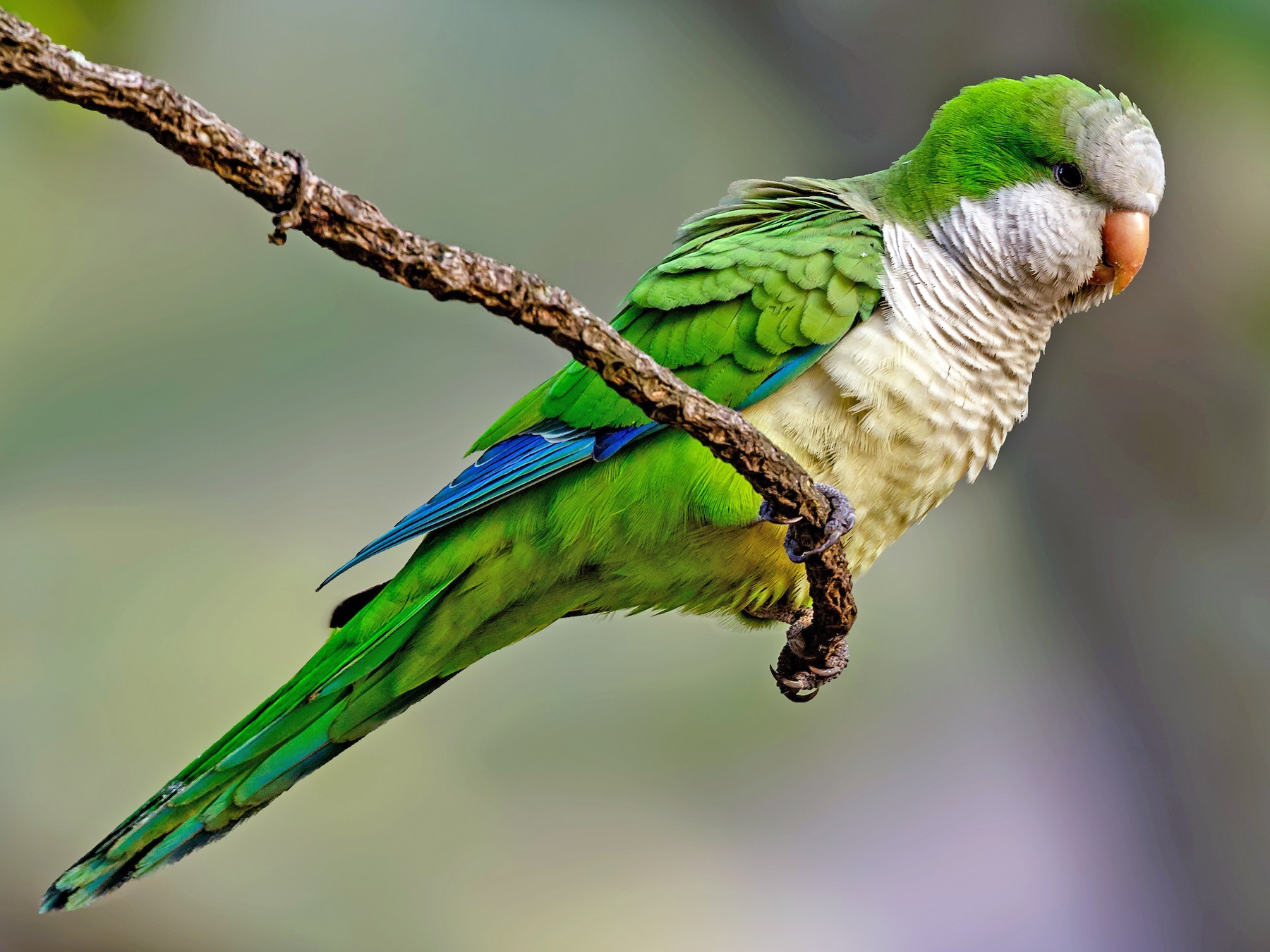
The noisy green birds attracting attention around Sunset House, where they have built large communal nests high in coconut palms, are not Cayman’s native parrots. They are an invasive species known as the monk parakeet, according to the Department of Environment.
Also known as quaker parrots, the birds are native to South America and are believed to have become established in the Cayman Islands after escaping or being deliberately released from captivity.
“They are an invasive species in the Cayman Islands and are not native Cayman parrots,” said the department’s research officer, Jane Haakonsson. “They serve as a reminder of how important it is to keep non-native species from entering the wild.”
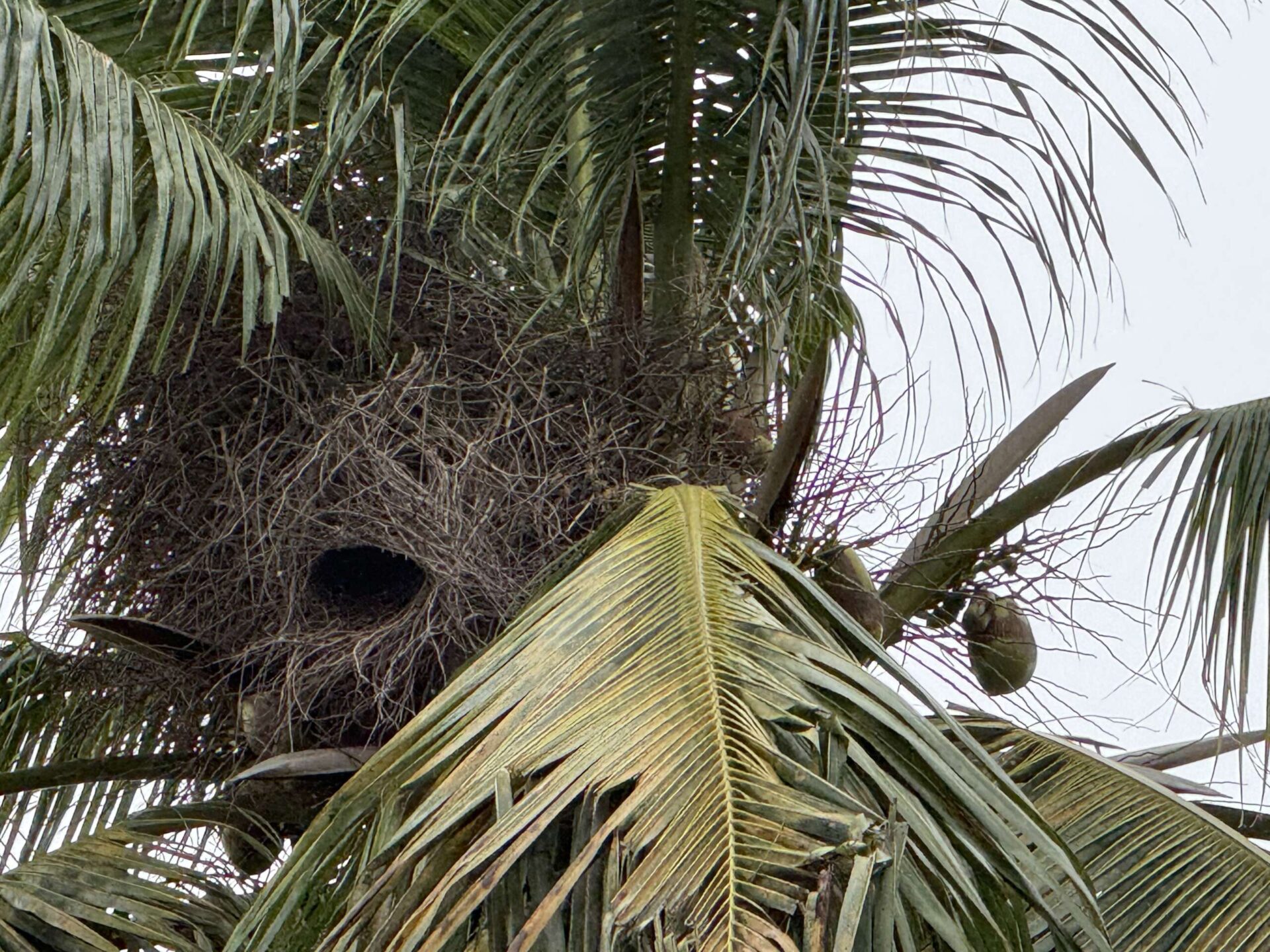
Unlike almost every other parrot species, monk parakeets do not nest in tree cavities. Instead, they weave bulky communal nests from sticks and twigs, sometimes creating multi-chambered structures that can house numerous breeding pairs.
Department of Environment research officer, Simone Williams, said the wild population appears to be confined mainly to Grand Cayman, although the birds are capable of flying between islands.
While colourful and charismatic, the birds present several environmental and practical concerns.
“The monk parakeet is a species we are concerned about,” Williams said. “It has been seen nesting around power lines, which is problematic.”
The department has, on several occasions, assisted Caribbean Utilities Company with the removal of nests that interfere with electricity infrastructure or present a potential fire risk.
Monk parakeets are listed as a prohibited species under the National Conservation (Alien Species) Regulations, 2022. They cannot legally be imported or kept as pets without a permit.
Although the department previously offered an amnesty period for owners to register existing birds, Williams said very few people came forward.
“The monk parakeets we see in the wild in Cayman are either pets that were released or escaped, or the offspring of those birds,” she said.
The department estimates there are well over 100 monk parakeets living in the wild, although no formal population survey has been completed.
Despite their growing numbers, the department does not currently have an active eradication programme.
“There are other invasive species, such as feral cats, that are causing much greater damage to our native wildlife,” Williams explained. “With limited resources, those higher-priority threats receive most of our attention.”
Amazon parrots
The Department of Environment is also concerned about escaped Amazon parrots, especially yellow-naped Amazons, because they are intelligent, adapt well to local conditions and can interbreed with Cayman’s native parrots, potentially affecting the genetic integrity of the Islands’ endemic populations.
Other escaped cage birds, including budgerigars, lovebirds, cockatiels and sun conures, are occasionally reported but rarely establish breeding populations because suitable food sources are limited.
The department is encouraging residents not to release unwanted pets into the wild and to report sightings of prohibited species.
Officials say preventing invasive species from becoming established remains one of the most effective ways to protect the Cayman Islands’ unique native wildlife.
Related Videos