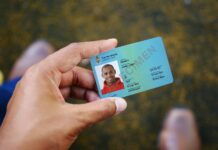
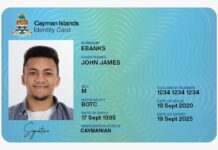
After extensive testing of the functioning of a digital ID card, the project and a corresponding national digital identity register still need enabling legislation, according to the director of e-Government Ian Tibbetts.
Legislative drafting is almost complete, and a public consultation is imminent, Tibbetts said during a project update at the Cayman Islands Digital Economy Conference (CYDEC) on Tuesday.
Following the passing of the required legislation, the government’s tech unit would need some time for the final configuration, but then the introduction of a national ID card system would be “months, not years away”, he said.
However, at last year’s CYDEC event, Tibbetts told delegates that bills and legislation were being drafted, with the aim of going to Parliament in 2021.
A year earlier, in June 2020, then-Minister of Commerce Joey Hew had announced the cards would be issued in the second quarter of 2021.
Plans for a ‘national ID’ scheme were first mentioned by Hew in 2019.
Despite some public pushback against a digital identity register, the suggested benefits of have not changed.
The digital ID is part of a wider initiative to create a streamlined digital infrastructure that would improve how residents and businesses can access government information and services.
In combination with solutions that better connect the disparate government computer system with each other, a digital ID would help ensure that the same documents do not need to be provided multiple times to different departments.
Tibbetts said, “This programme is about enabling each person to see and maintain their information, uniquely identify themselves and prove in an electronic way that they are who they say they are.”
This digital identification would become pivotal in a wide range of interactions between individuals and the government and non-governmental organisations.
“Whether it’s via web portals or mobile apps or meeting face to face over the counter, this minimises the need for individuals to repeatedly present the same documents to different government departments, and it minimises the need for government to store all these different pieces of information in different locations,” Tibbetts explained.
The physical card contains the identity information that can be read by a chip reader for easier and faster processing, obviating the need to manually fill in information and minimising mistakes.
Ultimately, the digital ID will contain two digital certificates that can be used to safely sign PDF documents or digital documents electronically. This feature could also be used in business transactions with the private sector.
The system would also help prove one’s immigration status, which in certain cases can be difficult.
Related Videos