Last year, Jamaica followed the Bahamas and the Eastern Caribbean Currency Union in accepting a digital currency as legal tender.
Hoping to promote financial inclusion of people without bank accounts and to make local payments more efficient, Cayman’s regional neighbour has embraced the concept of a central bank digital currency (CBDC).
So far Jamaica has taken a measured approach to issuing the new digital currency. If the experience in the Bahamas and the Eastern Caribbean is anything to go by, the rollout of Jamaica’s e-currency will take time.
Unlike privately-issued cryptocurrencies, which verify transactions and maintain records through a decentralised system using cryptography, a CBDC is digital money issued and controlled by a central bank.
It is backed by, and pegged to, a country’s fiat currency. The use of this digital version of a fiat currency is akin to cash, without any of the cash-handling fees.
The Jam-Dex
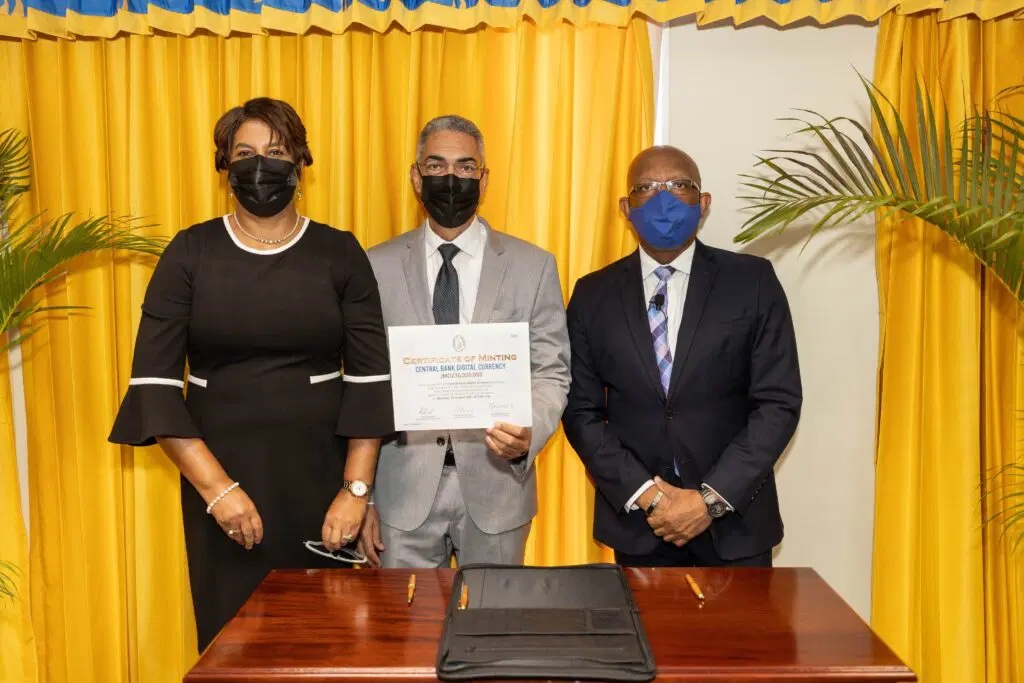
Jamaica minted its first CBDC, called the Jamaica Digital Exchange or Jam-Dex, on 9 Aug. 2022. The Jamaican central bank created J$230 million (US$1.49 million) in digital currency to issue to deposit-taking institutions and authorised payment service providers.
The digital currency was created in half an hour, compared to the lead time for the printing of cash, which takes about nine months, the Bank of Jamaica said.
Under the motto “no cash, no problem”, Jamaica’s central bank has promoted the new legal tender as an alternative to physical currency that can be exchanged dollar for dollar with physical cash.
After obtaining a CBDC wallet from banks, building societies or payment service providers, consumers can use the digital currency to make payments or as a store of value, just like they would with cash.
The Bank of Jamaica noted the main benefits of the digital currency are that there are no fees involved and there is no need to have a bank account.
As such it would improve financial inclusion of the unbanked.
 Given that digital money can be transferred from wallet to wallet instantly at any time of the day, it makes sending money cheaper and more efficient than using bank transfers.
To add digital funds to the wallet, users either pay cash to a wallet provider, transfer funds from a bank account, use a smart ATM or receive it from another wallet. Conversely, they can convert Jam-Dex to cash at the wallet provider or via smart ATMs.
Payments are made by simply scanning a QR code or entering the wallet ID of the other party and entering the amount to send.
Even at smart ATMs, converting Jam-Dex to cash and cashing out does not require a bank account or card, just a smartphone with the CBDC wallet to scan a QR code.
To help encourage adoption, Jamaica’s government, in April 2022, promised to reward the first 100,000 Jamaicans who established a wallet with a digital deposit of J$2,500 (US$16.40).
Three months later, Finance Minister Nigel Clarke said that threshold had been met.
Jamaica’s government also started to use Jam-Dex to make payments in a small-scale pilot.
Late last year, government paid about 100 seasonal workers in two parishes, who participated in a Christmas work scheme, in digital currency.
To make the payments, Bank of Jamaica partnered with NCB, whose subsidiary Lynk was the only digital wallet provider for Jam-Dex payments at the time.
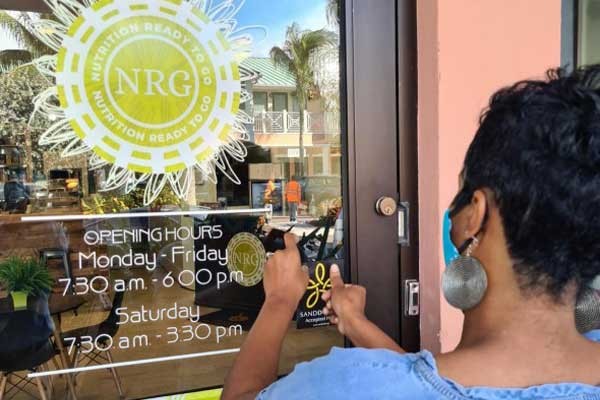
NCB signed up 70 small merchants, including market vendors, food stores, restaurants and bars for a wallet to accept the digital currency.
On 30 Dec. 2022, JN Bank became the second deposit-taking institution to receive digital currency from the central bank. But, so far, the digital currency issuance is minimal.
More digital currency will be issued later this year, while other wallet providers are being assessed in the Bank of Jamaica’s Fintech Regulatory Sandbox.
The Jamaican government is aiming to use Jam-Dex payments again in a social and welfare programme in the second quarter of this year.
Currently, the use of Jam-Dex is subject to daily transaction limits, as well as cash-in and cash-out limits. It cannot be used for overseas transactions as, just like the Jamaican dollar, it is only legal tender in Jamaica.
Issuance of the Bahamas Sand Dollar still low
The slow-moving introduction of a CBDC in Jamaica is not a surprise.
The Bahamas was the first country in the world to launch a CBDC, the Sand Dollar, in October 2020.
In the Bahamas, too, the benefits of a digital currency were mostly linked to overcoming financial exclusion.
However, an analysis by the London School of Economics found that the data did not strongly support financial inclusion as a reason for introducing a Bahamian CBDC.
Exuma, the islands where the Sand Dollar pilot took place, did not have a particularly high share of people without a bank account, it noted, as 93% of Exumans had some form of deposit account and more than 90% had a debit card.
People without a bank account were mostly aged 55 and above – the group that is typically most resistant to using digital payments.
The central bank of the Bahamas nevertheless claimed the introduction of the Sand Dollar was a success. In a July 2022 paper, the central bank said the adoption rate of the digital currency was approximately 7.9% with 32,736 created wallets, which included 1,340 sovereign wallets.
The International Monetary Fund, in contrast, said in a May 2022 report the Bahamas CBDC “makes up less than 0.1 per cent of currency in circulation and there are limited avenues to use the sand dollar”.
According to the central bank, only US$303,785 worth of Sand Dollars were in circulation in the summer of last year.
The digital currency was recently integrated into the country’s automated clearing house system.
The IMF recommended the Bahamas central bank should further strengthen its internal capacity for cybersecurity and the resilience of systems associated with the Sand Dollar, while maintaining careful oversight of the CBDC project.
DCash service down for two months
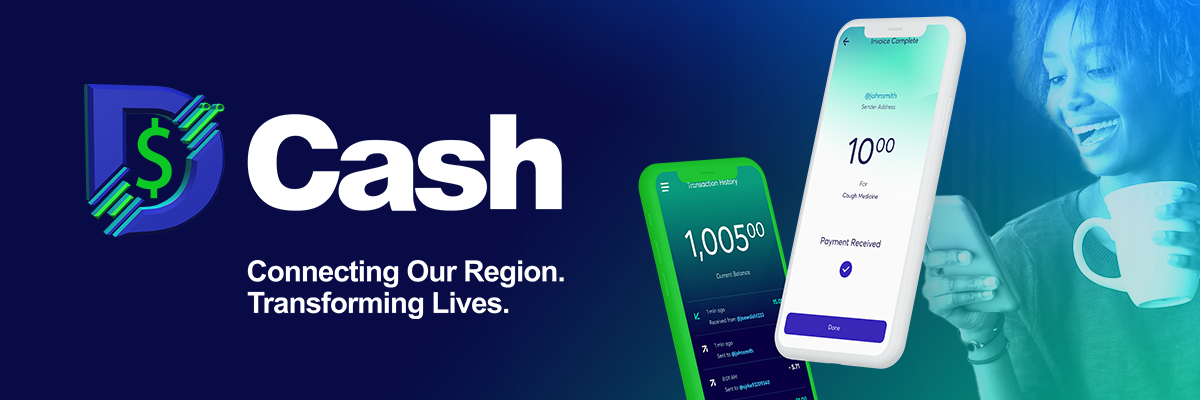
Why that may be necessary was shown by DCash, the CBDC issued by the Eastern Caribbean Central Bank.
In January 2022, the digital version of the Eastern Caribbean dollar now used by eight nations suffered an outage and was taken offline for two months.
The “service interruption” reportedly resulted from an expired certificate of the version of the Hyperledger Fabric that hosts the DCash ledger.
The issuance volume of DCash is still negligible so that the outage only had a limited impact.
But the long downtime highlights the risks that issuing central banks must manage and prepare for.
Josh Lipsky, the senior director of the Atlantic Council’s GeoEconomics Center, told Bloomberg that every country that attempted a large e-currency rollout had suffered hiccups.
“This is an important case study in things that can go wrong in the rollout and expansion of a digital currency,” he said.
The Atlantic Council is tracking CBDC projects around the world. Outside of the Caribbean, the only other official launched digital currency is the eNaira in Nigeria.
Started in October 2021, there have been 700,000 transactions for a value of 18 million eNaira as of October 2022. There are 919,000 customers and 33 participating commercial banks.
In total, the Nigerian central bank has minted 3.1 billion eNaira (US$6.75 million).
Related Videos