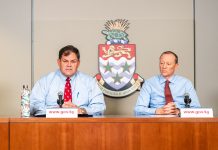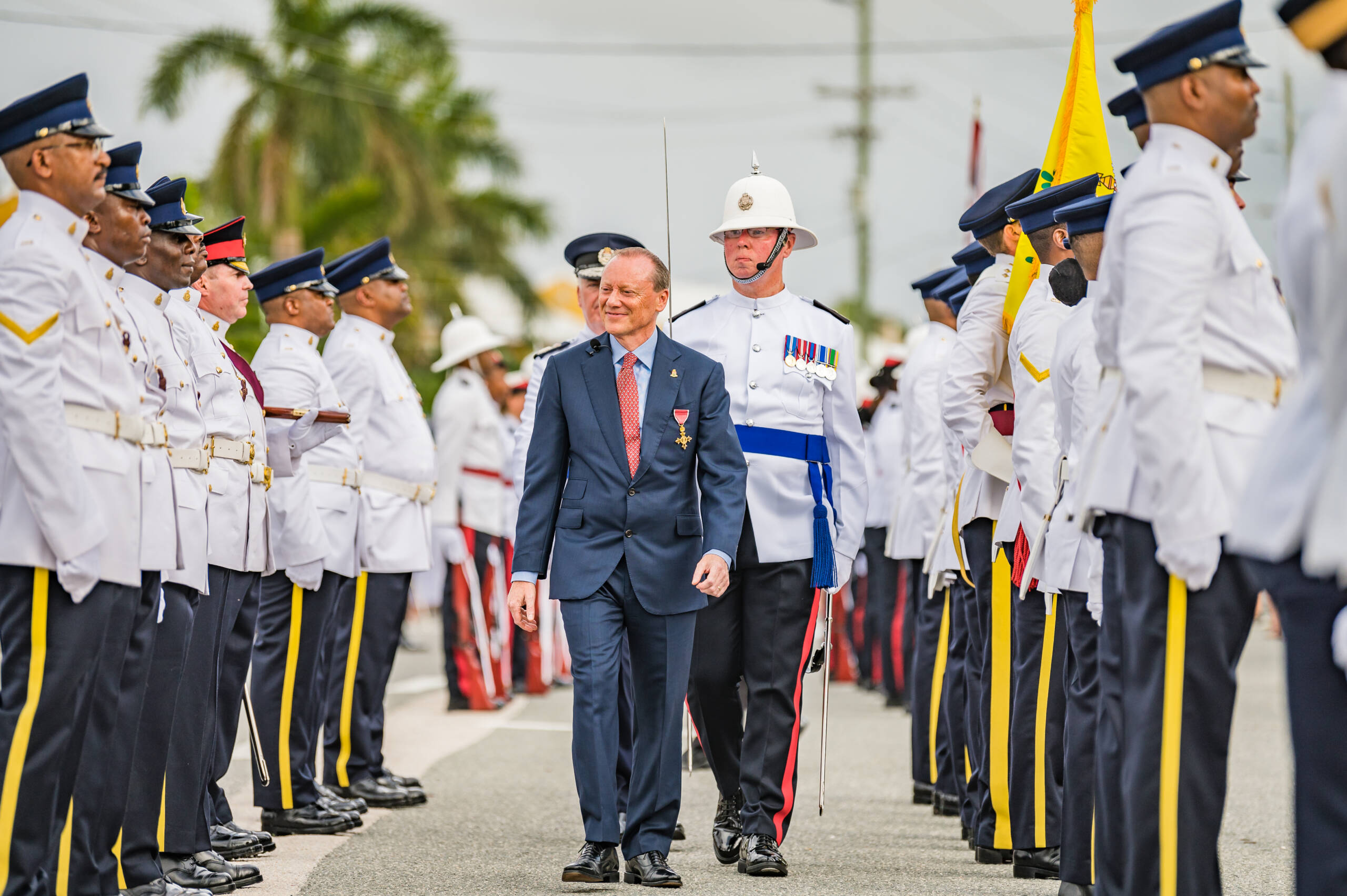
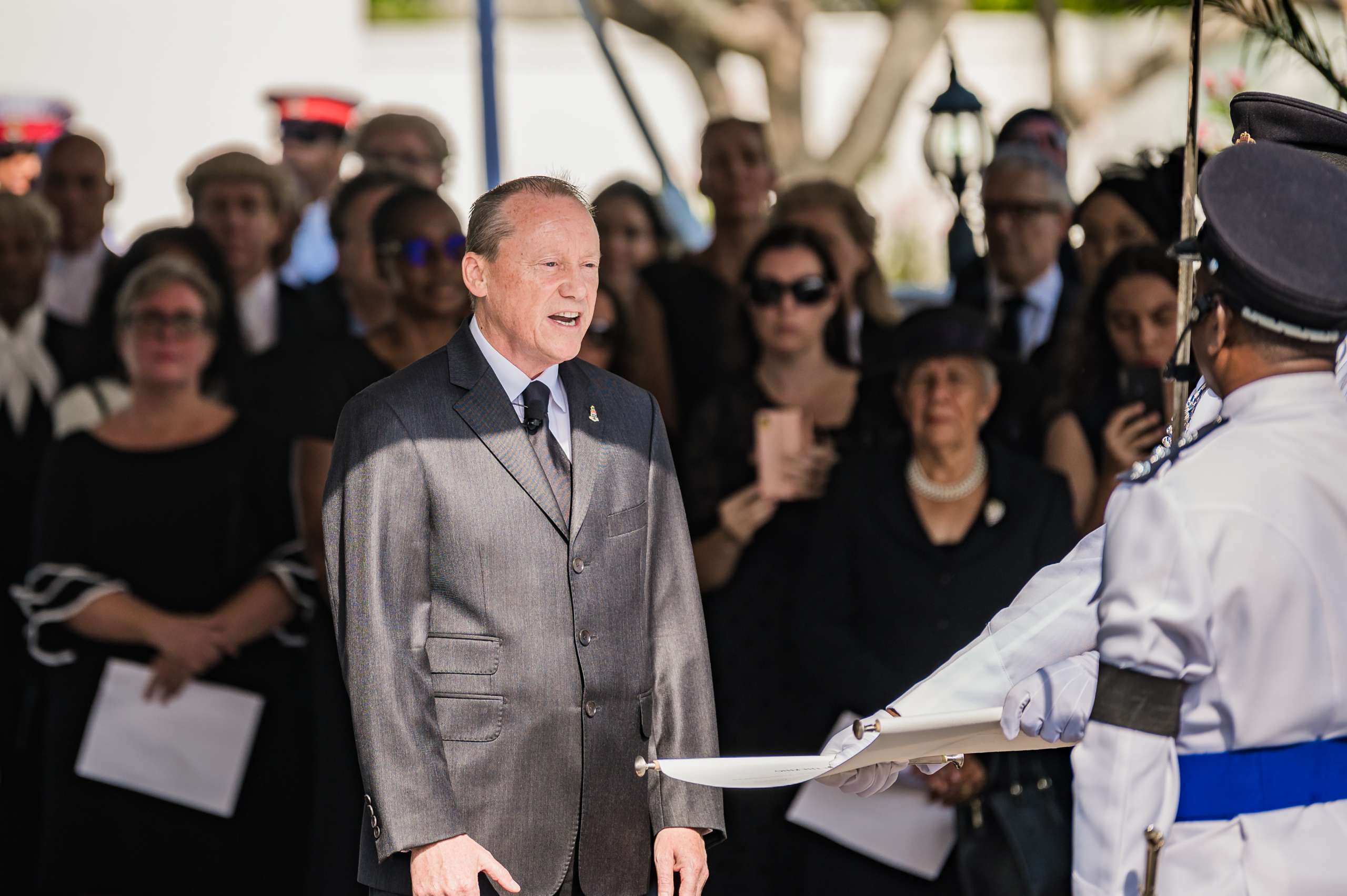
Governor Martyn Roper, who departed Cayman on Wednesday, 29 March, looked back at his time as the Crown’s representative on island in a recent interview on the Cayman Compass Facebook show ‘The Resh Hour’.
On Tuesday, he shared a “final farewell” on his social media channels which showed civil servants gathering to cheer him off, as he reflected, “We will much miss the kindness and warmth of Cayman’s community.”
In a message to the public on the show, Roper said, “Thank you for the last four-and-a-half years. It’s been a huge privilege for me as governor and for Lissie, my wife, to serve the people of these islands. We’ve really done our best to get out and about and get to meet as many of you as possible. It’s a very special place. It’s a wonderful community, and Cayman will always have a very, very special place in both of our hearts.”
He said he looked back with pride at his time as Cayman’s governor, both in his response to challenging moments, such as the COVID pandemic, the dump fire, the earthquake and the several tropical storms that impacted the islands since 2018, and through the engagement he had with the local community with his steel pan playing, 5K and marathon running, and visiting the elderly with Meals on Wheels.
Some of his most memorable moments involved the royals, he said.
“To be the governor here when Her Late Majesty passed and to proclaim a new king during my time here, that was an incredibly poignant and moving moment,” he said. “For me, as a diplomat who served … Her Britannic Majesty’s government for 38 years and as a diplomat overseas batting for Britain, to be here when that happened, and to see the respect and the warmth and the genuine sadness of so many people at Her Late Majesty’s passing, that was really quite poignant and touching.
“And going to the funeral with the premier as well – that will be an incredible highlight of my whole career. We were really privileged to be part of that and treated incredibly well and prominently as Overseas Territories because of the affection Her Majesty had for all the Overseas Territories, including Cayman.”
Royal visits bookended his term of governor. The then Prince of Wales, Charles, and his wife Camilla, visited Cayman six months after Roper arrived, and last month, just weeks before his departure, Prince Edward and his wife Sophie paid a visit.
Roper said both visits were very successful and involved the royals meeting many local people.
“I started my tour with a big royal visit and ended with one,” he said.
Fond memories
“We go back with such incredibly positive and fond memories of Cayman, its wonderful people and amazing community,” he said, as he lauded the islands’ strong local culture, heritage and traditions, as well as its ability to accept and assimilate 130 different nationalities.
“That’s a really strong, diverse community. Cayman gets a lot of talent out of that, both homegrown talent and talent coming from overseas,” he said.
“I think that’s a big part of the success of the Cayman Islands over the last 40 years. Not many other islands have it to that same extent, and I hope that’s something that can continue in the future.”
COVID times
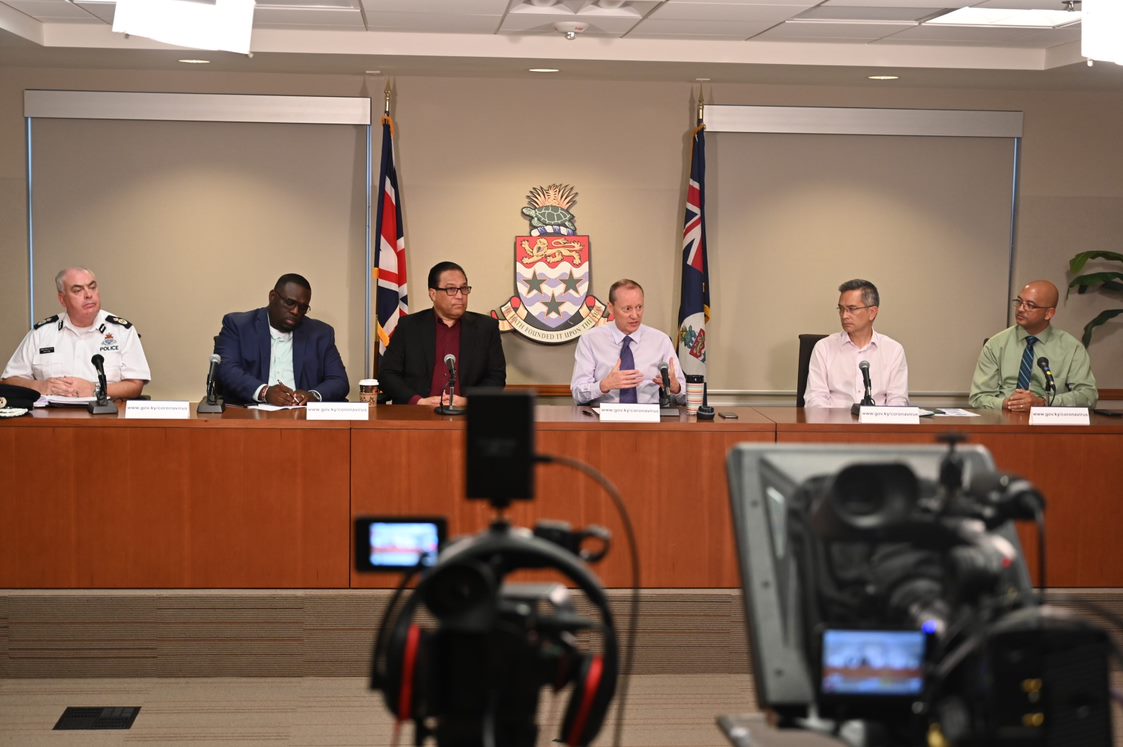
He also addressed the COVID-19 pandemic and the weeks of lockdown in Cayman, during which he and government officials updated the nation at daily televised briefings.
Asked for some behind-the-scenes insights from those days, he said, “in some ways” he and the then premier Alden McLaughlin and his team may have had it easier than others as they attended their offices every day, and had a routine and were seeing people. “I was very conscious, for a lot of people who were locked down and who could only come out at certain times, that was very tough,” he said, recalling the curfews in place at the time.
“I agreed protecting the health of our people was absolutely paramount, and everything flowed from that really, because once you start from that premise, the policies flow from that,” he said. “I still say to this day we had probably one of the best responses anywhere in the world. If you look at the deaths per head of population, ours is very, very small compared to most other places in the world.
“And by the time we opened up and COVID was back, we had 85% of people who’d had the vaccine.”
He added, “Being on the inside, I just felt it was really important for me in the press conferences to be a reassuring voice, to be a calm voice, try to explain what we knew and explain what we didn’t know. To really be there as the voice of common sense, to help people who I knew were finding it difficult in the community to deal with this. I think we managed that in the press conferences, through every day coming back and trying to explain what we knew in an understandable way.”
Keeping calm and carrying on seemed to be his mantra in those trying and anxious times, as he explained, “We were dealing with a global pandemic, none of us quite knew how it [would go]. … I think in those leadership positions, you have to be very clear how you, as an individual, are resilient. You have to know yourself and know what coping mechanisms you need to be resilient because you have a job to do, and your job is to be there, to be confident and to try to reassure and help people in a difficult situation.
“So we can’t be that sort of confident, calm self, it’s going to be very difficult for everybody else. So you switch into that mode, using the resilience that you have, to enable you to … deal with whatever is going on inside.”
Roper said the pandemic highlighted the good relationship between the Cayman Islands and the UK, which manifested in the swift supply of vaccines once they became available. “If you need an example of how the UK-Cayman partnership works, that is it,” he said.
“If we did not have the capacity to bring those vaccines in, I dread to think what would have happened. I think it saved hundreds of lives that we were able to vaccinate our people so quickly.”
On the lighter side
The image of the governor, usually beside his music teacher Earl La Pierre, playing the steel pan was a relatively common and lighthearted sight during his tenure.
He said he took up playing the pan as it was a “fun way of trying to do something different and connect with people and try to show an understanding of the culture. I think it worked, I think people found it amusing that I was having a go at the steel pan”.
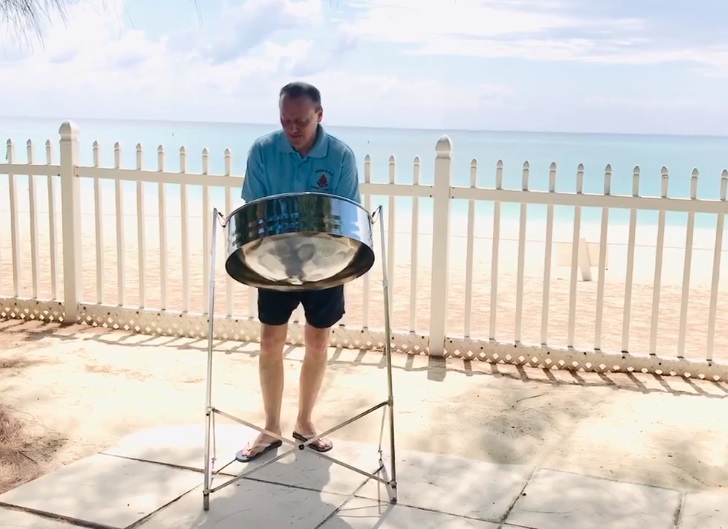
During lockdown, he continued to practise and even posted a video – which has more then 2,300 hits on Facebook – of him playing ‘Chariots of Fire’ on the pan by the beach in front of his residence on Seven Mile Beach. “I think that brought a bit of light relief to a lot of people during COVID,” he said.
Despite saying “I don’t have any musical talent,” he has learned a total of four tunes from La Pierre, and is taking his pan back to the UK with him, where, he said, he would continue practising it, though he wasn’t confident he’d be adding any more numbers to his repertoire.
Other fond highlights he recalled were running in many community and charity 5Ks, as well as relays in the annual marathon, and travelling around the island with Meals on Wheels as volunteers made their deliveries.
“Visiting seniors in their homes with Meals on Wheels, that was amazing,” he said. “I got to go to see people I wouldn’t normally see. I was able to take food with the fantastic volunteers with Meals on Wheels who do an amazing job supporting hundreds of of our seniors every single day. … I got to meet an incredible range of different people.”
Another fun activity he remembered fondly was his most recent appearance at Pirates Week, for which he learned to sword fight. Last year, he said, he became the first governor in the history of the decades-old festival to defeat the pirates.
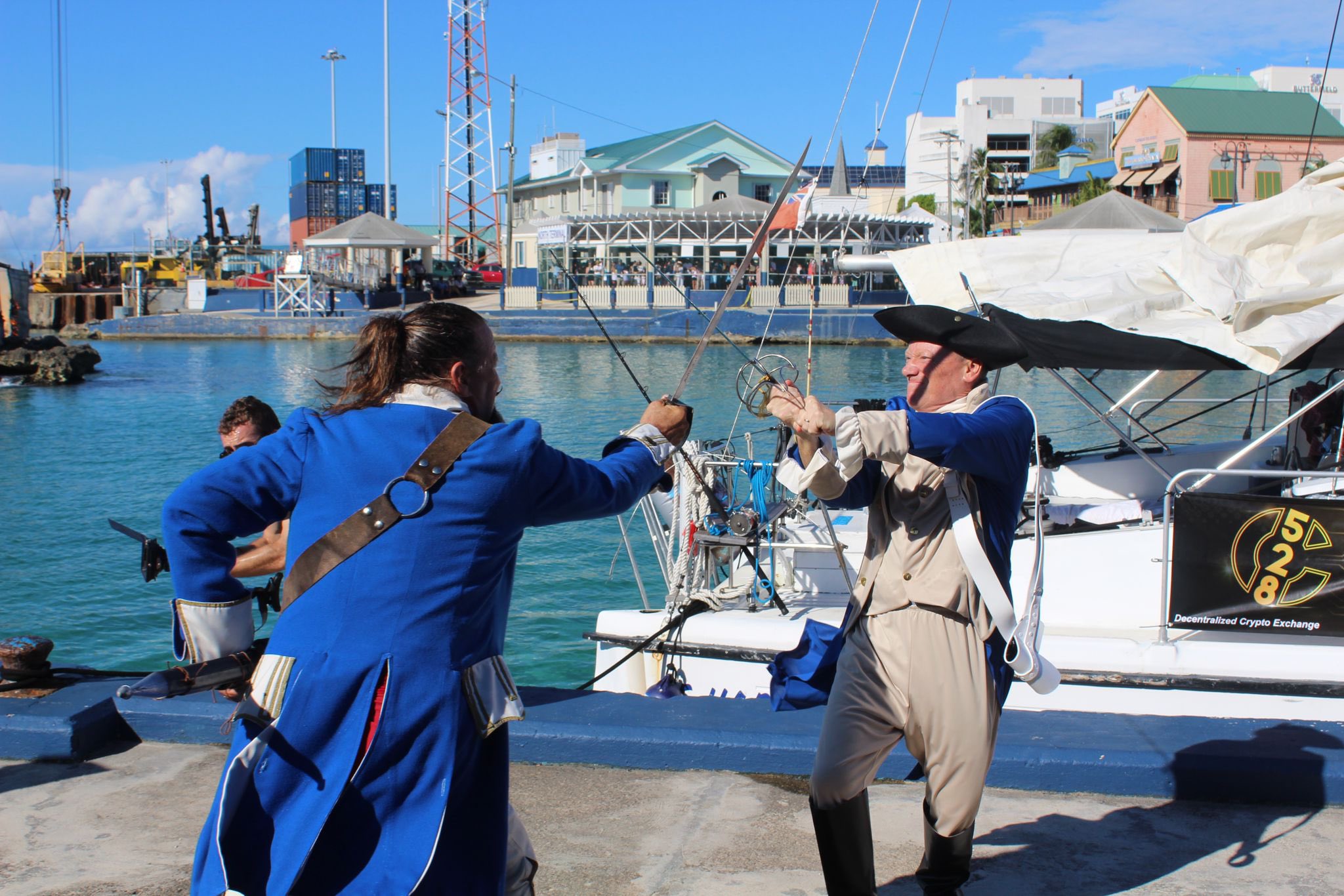
The script on the event was changed so that instead of the pirates capturing the governor, it was the pirates who were defeated and locked up. “Usually, the governor gets beaten and is taken in handcuffs through the streets,” he said, adding that as this would be his final Pirates Festival, he wanted to see a different outcome.
Civil partnerships
It wasn’t all fun and games, though. There was controversy and pushback against the governor using his reserved power under Section 81 of the Constitution to enact the Civil Partnership Act, which gave marriage-equivalency rights to same-sex couples in Cayman, after lawmakers voted down the bill in Parliament.
Roper said he and the UK had no choice but to assent to the legislation after the Court of Appeal declared Cayman was in breach of its human rights obligations to enact legislation that recognised and protected same-sex relationships.
“The Court of Appeal was very clear that if the Cayman Parliament failed to pass the legislation to give rights in law to people in same-sex relationships, then the UK had to step in, so there really wasn’t any choice about that,” he said.
He acknowledged criticism that the law does not go far enough as it does not legalise same-sex marriage, but said, “I was very aware this is a sensitive and difficult issue for very many people.”
“We did what was required by law, but we did it in a way that also showed some respect to the views of people on our islands, some very strong views,” he said. “I know some people didn’t like it, a lot of people did, and three years on, life really hasn’t changed at all, but hundreds of people have had their rights recognised in the law.”
He added, “I think it was important for our islands that it had to happen, and perhaps unfortunately it had to happen through Section 81, the governor’s reserved power, but I think it was the right thing to do and many people have been able to take advantage of that. And for the vast majority of people in the community, it hasn’t changed life one little bit really.”
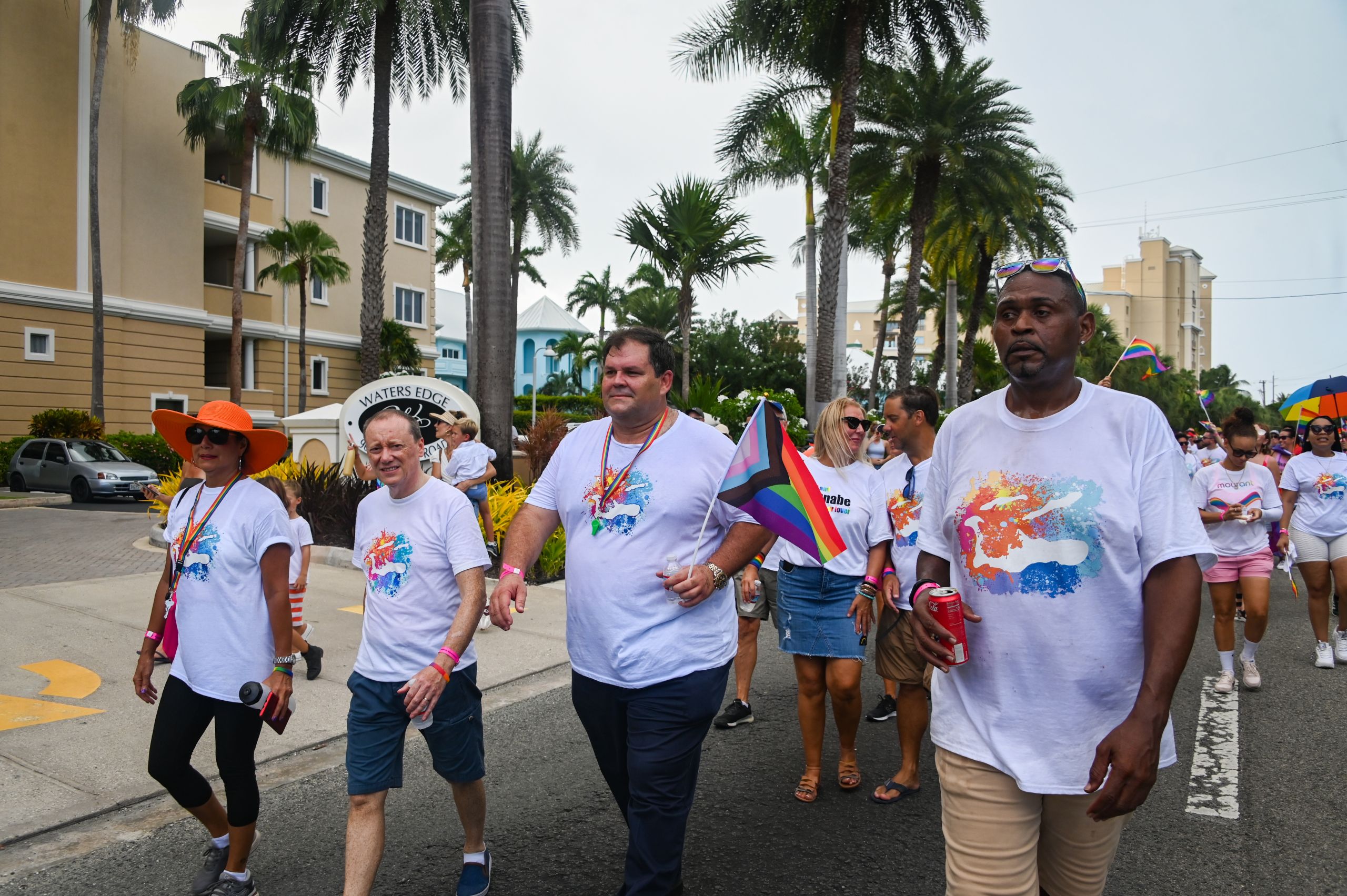
He was also the first governor to take part in Cayman’s inaugural Pride Parade, alongside Premier Wayne Panton. He says this is a sign that Cayman is “step by step” becoming a more tolerant community.
“There is still a stigma out there around sexual identity,” he said, but added, “These things often happen incrementally, you don’t usually get change overnight.”
Regrets
One of the regrets he said he had as he prepared to pack up and leave Cayman is that more progress has not been made on tackling child sexual abuse on island.
“We’ve spent a lot of time on child safeguarding, and spent a lot of funds to help Cayman and the Overseas Territories through dealing with this issue, by setting up the processes to manage it. MASH, the Multi-Agency Safeguarding Hub, was set up to bring together social workers and police and try to have the support systems in place.
“If I’m being honest, we haven’t really made very much progress on that, and I think it comes down to social taboos around child sexual abuse, whereby often it’s the family that is protected rather than the child.
“I think there are cultural taboos around sexual identity, around sexual harassment… As a community, we need to be more honest about some of those issues and talk about them more. … I would have liked to have make more progress on that. The cultural factors are holding that back and it’s really the responsibility of the community, of our elected leaders and anyone in a position of authority in our islands.”
Mental health is another issue that is steeped in stigma, he said, with many people not wanting to talk about the subject, but that mindset is changing, he acknowledged. “We’ve made strides in recent years,” he said, noting the establishment of the Alex Panton Foundation and the progress in constructing a long-term mental health facility in East End.
He commended the Cayman Islands Regiment, which was established during his time in Cayman to respond to local and regional disasters and emergencies, such as hurricane relief and resiliency, as well as the other response teams like Hazard Management Cayman Islands.
Citing storms like Grace and Ian that caused damage in Cayman, he said, “We’ve been tested a lot in the last few years.”
Roper said he had been informed he was Cayman’s second-longest-serving governor, after Thomas Russell, who was governor for seven years.
Related Videos