

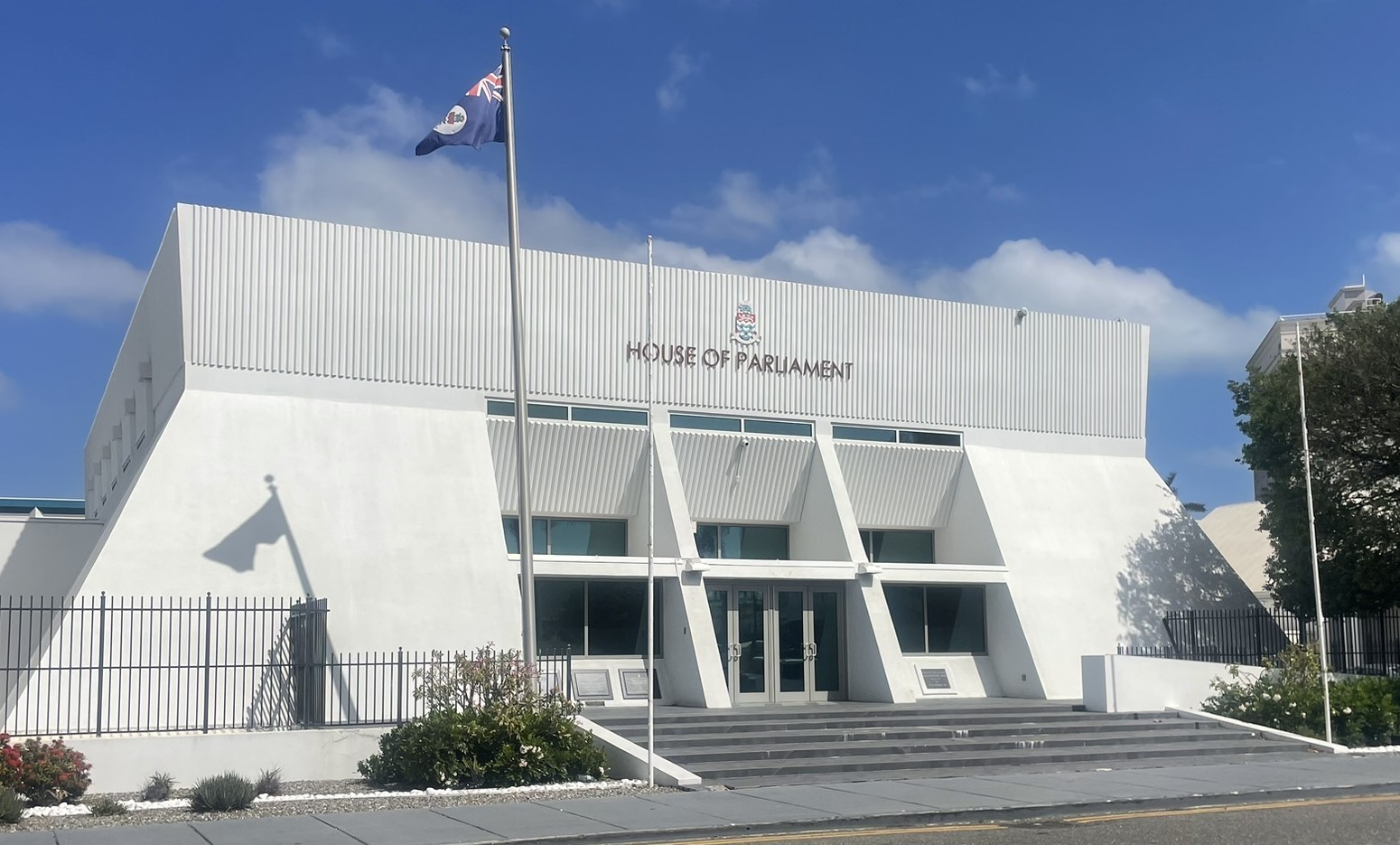
Finance Minster Rolston Anglin presented government’s much-anticipated Strategic Policy Statement (SPS) to Parliament on Wednesday, 15 Oct., which includes details on $209.5 million in new revenue measures.
The SPS set out the goals and policy direction of the National Coalition For Caymanians’ government over the next three years as well as influencing November’s budget, and, said Anglin, “reflects NCFC’S core beliefs and desire to uplift and improve our society, economy and overall wellbeing, not just for today, but the long term.”
Financial forecasts
Details of the SPS will be scrutinised by MPs from all sides of the chamber during the full parliamentary debate, which will take place on Friday, 17 Oct. but in his initial presentation, Anglin gave a summary of current financial forecasts of the nation’s finances for the next three years, including income, spending and debt levels.
He said that government had outlined seven broad categories including education, immigration, housing, environment, health, heritage and a diversified, resilient economy that would guide policy development, noting the challenges of being an island nation, but also highlighting Cayman’s strength in sectors such as financial services and tourism.
Key points of his speech in Parliament included the news that the government plans to boost revenues by increasing fees in the financial services industry and on high-value land purchases, as well as by reintroducing mandatory IDs for all work permit holders.
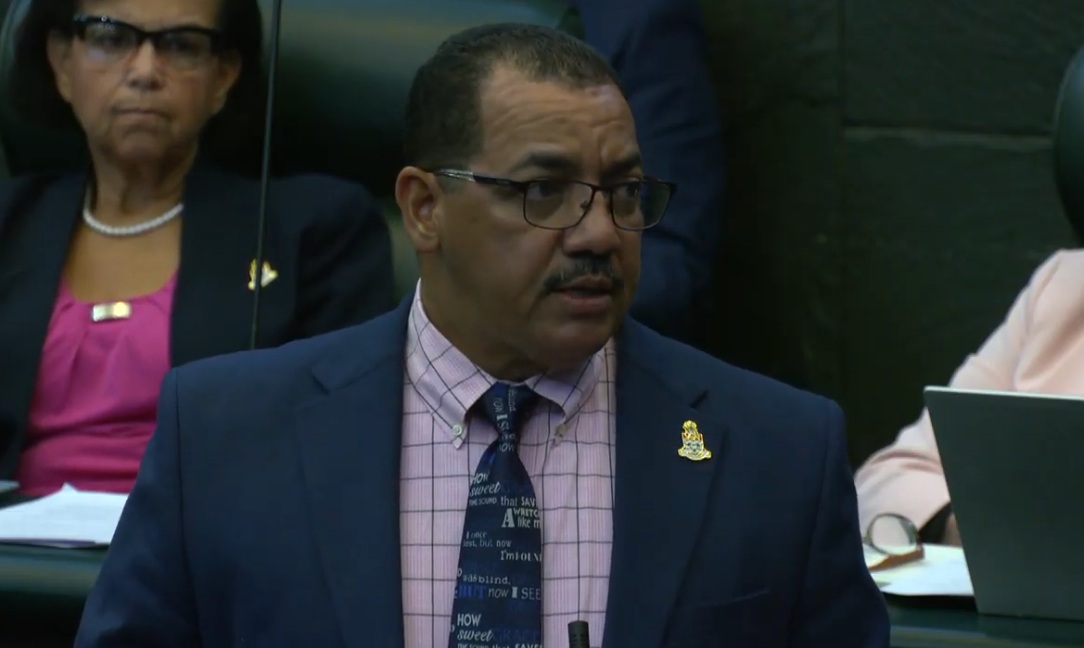
Operating revenues over the next three years are forecast to total $3.86 billion, which can be broken down into $1.25 billion in 2026, $1.3 billion in 2027 and $1.32 billion in 2028.
Financial services fees increasing
Anglin said the budget forecasts included revenue-enhancing measures that should generate an extra $209.5 million in additional income over the next three years.
Anglin told MPs that government recognised the need to grow revenue, saying, “We have carefully selected a range of new revenue measures that are low cost to implement and which will have little to no impact on ordinary citizens, while generating stable flows from growing economic sectors.”
Details of each measure will emerge during upcoming Parliamentary debates, he said, but he revealed that it included increases in financial services fees, such as legal and accounting practitioner fees, increased stamp duty on high-end land transfers and the reintroduction of mandatory identification for all work permit holders.
Operating expenditures over the same period are forecast to come in at slightly under revenues, totalling $3.83 billion which is made up of $1.25 billion in 2026, $1.29 billion in 2027 and $1.3 billion in 2028. The annual surplus is expected to grow over the next three years, he said, with a surplus of $6.6 million expected in 2026, $9.4 million in 2027 and $13.8 million in 2028.
In a pointed reference to previous governments, Anglin said, “In preparing this SPS, we have taken a very pragmatic approach that made the hard decision to budget at realistic levels for areas that have been chronically under-budgeted for several government administrations.”
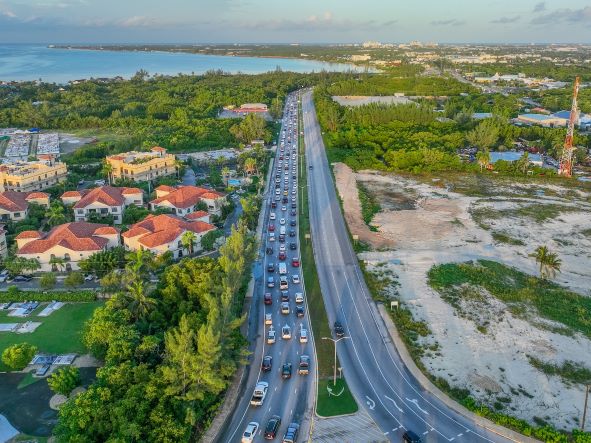
He pointed to previous budgets for health care costs that his government has now increased by 269%, saying this “clearly demonstrates our commitment to realistic and transparent budgeting. In this case, it ensures that Caymanians who are in need will have the services in health care when they need it, and the government can get on with its business and not have to hold out hope that finances will improve in order to provide these services.”
There would also be increased spending on the police service, he said, while capital investments on major projects such as schools, the road network including the East-West extension and the new submarine communications cable would total $323.7 million.

Government is expecting to borrow up to $321 million to fund capital investment but pledged to only to do so when “absolutely necessary” and would still remain compliant with the required debt ratio.
Summing up, Anglin said that government had taken a “conservative approach” to the management of public finances, saying “being fiscally responsible isn’t just about numbers. It’s about protecting our future. It gives us the strength to face challenges, whether it’s a hurricane, a global downturn or any unexpected crisis.”
He added, “When our finances are strong, our people are strong, and when our people are strong, our islands thrive. As the saying goes, the best way to predict the future is to create it, and by supporting responsible financial decisions today, we help create a future that is secure, stable and full of opportunity for all Caymanians.”
MPs are set to debate the details of the SPS on Friday, 17 Oct.
Related Videos











Hitting our Financial Industry again, which has always been Govt’s major source of revenue, is killing the goose that lays the golden egg. Raising more revenue is not the only solution, reducing excessive expenditure is a viable alternative. For decades nearly all Gov’t revenue has been spent on Gov’t itself, we need to look at reducing our army of civil servants, and those employed in Govt related entities, and curtail many of the costly perks they all receive. This alone would solve the problem. Many could transfer to the Police Dept which is desperately short of staff, but of course that would entail long and often anti-social hours.
It would be good to know the number of vehicles in Government fleets, by departmental breakdown. I don’t mean special vehicles or equipment, just regular pickup trucks, cars and SUVs. DEH’s parking lot after-hours looks like a Toyota dealership (but at least they leave them at work and not drive them home).
Also, curious to know how much is paid to chauffeurs for Ministers’ official and unofficial use.
These all seem to be increasing annually yet Government never seems eager to cut back its own expenses. Simply raise fees for more revenues….to waste!
It would be good to see targeted cuts to our bloated civil service. Simply raising fees on our leading industry is not the solution.
CIG should remember what happened when they raised fees on the fund admin business in the early 2000’s. For example prior to 2006 there were no fund admin companies in Halifax NS. Now there are 2,000+ good paying jobs in fund admin Nova Scotia. Cayman numbers have been stagnant at best or declining most years since. Why do we think that happened?