

Ride-share and carpooling apps are quietly filling a vacuum in Cayman’s public transport services and seeking to put pressure on government to bring the industry into the mainstream.
One app, Island:Go, has been operating in Cayman for around two years with a platform that is outwardly similar to Uber and Lyft and uses private drivers in their own vehicles, the Compass understands.
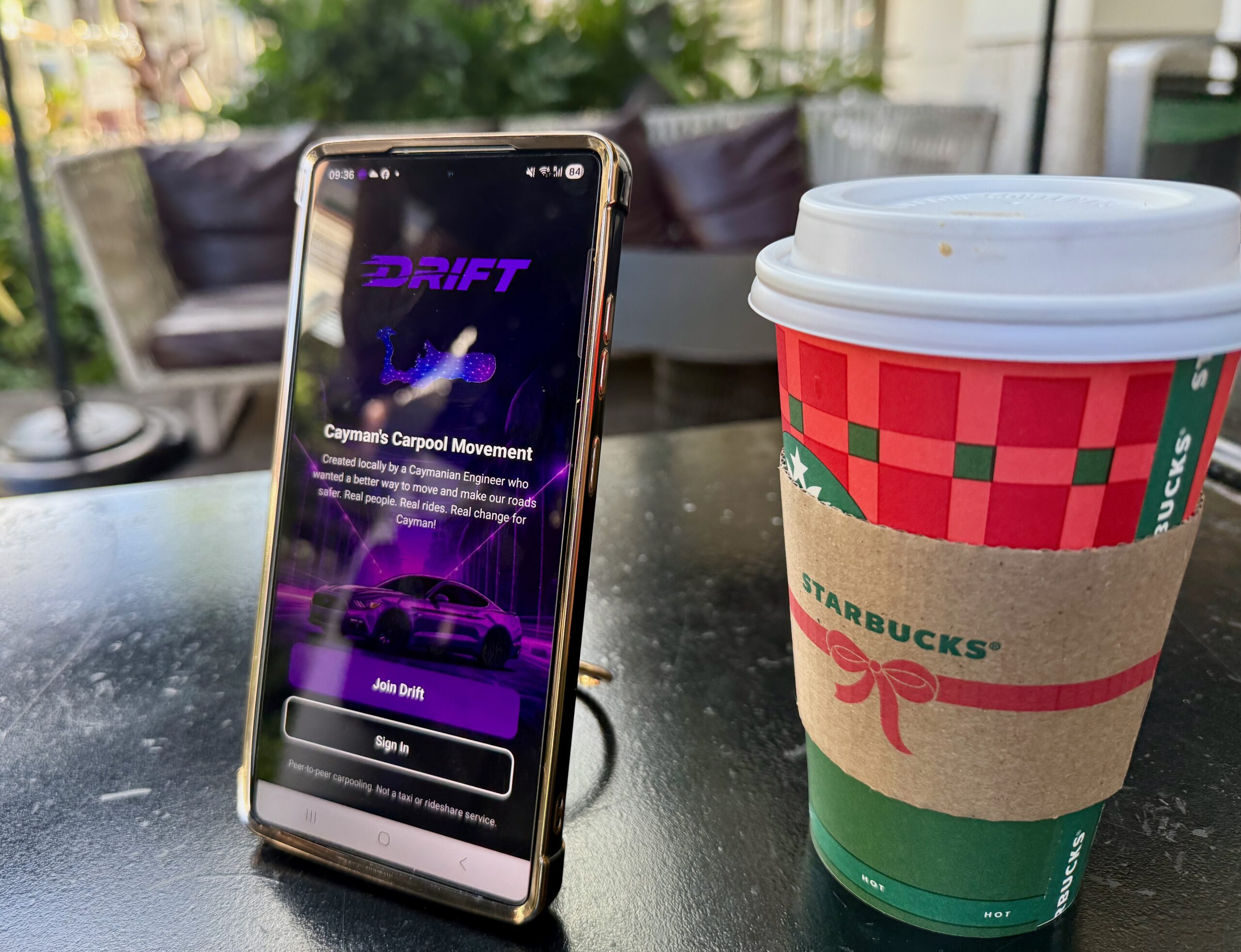
And a Cayman tech company is in the process of launching its own carpooling app, Drift, to help fill unmet demand for affordable transport among residents, particularly late at night.
Both models could run into legal hurdles on a strict interpretation of Cayman’s Public Transport Law, which requires a specific licence to carry passengers for fares. But that hasn’t stopped a wave of enthusiasm from frustrated residents amid perceptions that current taxi and bus options are unreliable and expensive.
The owners of Drift who requested to remain anonymous in this article, said they hope the product will become so widely used that they will force government to act.
“We’ve done our homework and we’re committed to staying within the law. We know there’s a grey area, but at its core, Drift is simply a tech platform that connects people who need a ride with people already on the road.
“In that sense, it’s not much different from the Facebook carpooling groups that already exist. It just makes the process safer and more reliable.”
While other apps, including Flex, which launched in Cayman several years ago following the Uber model, were required to use licensed taxi drivers, which are restricted by government quota and bound to a mandatory fare schedule, Drift’s developers insist it is a tech company, not a taxi or ride-share service.
“Think of it more like Airbnb meets Tinder. Airbnb isn’t a hotel. It’s a platform that connects people who have space with people who need a place to stay. Tinder isn’t a dating service. It simply matches people who want to meet,” they said.
“Drift works the same way. It’s not a taxi company; it’s just the technology that connects two people with a shared need at the right moment.”
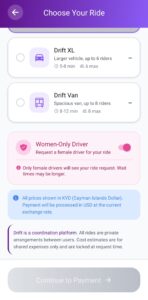
The app, designed by a Caymanian coder, includes many features similar to apps like Uber and Lyft. It allows users to link with a driver and facilitates a payment for a suggested gas contribution. It also includes features for drivers to upload insurance and licensing documents before they can be registered.
The creators say their main aim is to solve what they see as two major problems in Cayman: the absence of taxis late at night and the risks associated with the more informal ride sharing that is filling that gap. Drift includes multiple safety features including an SOS alert button, a speedometer on the app and the ability for women to request a female driver.
Red tape hindered Flex
Previous efforts to establish transport apps in Cayman have run into regulatory challenges.
Flex, which launched in 2019, was ultimately unsuccessful because it couldn’t get enough drivers signed up.
Co-founder Alex Cowan said the regulatory environment made it nearly impossible to build a viable service.
“Government told us they would shut us down if we didn’t comply with these certain rules and regulations,” he said. The main stipulation was that they must only use drivers from the limited pool of licensed taxi operators.
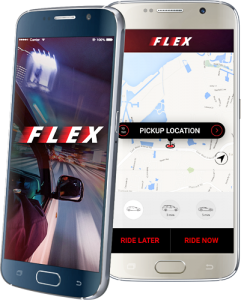
Over the long term this didn’t prove a viable option, given the reluctance of many taxi drivers to embrace new technology. The return of tourism after COVID-19 also meant there was plenty of work for drivers form cruise and air passengers and there were relatively few cabs available for evening and late-night work.
Flex also had to integrate government’s complex fare tables into the app.
“They need to revise the government rates … it needs to be more streamlined and efficient,” Cowan said.
Despite the operational difficulties, he believes the core concept was sound. From a practical perspective, he believes it would take around 350-400 drivers to create a consistent service that met the demand in Cayman. And he believes it would help cut drink-driving. If government wants to protect taxi drivers and improve the system, he says it could allow a Flex-like app for evening hours only.
“With a more consistent system and motivated young Caymanian drivers … Flex would have taken off,” he said.
The letter of the law
A strict interpretation of Cayman’s law suggests Island:Go and possibly also Drift could face similar hurdles.
Responding to questions from the Compass, government officials pointed to the Public Transport Act, which states that no vehicle other than a licensed public passenger vehicle driven by a permit-holding operator may carry passengers “for hire or reward.” Driving without such a permit is a criminal offence carrying fines of up to CI$5,000 or six months’ imprisonment.
A ministry spokesperson said that while ride-share platforms may resemble Uber in appearance, private motorists accepting payment through an app “do not fall within Cayman’s regulatory, licensing or safety framework.”
The spokesperson said the ministry had seen no evidence that Island:Go drivers hold public-passenger permits or that their vehicles carry the required insurance to carry passengers for payment.
She said, “For a passenger, although Island:Go is presented as a product similar to Uber, in practical terms it is much closer to getting into a stranger’s private vehicle, paying them to drive you, without any assurance that they are properly licensed, that the vehicle has passed the required public-passenger inspections, or that there is adequate insurance in place for either the driver or the passengers in the event of an accident.
“In the event of a collision or serious incident, that uncertainty around licensing, inspection and coverage could leave passengers particularly exposed.”
The app is already widely used in Cayman and Bermuda. It is not clear where the owners are based or who they are. Responding to questions through its website, a representative told us it is “a technology platform that allows private individuals to make pre-arranged transport arrangements with each other.”
They said it was currently operating a “community safety pilot, created in response to the well-documented shortage of safe late night transport.”
The representative said there was already strong evidence that the platform was helping prevent late night drink driving incidents.
“Adoption has grown rapidly, especially during hours associated with higher drink driving risk,” they said.
“With sustained adoption, we believe Cayman could eliminate drink driving incidents completely.”
Drift seeks to create momentum
Whether Drift’s model passes legal muster may turn on interpretations of the wording of the law
The developers argue that because riders will make a voluntary contribution rather than paying a fare, and because the platform ostensibly connects people already heading in the same direction, it does not fall within traditional taxi regulations.
“Our hope is that once enough people are using it, government will see the benefit and create a framework for it,” one of the founders said. “We’re not dealing with ‘fares.’ Riders contribute towards fuel, which we believe keeps us in the right regulatory space.”
‘Too much red tape’
Both the owners of Drift and Flex believe government should eventually allow a fully fledged rideshare service, similar to Uber in Cayman.
Cowan argues that a robust user-friendly app and a pool of well-vetted Caymanian drivers would be relatively easy to assemble.
Beyond that he believes government just needs to let the private sector get on with it.
“There’s too much red tape everywhere,” he said.
He also sees broader socio-economic benefits. Hundreds of young Caymanians could supplement their income in the same way drivers in the US use Uber and Lyft. Bars and restaurants could also enjoy brisker trade from patrons secure in the knowledge they could get home safe. And as the Compass reported earlier in this series, studies of accident data in US and UK cities have shown that Uptake of Uber is linked to significant cuts in accidents.
Any change in Cayman’s regulatory framework will likely collide with entrenched interests. But users have long complained about the reliability of bus and taxi services for locals and the introduction of significantly more expensive drivers licenses for expats could increase the demand for services.
Drift’s creators argue that Cayman’s current system does not meet the needs of residents.
“Living in Cayman without a car is incredibly difficult. Public transport is unreliable. There’s no bus schedule. Taxis don’t use meters. Other countries have solved this with technology, but here we’re still talking about adding more buses.”
They believe their app will fill a gap without competing with existing business that are more focussed on servicing tourists in the daylight hours.
“Government should let it operate and evolve. If it grows into a true rideshare system down the line with proper regulation, it will help far more people than it could ever hurt.”
For Cowan, the experience with Flex was frustrating, but he is cautiously optimistic that a more tech-focused government could eventually bring Cayman’s transport sector into the 21st century.
He hopes they will bring Caymanian business people like himself into the conversation.
“I really do think the current government may be more open to it,” he said. “There’s potential for a Flex 2.0 some day.”
Are there insurance risks?
Ride-sharing apps such as Island Go are an increasingly popular way of getting around but passengers might not be aware of the risks of using an unlicensed service.
If the car does not have the correct insurance for carrying commercial passengers and there is an accident, then the insurers are unlikely to pay out on any claim, leaving the driver and the passengers out of pocket.
S Greg Miller, claim manager from Cinico, said, “Anytime you get into a vehicle that represents itself as a public transportation provider and they’re not properly licensed for that, you’re putting yourself at risk. In case of an accident, there may not be sufficient coverage in case you are injured in that vehicle, and in most cases, there won’t be any coverage. So you’re putting your health and welfare at risk.”
In a typical case of a driver serving to avoid another car and crashing, for example, not only would the damage to car and possessions not be covered by insurance, but the passengers could sue the driver for personal injury and loss of earnings.
“For example, a passenger has a broken arm, their insurance might pay $5,000 but there’s a co-pay of $2,000,” he said. “They would definitely come to the driver to reclaim that cost. If they lost any wages by being unable to work, their attorney would probably look to get damages for that as well, so it could escalate fast.”
If the driver has limited assets of their own, then, said Miller, passengers could be left with “a sizable medical bill, a possible loss of income and other expenses you would not be able to recoup.”
Miller pointed out that even if a driver declared on their car insurance that they were operating as a taxi service, they would need to show the correct business licence and registration certificate which ride-sharing app drivers would be unlikely to have.
“Whatever the requirements are for you to operate as a taxi, if you’re not following those, then your coverage is not going to be valid either,” he said.
One grey area is when a ride-sharing app says that they are just covering the cost of petrol. “You could get in trouble for that,” he said, “because, again, by saying, ‘Oh, they just contributed for gas’, you could be asked, ‘If they didn’t contribute to gas, would you still have taken them?’ And you might answer yes, but the answer would be clearly no.”
Additional reporting by Sarah Bridge.
Related Videos












Disappointing this government can’t come up with a first world solution in 2025. Trying to stay in the stone age but claim they are technology first. Public transit in Cayman is a joke.
Everyone uses Island GO already and I have heard it is about to be legalized/insured soon so this will not be an issue
It’s not affordable for those of us in North Side. A ride to town is $136. Crazy.