

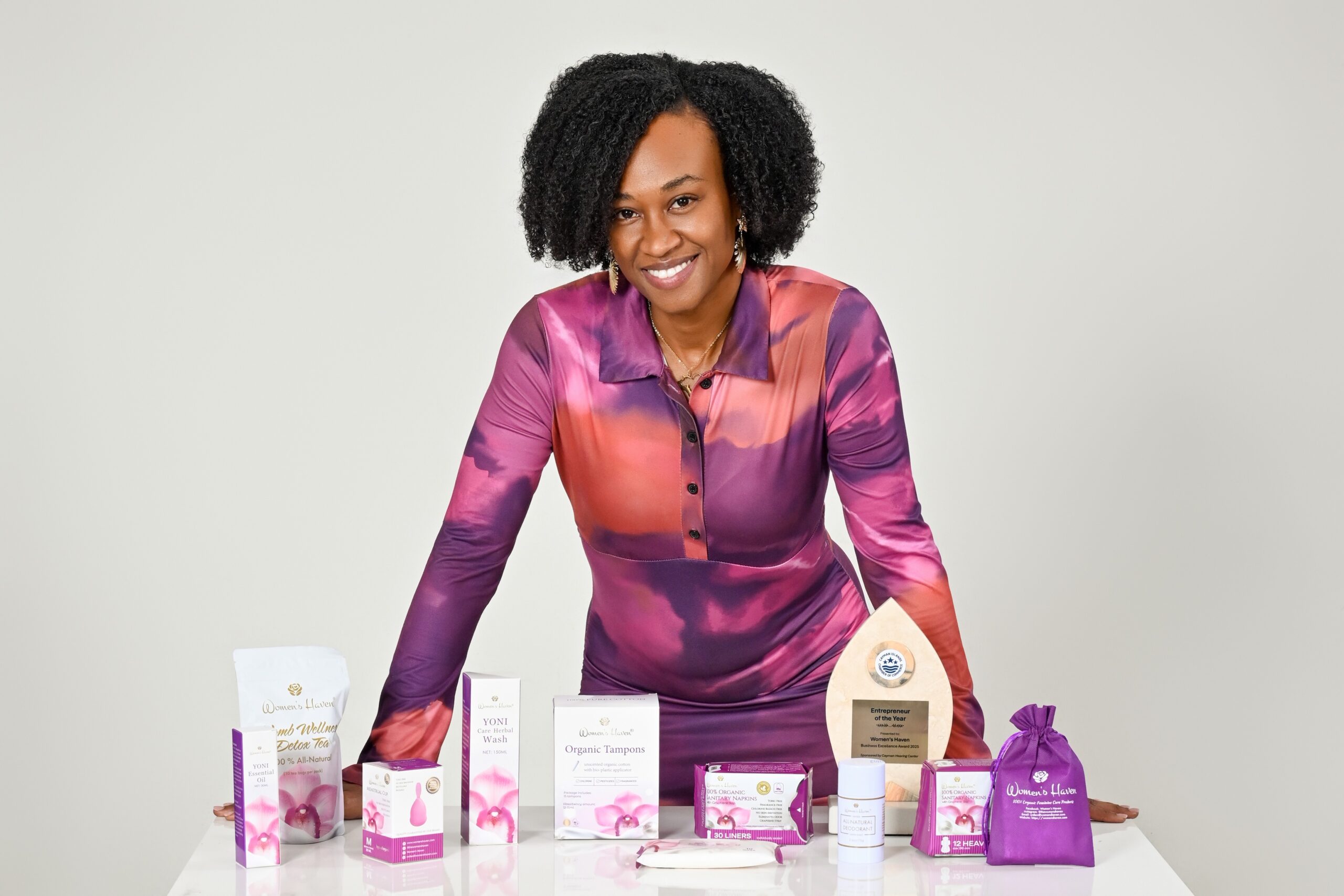
After years of hard work, Caymanian entrepreneur Melesia Adderley is finally getting recognised for her efforts to improve women’s health and the taboo about menstrual periods.
Last year, Adderley collected a range of awards and grants including Entrepreneur of the Year 2025 in the Cayman Islands Chamber of Commerce Business Excellence Awards and a National Heroes Day 2025 nomination. Just a few weeks in and 2026 looks set to be another successful year with Adderley named as one of the inaugural Caribbean & African Women of Impact Award honorees which recognises women for their work in those regions.
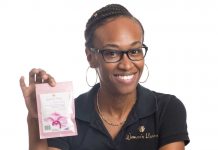
Adderley founded her organic feminine care company Women’s Haven in 2019 and like all good business ideas, it came about through her own experience.
“Women’s Haven started on a personal journey,” said Adderley. “I was very uncomfortable throughout my menstruation when growing up and I used to think that it was only me.”
Then Adderley discovered organic sanitary pads, which, she says, “changed my life. It was like night and day.”
She discovered that traditional products use bleach and chemicals which can cause skin irritations and other issues, problems which disappeared for her when using the organic products.
She started recommending them to friends who had, like her, been in the dark about organic sanitary products.
Taboo topic
“You know, periods are seen as taboo,” she said. “We don’t talk about those things, such as if we itch, if we smell, if we’re bleeding too much, but I started to talk to my friends and would give them one of these organic pads and they just kept coming back for more,”
Adderley, who graduated from Barry University in Miami Shores, Florida with a masters of science and organisational learning and leadership, describes herself as a “serial entrepreneur”. She started her own online food delivery service business, Island Grub, as well as working in the corporate world for the likes of Dart and Exxon Mobil.
Having discovered the organic period products, she became the exclusive distributor for the brand in Cayman and the Bahamas. With her customers loving the brand but wanting more pads per packet at a more affordable cost, she suggested the company work with her on a Caribbean collaboration. When the company declined, Adderley was undeterred.
“I said ‘fine, no problem’ and I just continued doing my thing while figuring out how to make my own pads,” she said.
After months of intensive research, Adderley found a manufacturer who could produce pads and liners to her specifications. Women’s Haven now sells 20 different products in 100 stores across 15 countries as well as online through Amazon and most recently, Temu. “We have trademarks all over the region,” she said.
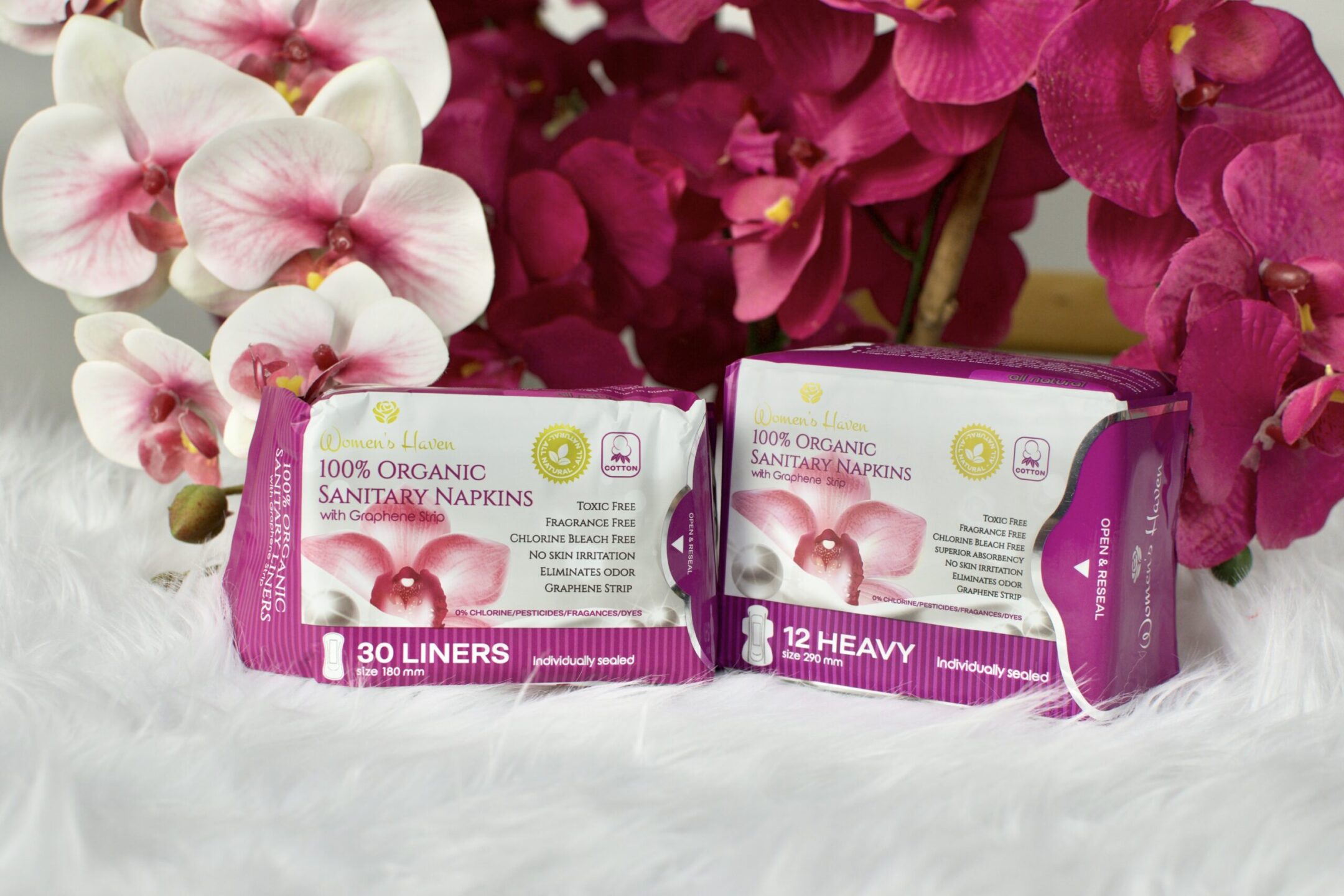
It was quite a learning curve to get to that point, she said. “I had no mentor, no coach, so I had to figure this out on my own. I did a lot of research and the manufacturer really helped me as well, because they knew I was new.”
The end result was a totally unique product, said Adderley. “Every single layer is different. You will never find my products anywhere else around the world. It’s made of 100% organic products and our packaging is also environmentally-sustainable and resealable.”
Creating a product from scratch was a challenge in itself, even without the cultural taboo around periods.
“I took a big risk,” she said. “I was solving a personal problem, not realising it was a bigger problem. But I said to myself, ‘Well, if I go and I make these liners and these pads and no one buys them, at least me and my two daughters will have pads for the rest of our life’.”
Expanded product line
Since launching, Adderley has expanded the product line to include sanitary napkins, liners, tampons and menstrual cups as well as essential oils, herbal wash, deodorants and wipes, all quite an achievement in a world in which periods are not often publicly discussed.
“We grew up very conservative, you know, not wanting to talk about certain things,” said Adderley. “In the United States and other places around the world, you would find tampons and menstrual cups being the more popular types of sanitary products whereas in the Caribbean, most people prefer pads,”
There’s still a taboo around blood and the use of tampons in the Caribbean, she says, which means a learning curve when it comes to using them, but Adderley is keen for women to know about all the options available. From the start, the company has donated products to girls and young women and spread the word about the importance of women’s health.
Women’s Haven has so far distributed three million products with the company growing purely through word-of-mouth and through a regional expansion where women in each country get exclusive distribution rights to the Women’s Haven brand.
“Women’s Haven isn’t only about providing organic feminine care products, but also about empowering women across the region,” said Adderley. “A lot of these women didn’t have a trading business licence or a proper business bank account, so I’ve coached and mentored them to the point where they’re now stocking the major supermarkets and pharmacies in their countries.”
Plans for the next few years include expanding into new territories, particularly across the Caribbean and even into Africa. While Adderley said it was hard to get recognition for the brand in the early days, awards are now coming in thick and fast for the company.
Her company has received grants from SheTrades Caribbean Go & Grow and OWN Bahamas Foundation and she was a finalist in the CARICOM HERizon awards.
Hard work recognised
“We had an amazing year last year and it was great to be recognised,” she said “I cried for days [after the CoC award] because I felt that you work so hard and your effort goes unnoticed until you make it. That’s something a lot of entrepreneurs go through – you have to just pass that hurdle and you have to prove yourself.”
Adderley has also started offering business mentorships to help other would-be entrepreneurs in their business journey.
“A lot of Caribbean business owners need help as there’s often no one to talk to,” she said. “I particularly want to help female entrepreneurs to be able to believe in themselves and that it’s possible for Caribbean people to make globally-impacting brands as well, because sometimes we just don’t ever believe that anyone from the Caribbean can do something like that.”
Related Videos









Would it be terribly non PC to say this entire editorial reads like an aditorial?
The taboo about menses is real enough. but the story doesn’t explore that either from a social impact or a human physiological point of view. It suggests the issue will be resolved by selling this brand of organic tampon.
Which, were it true, would be an extraordinary story of global importance and effect.
But it isn’t. The material tampons are make from clearly must be non-reactive with bodily chemistry, but achieving that doesn’t solve the taboo, merely addresses, with an unstated degree of success a “housekeeping” issue.